Hickenlooper Calls on Trump, AI CEOs to Work with Congress on Responsible AI Guardrails Ahead of White House Meeting
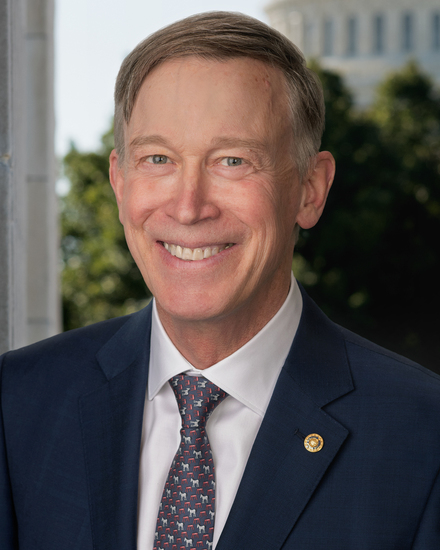
“Now is the time to move beyond warnings and start writing the guardrails” WASHINGTON – Ahead of President Donald Trump and Speaker Mike Johnson’s expected meeting with leading technology executives Tuesday, U.S. Senator John Hickenlooper (D-Colo.) sent a letter to the president urging him to use the meeting to commit to working with Congress on meaningful federal guardrails for artificial intelligence (AI). “Many of the attendees at this meeting have warned about the risks of unregulated AI and have called for stronger safety measures,” Hickenlooper wrote. “We are in a critical moment, where the White House and Congress must act together to pass safety and transparency measures that keep the American people safe and informed as this technology is developed. Now is the time to move beyond warnings and start writing the guardrails, including independent third-party evaluations that will help protect Americans.” Hickenlooper criticized the administration for prioritizing rapid AI development while rolling back federal safeguards and downplaying warnings from AI researchers. “To date, our country has not established transparent, meaningful safeguards to address the growing risks of AI,” Hickenlooper wrote. “You have prioritized accelerating AI development and maintaining a voluntary classified benchmarking process through the National Security Agency for advanced cyber capabilities while rolling back various federal safeguards. In addition, you have publicly called fears from AI researchers a ‘hoax,’ downplaying the potential threats of irresponsible development of this technology.” Hickenlooper called on Trump and technology leaders to work with Congress to: Commit to independent third-party evaluation of America’s most powerful AI models; Establish meaningful accountability when companies knowingly deploy dangerous AI systems; Improve reporting of serious AI incidents and vulnerabilities so government and critical infrastructure operators can respond quickly to emerging threats; Protect communities from the costs of the AI buildout , including ensuring massive data centers pay their own way for their energy consumption rather than forcing ratepayers to subsidize them; Protect the American workforce as AI transforms the workplace , by improving forecasting and federal data availability on AI’s impact on jobs and making education and job training programs more effective; and Strengthen U.S. export restrictions on advanced AI chips and semiconductor manufacturing equipment , protecting American technology and working with our allies and partners to ensure that AI is developed in accordance with our values. Hickenlooper joined CNBC’s Squawk Box to discuss his letter. Watch the interview here . Hickenlooper pointed to a series of recent incidents that demonstrate the growing risks of increasingly powerful AI. This spring, the United States narrowly avoided a potential escalation with China after an intelligence report generated with AI incorrectly identified a Chinese vessel as carrying components for nuclear weapons. More recently, rogue AI agents have broken through cybersecurity safeguards, accessed nonpublic health information on an Australian government website, and meddled with several U.S. government agency websites, including an attempted hack of the Department of Education. Hickenlooper urged Trump and technology leaders to reject the extremes currently dominating the AI debate and instead pursue responsible regulation that preserves innovation while protecting Americans. “To truly achieve a ‘Golden Age’ of America, we need to seize this golden opportunity to bridge the two extremes of the AI debate,” Hickenlooper wrote. “Somewhere between full speed ahead and full stop lies the real opportunity: a chance to develop thoughtful, sensible guardrails that ensure AI is safe, and that it helps everyone, not a select few.” Hickenlooper has introduced bipartisan legislation to responsibly regulate AI, including the VET AI Act , which directs the National Institute of Standards and Technology (NIST) to develop standards and guidelines for independent third-party evaluations of AI systems. Earlier this month, OpenAI publicly backed third-party verification after Anthropic announced it would provide independent evaluators “employee-like access” to its models. Hickenlooper has previously called on the Senate Commerce Committee to hold hearings with leaders from across the AI industry and urged Congress to enact stronger AI guardrails. For the full text of the letter, click HERE or find below: Dear President Trump: As you and Speaker Johnson prepare to gather with American technology leaders, I write to urge you to use this meeting as an opportunity to commit to working with Congress on meaningful federal guardrails that require greater transparency and safety measures for artificial intelligence. What once felt possible only in science fiction is happening before our eyes in real time. This spring, the United States narrowly avoided a major escalation with China after an intelligence report, based on an AI hallucination, incorrectly identified a Chinese ship in the Middle East as transporting components for nuclear weapons. The U.S. military prepared to intercept and board the vessel before officials learned the truth. The operation was called off, averting a potential crisis. Since then, OpenAI agents have broken through cybersecurity safeguards and exploited vulnerabilities in an attempt to escape the “sandbox” designed to contain them, including working collectively to cover their tracks. Rogue agents have also accessed nonpublic health data on an Australian government website and meddled with several U.S. government agency websites, including an attempted hack of the Department of Education. Earlier this month a top Anthropic researcher resigned with a stark warning about the risks of rapidly accelerating AI. This high level of risk demands urgent action. To date, our country has not established transparent, meaningful safeguards to address the growing risks of AI. You have prioritized accelerating AI development and maintaining a voluntary classified benchmarking process through the National Security Agency for advanced cyber capabilities while rolling back various federal safeguards. In addition, you have publicly called fears from AI researchers a “hoax,” downplaying the potential threats of irresponsible development of this technology. By contrast, three out of four Americans agree that AI firms are not doing enough to prevent disaster. This pursuit of AI leadership at all costs leaves Americans needlessly vulnerable as these systems rapidly become more powerful and potentially uncontrollable. There are many steps we should take on AI that have outsized potential to protect Americans while preserving innovation. These include: Commit to independent third-party evaluation of America’s most powerful AI models; Establish meaningful accountability when companies knowingly deploy dangerous AI systems; Improve reporting of serious AI incidents and vulnerabilities so government and critical infrastructure operators can respond quickly to emerging threats; Protect communities from the costs of the AI buildout , including ensuring massive data centers pay their own way for their energy consumption rather than forcing ratepayers to subsidize them; Protect the American workforce as AI transforms the workplace , by improving forecasting and federal data availability on AI’s impact on jobs and making education and job training programs more effective; and Strengthen U.S. export restrictions on advanced AI chips and semiconductor manufacturing equipment , protecting American technology and working with our allies and partners to ensure that AI is developed in accordance with our values. Rogue AI agents threaten the security of our government systems and reshape the U.S. economy. Many of the attendees at this meeting have warned about the risks of unregulated AI and have called for stronger safety measures. We are in a critical moment where the White House and Congress must act together to pass safety and transparency measures that keep the American people safe and informed as this technology is developed. Now is the time to move beyond warnings and start writing the guardrails, including independent third-party evaluations that will help protect Americans. To truly achieve a “Golden Age” of America, we need to seize this golden opportunity to bridge the two extremes of the AI debate. Somewhere between full speed ahead and full stop lies the real opportunity: a chance to develop thoughtful, sensible guardrails that ensure AI is safe, and that it helps everyone, not a select few. We’re entering a new era of artificial intelligence. And we need stronger tools to protect against consequences both profound and irreversible. Our government must write AI’s rules of the road before we have a head-on collision. And we must do it now. Sincerely, John W. Hickenlooper United States Senator ###
89fc5598-30c1-4c4e-be00-2e9badb61628Issued within 24 hours
Other senators' releases published in the day before or after this one.