Sullivan Secures 56 Provisions, Historic $2.6 Billion for Alaska in FY 2027 Defense Authorization
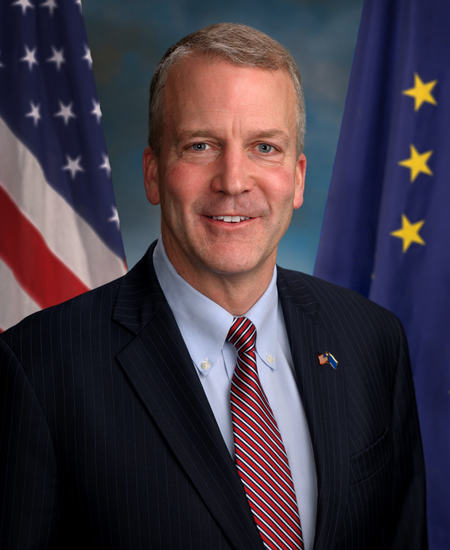
06.23.26 Sullivan Secures 56 Provisions, Historic $2.6 Billion for Alaska in FY 2027 Defense Authorization Bill Supports Alaska's Military Members & Families, Makes Largest NDAA Investment in Alaska History WASHINGTON —U.S. Senator Dan Sullivan (R-Alaska) and his fellow Senate Armed Services Committee (SASC) colleagues last week advanced the Fiscal Year 2027 National Defense Authorization Act (NDAA) out of committee by a bipartisan vote of 18 to 9. The $1.15 trillion legislation includes 56 provisions and amendments authored by Sen. Sullivan. It authorizes a historic $2.6 billion in military construction and projects specifically for Alaska, and requires the Department of War (DOW) to create a plan to audit, fortify, and fully staff previously abandoned armories in many Rural Alaska communities. The FY 2027 NDAA also supports military service members and their families, addresses critical energy and housing challenges, and helps close key defense gaps in the Arctic. Finally, the legislation is focused on catalyzing a sweeping defense manufacturing revival to address the atrophied defense industrial base and to build a modern U.S. military that can meet the rapidly evolving threats of global adversaries. “For over 10 years, in each annual defense authorization, I have consistently fought for and delivered robust investments in Alaska and our service members. In that regard, this year’s NDAA is a grand-slam home run, making by far the largest investment ever in our great state at $2.6 billion,” said Sen. Sullivan . “These investments bolster Alaska’s role as the cornerstone of America’s missile defense system, the hub of Arctic and Indo-Pacific air combat power, and a vital platform for expeditionary forces. A centerpiece of this year’s NDAA is the beginning of the historic, multi-year, $7 billion ‘Fighter Town USA’ recapitalization at JBER, which will build 26 state-of-the-art facilities to make JBER the most strategic base in the world, create upwards of 4,000 private-sector jobs, and bring many more military members to our state in the years to come. “Other NDAA provisions I secured will improve the quality of life for our Alaska-based warfighters and their families, with a well-deserved pay raise, critical housing and education support, and upgraded base infrastructure at JBER, Eielson, and Fort Wainwright. Finally, this year’s NDAA includes my bill, the Alaska National Guard Rural Community Revival Act, which requires the Pentagon to plan for reopening and staffing many of the long-abandoned armories that exist across Rural Alaska to broaden our military’s presence and capabilities in our highly strategic state. “Thanks to the rigorous, bipartisan work of the committee, this NDAA sends a clear message of strength to our adversaries, fosters a groundswell of economic activity that will create thousands of good-paying jobs at home in Alaska, and ensures the United States military remains the most lethal fighting force on the planet. I will be working with my Senate and House colleagues to preserve all these vital provisions and expeditiously deliver this important legislation to the president’s desk.” The FY 2027 NDAA supports U.S. service members and their families with provisions that: Authorize funding to support a 3.6 percent pay raise for military members. Refocus defense leadership on service member quality of life by establishing a new Assistant Secretary at DOW to elevate and prioritize housing, travel, and movement issues for military members. Improve counseling and access to information related to foster care opportunities for military families. Enhance housing transparency through long-term planning and by incorporating community feedback. Authorize DOW to increase the maximum tuition assistance benefit. The $2.6 billion in military construction and project authorizations for Alaska include: $2.066 billion for the Fighter Town Recapitalization Build-Out at Joint Base Elmendorf-Richardson (JBER). $56 million for Addition/Alteration (ADAL) Field Training Detachment. $132.3 million for a Conventional Munition Complex. $451.5 million for dormitories. $93.8 million for a flight simulator. $31.25 million for fuel cell maintenance. $422.1 million for infrastructure and utilities. $63.25 million for low observable aircraft structural maintenance. $127.5 million for an operation and generation hangar. $359.1 million for precision guided munition (PGM) relocation. $50 million for public traffic route alignment. $125.25 million for Squadron 1-1 airfield pavements. $154 million for Squadron 1-1 flowthrough hangars. $156.964 million for the JBER Phase 2 Military Housing Privatization Initiative (MHPI) restructure. $147 million for a dining facility at Ft. Wainwright. $50 million in increased launch capacity, which will benefit the Pacific Spaceport Complex – Alaska on Kodiak Island. $43.2 million for winter equipment for the U.S. Army in Alaska. $42 million for Joint Integrated Test and Training Center (JITTC) INC. $41 million for the Joint Pacific Alaska Range Complex (JPARC) Range Operations Center at Eielson Air Force Base. $24 million for Barracks Increment 2 at Ft. Wainwright. $15 million for resilient autonomous sensing in the Arctic. $10 million for autonomy within the Golden Dome missile defense system, which will include projects in Alaska. Sen. Sullivan’s Alaska-related provisions in the FY 2027 NDAA: Direct a plan to optimize Arctic readiness and infrastructure by requiring an audit to repurpose underutilized armories into tactical, cold-weather logistical hubs, utilizing public-private partnerships with Alaska Native corporations, making microgrid upgrades, and building targeted recruitment frameworks to address severe personnel vacancies in remote regions. Allow 8(a) small businesses to bid on DOW construction contracts by committing to open a local office within 60 days of winning a contract, rather than having local office presence before submitting a bid. Mandate the formal integration of the Army National Guard into the comprehensive Army Arctic Strategy, helping the Alaska National Guard to procure winter gear. Direct DOW to establish a comprehensive strategy and roadmap to mitigate local community impacts during the construction of private data centers on military installations. To guarantee that these facilities do not compromise local utility needs, this legislation mandates that DOW conduct rigorous grid impact assessments, requiring a formalized review of energy demands and commercial grid stability, before executing or renewing any Enhanced Use Lease (EUL) for military infrastructure or energy production. Establish a joint DOW-U.S. Department of Veterans Affairs (VA) military trauma care and research program with regional partners to bolster medical readiness across the Indo-Pacific and Arctic. Establish an Analytics and Simulation Laboratory within the Ted Stevens Center for Arctic Security Studies. Increase the end strength of Alaska Air National Guard full-time support personnel to ensure there are no cuts to local positions. Direct the transfer of certain military land to the Municipality of Anchorage and the Village of Eklutna for critical projects that would help DOW and the community. Require a strategy to improve Arctic satellite connectivity by directing the Secretary of War to submit a plan to enhance high-speed data downlinks, winterize ground stations against extreme weather, and build resilient communication lines alongside the Coast Guard and Arctic NATO allies. Allow the U.S. Coast Guard to bid within the Defense Community Infrastructure Program, enabling remote Alaska maritime communities to secure competitive DOW funding for critical roads, housing, and utilities to directly boost Coast Guard operational readiness and family quality of life. Strengthen military grid resiliency by requiring DOW to establish energy redundancy, diversify power supply sources, and ensure critical installations maintain reliable power generation capacities. Direct the expansion of energy storage by requiring DOW to establish minimum fuel reserves and build protected infrastructure to eliminate single points of failure in Alaska. Direct DOW to conduct rigorous audits of domestic energy supply chains and foreign energy dependencies, establishing a clear roadmap to wean DOW off dependence on resources from foreign adversaries and aggressively invest in secure domestic supplies, specifically Alaska’s extraordinary oil, natural gas, and critical mineral resources, to guarantee absolute energy independence for the U.S. military. Direct the Secretary of the Air Force to submit a report and briefing to Congress, evaluating the infrastructure and funding needed to expand national security space launches at the Pacific Spaceport Complex on Kodiak Island in Alaska. Direct DOW to brief Congress on the feasibility of establishing a dedicated Arctic Capable National Guard Special Forces unit. Raise the spending limit for quick-approval construction projects from $9 million to $15 million and waive local cost adjustments for Alaska. Other Sullivan priorities in the FY 2027 NDAA: Support the implementation of the new Program Acquisition Executive (PAE) office scorecards, which serve as a primary diagnostic tool for assessing the operational health of each acquisition office. Establish dual acquisition workforce pilot programs by directing DOW to create a venture capital training certification for contracting officers and an advisory program integrating commercial industry executives into senior procurement roles. Build upon Sen. Sullivan’s FY 2023 and 2024 NDAA provisions requiring the Navy to maintain 33 amphibious ships. Direct the Navy to conduct a study on using naval reservists to expand its existing workforce backup program for shipbuilding. Direct the Secretary of the Navy to brief Congress on establishing a standard legal definition for “distributed shipbuilding” across all federal vessel construction programs. Require all budget books to explicitly detail all uses of multi-year procurement authority and supporting data, providing a predictable federal demand signal to venture capital and private equity partners, while equipping Congress with enhanced visibility into investment risk and long-term program sustainability. Require certain DOW contractors to report detailed information regarding their business exposure to China, including revenue, profits, assets, investments, supply chain dependencies, financing relationships, and employment ties connected to China. Require that mission-critical systems delivering space-based tactical data be procured from multiple vendors to foster a robust and resilient marketplace, the final provision of Sen. Sullivan’s Ground and Orbital Launched Defeat of Emergent Nuclear Destruction and Other Missile Engagements (GOLDEN DOME) Act . # # # Print Email Tweet Next Article Previous Article
8dd70bce-e0e7-41f0-9211-fea4e8eb296aEdit history (1 prior version)
This release was edited after publication. Earlier captures are preserved below.
- Captured Jun 24, 2026, 9:46 AM EDT
Show prior body text
06.23.26 Sullivan Secures 56 Provisions, Historic $2.6 Billion for Alaska in FY 2027 Defense Authorization Bill Supports Alaska's Military Members & Families, Makes Largest NDAA Investment in Alaska History WASHINGTON —U.S. Senator Dan Sullivan (R-Alaska) and his fellow Senate Armed Services Committee (SASC) colleagues last week advanced the Fiscal Year 2027 National Defense Authorization Act (NDAA) out of committee by a bipartisan vote of 18 to 9. The $1.15 trillion legislation includes 56 provisions and amendments authored by Sen. Sullivan. It authorizes a historic $2.6 billion in military construction and projects specifically for Alaska, and requires the Department of War (DOW) to create a plan to audit, fortify, and fully staff previously abandoned armories in many Rural Alaska communities. The FY 2027 NDAA also supports military service members and their families, addresses critical energy and housing challenges, and helps close key defense gaps in the Arctic. Finally, the legislation is focused on catalyzing a sweeping defense manufacturing revival to address the atrophied defense industrial base and to build a modern U.S. military that can meet the rapidly evolving threats of global adversaries. “For over 10 years, in each annual defense authorization, I have consistently fought for and delivered robust investments in Alaska and our service members. In that regard, this year’s NDAA is a grand-slam home run, making by far the largest investment ever in our great state at $2.6 billion,” said Sen. Sullivan . “These investments bolster Alaska’s role as the cornerstone of America’s missile defense system, the hub of Arctic and Indo-Pacific air combat power, and a vital platform for expeditionary forces. A centerpiece of this year’s NDAA is the beginning of the historic, multi-year, $7 billion ‘Fighter Town USA’ recapitalization at JBER, which will build 26 state-of-the-art facilities to make JBER the most strategic base in the world, create upwards of 4,000 private-sector jobs, and bring many more military members to our state in the years to come. “Other NDAA provisions I secured will improve the quality of life for our Alaska-based warfighters and their families, with a well-deserved pay raise, critical housing and education support, and upgraded base infrastructure at JBER, Eielson, and Fort Wainwright. Finally, this year’s NDAA includes my bill, the Alaska National Guard Rural Community Revival Act, which requires the Pentagon to plan for reopening and staffing many of the long-abandoned armories that exist across Rural Alaska to broaden our military’s presence and capabilities in our highly strategic state. “Thanks to the rigorous, bipartisan work of the committee, this NDAA sends a clear message of strength to our adversaries, fosters a groundswell of economic activity that will create thousands of good-paying jobs at home in Alaska, and ensures the United States military remains the most lethal fighting force on the planet. I will be working with my Senate and House colleagues to preserve all these vital provisions and expeditiously deliver this important legislation to the president’s desk.” The FY 2027 NDAA supports U.S. service members and their families with provisions that: Authorize funding to support a 3.6 percent pay raise for military members. Refocus defense leadership on service member quality of life by establishing a new Assistant Secretary at DOW to elevate and prioritize housing, travel, and movement issues for military members. Improve counseling and access to information related to foster care opportunities for military families. Enhance housing transparency through long-term planning and by incorporating community feedback. Authorize DOW to increase the maximum tuition assistance benefit. The $2.6 billion in military construction and project authorizations for Alaska include: $2.066 billion for the Fighter Town Recapitalization Build-Out at Joint Base Elmendorf-Richardson (JBER). $56 million for Addition/Alteration (ADAL) Field Training Detachment. $132.3 million for a Conventional Munition Complex. $451.5 million for dormitories. $93.8 million for a flight simulator. $31.25 million for fuel cell maintenance. $422.1 million for infrastructure and utilities. $63.25 million for low observable aircraft structural maintenance. $127.5 million for an operation and generation hangar. $359.1 million for precision guided munition (PGM) relocation. $50 million for public traffic route alignment. $125.25 million for Squadron 1-1 airfield pavements. $154 million for Squadron 1-1 flowthrough hangars. $156.964 million for the JBER Phase 2 Military Housing Privatization Initiative (MHPI) restructure. $147 million for a dining facility at Ft. Wainwright. $50 million in increased launch capacity, which will benefit the Pacific Spaceport Complex – Alaska on Kodiak Island. $43.2 million for winter equipment for the U.S. Army in Alaska. $42 million for Joint Integrated Test and Training Center (JITTC) INC. $41 million for the Joint Pacific Alaska Range Complex (JPARC) Range Operations Center at Eielson Air Force Base. $24 million for Barracks Increment 2 at Ft. Wainwright. $15 million for resilient autonomous sensing in the Arctic. $10 million for autonomy within the Golden Dome missile defense system, which will include projects in Alaska. Sen. Sullivan’s Alaska-related provisions in the FY 2027 NDAA: Direct a plan to optimize Arctic readiness and infrastructure by requiring an audit to repurpose underutilized armories into tactical, cold-weather logistical hubs, utilizing public-private partnerships with Alaska Native corporations, making microgrid upgrades, and building targeted recruitment frameworks to address severe personnel vacancies in remote regions. Allow 8(a) small businesses to bid on DOW construction contracts by committing to open a local office within 60 days of winning a contract, rather than having local office presence before submitting a bid. Mandate the formal integration of the Army National Guard into the comprehensive Army Arctic Strategy, helping the Alaska National Guard to procure winter gear. Direct DOW to establish a comprehensive strategy and roadmap to mitigate local community impacts during the construction of private data centers on military installations. To guarantee that these facilities do not compromise local utility needs, this legislation mandates that DOW conduct rigorous grid impact assessments, requiring a formalized review of energy demands and commercial grid stability, before executing or renewing any Enhanced Use Lease (EUL) for military infrastructure or energy production. Establish a joint DOW-U.S. Department of Veterans Affairs (VA) military trauma care and research program with regional partners to bolster medical readiness across the Indo-Pacific and Arctic. Establish an Analytics and Simulation Laboratory within the Ted Stevens Center for Arctic Security Studies. Increase the end strength of Alaska Air National Guard full-time support personnel to ensure there are no cuts to local positions. Direct the transfer of certain military land to the Municipality of Anchorage and the Village of Eklutna for critical projects that would help DOW and the community. Require a strategy to improve Arctic satellite connectivity by directing the Secretary of War to submit a plan to enhance high-speed data downlinks, winterize ground stations against extreme weather, and build resilient communication lines alongside the Coast Guard and Arctic NATO allies. Allow the U.S. Coast Guard to bid within the Defense Community Infrastructure Program, enabling remote Alaska maritime communities to secure competitive DOW funding for critical roads, housing, and utilities to directly boost Coast Guard operational readiness and family quality of life. Strengthen military grid resiliency by requiring DOW to establish energy redundancy, diversify power supply sources, and ensure critical installations maintain reliable power generation capacities. Direct the expansion of energy storage by requiring DOW to establish minimum fuel reserves and build protected infrastructure to eliminate single points of failure in Alaska. Direct DOW to conduct rigorous audits of domestic energy supply chains and foreign energy dependencies, establishing a clear roadmap to wean DOW off dependence on resources from foreign adversaries and aggressively invest in secure domestic supplies, specifically Alaska’s extraordinary oil, natural gas, and critical mineral resources, to guarantee absolute energy independence for the U.S. military. Direct the Secretary of the Air Force to submit a report and briefing to Congress, evaluating the infrastructure and funding needed to expand national security space launches at the Pacific Spaceport Complex on Kodiak Island in Alaska. Direct DOW to brief Congress on the feasibility of establishing a dedicated Arctic Capable National Guard Special Forces unit. Raise the spending limit for quick-approval construction projects from $9 million to $15 million and waive local cost adjustments for Alaska. Other Sullivan priorities in the FY 2027 NDAA: Support the implementation of the new Program Acquisition Executive (PAE) office scorecards, which serve as a primary diagnostic tool for assessing the operational health of each acquisition office. Establish dual acquisition workforce pilot programs by directing DOW to create a venture capital training certification for contracting officers and an advisory program integrating commercial industry executives into senior procurement roles. Build upon Sen. Sullivan’s FY 2023 and 2024 NDAA provisions requiring the Navy to maintain 33 amphibious ships. Direct the Navy to conduct a study on using naval reservists to expand its existing workforce backup program for shipbuilding. Direct the Secretary of the Navy to brief Congress on establishing a standard legal definition for “distributed shipbuilding” across all federal vessel construction programs. Require all budget books to explicitly detail all uses of multi-year procurement authority and supporting data, providing a predictable federal demand signal to venture capital and private equity partners, while equipping Congress with enhanced visibility into investment risk and long-term program sustainability. Require certain DOW contractors to report detailed information regarding their business exposure to China, including revenue, profits, assets, investments, supply chain dependencies, financing relationships, and employment ties connected to China. Require that mission-critical systems delivering space-based tactical data be procured from multiple vendors to foster a robust and resilient marketplace, the final provision of Sen. Sullivan’s Ground and Orbital Launched Defeat of Emergent Nuclear Destruction and Other Missile Engagements (GOLDEN DOME) Act . # # # Print Email Tweet Previous Article
Issued within 24 hours
Other senators' releases published in the day before or after this one.