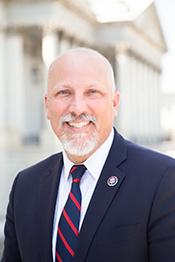
Pappas Follows Successful Call for House to Investigate Prediction Markets with Call for DOJ to Prosecute Suspected Insider Trading
May 15, 2026 Press Release Congressman Chris Pappas (NH-01) joined Congressmen Ted W. Lieu (CA-36) and Sean Casten (IL-06) and 53 House Democrats to urge the Department of Justice (DOJ) to pursue suspected insider trading on prediction market platforms more aggressively. Online prediction markets allow individuals to gamble on the outcomes of a wide variety of real-life events, including sports games, election outcomes, daily stock and commodity price changes, whether certain legislation being considered by Congress will be signed into law, and even geopolitical events such as the likelihood of the United States taking military action against another country or the outcome of diplomatic negotiations. The lawmakers cautioned that: “Trading on confidential, non-public information is illegal in traditional financial markets when it involves fraud, deception, or breach of duty. Failure to enforce these laws in the context of prediction markets risks creating a regulatory gap that rewards bad actors, incentivizes misconduct, and undermines confidence in the integrity of U.S. markets.” They closed by urging DOJ action: “We therefore urge the DOJ to continue to take decisive action against individuals who exploit prediction markets using nonpublic information for personal gain, and to rigorously enforce corporate compliance by ensuring that platforms implement effective safeguards to detect and prevent illegal activity.” The text of the letter can be found here and below: Dear Acting Attorney General Blanche: We write to express serious concerns about potential insider trading on prediction market platforms. Federal anti-fraud and market manipulation laws apply to these platforms, just as they do to traditional financial markets. We urge the Department of Justice (DOJ) to further prioritize criminal investigations and civil actions targeting abuses in prediction markets to protect U.S. financial markets, investors, and the public from fraudulent conduct. Recent suspected violations implicate significant geopolitical, sporting, and cultural events and risk creating perverse incentives for persons with access to confidential or classified information. For example, one anonymous trader has made nearly $1 million from dozens of suspiciously timed and accurate bets on military actions the U.S. has taken against Iran. Another trader with the username “Magamyman” made more than $550,000 from placing bets that Iran’s Supreme Leader would be removed, just before his assassination. In addition, ahead of the Super Bowl LX halftime show, unusually large trades were placed on Polymarket and Kalshi predicting that Lady Gaga and Ricky Martin would perform before there was any public confirmation. One social media user estimated that these suspected insiders made up to $3 million across multiple platforms. Lastly, the Nobel Institute is investigating a bet placed by a newly-created account on Venezuelan opposition leader María Machado winning the Nobel Peace Prize hours before the announcement, resulting in a profit of more than $50,000. Trading on confidential, non-public information is illegal in traditional financial markets when it involves fraud, deception, or breach of duty. Failure to enforce these laws in the context of prediction markets risks creating a regulatory gap that rewards bad actors, incentivizes misconduct, and undermines confidence in the integrity of U.S. markets. The DOJ has pursued several insider trading cases, including in coordination with U.S. financial market regulators, and criminally prosecuted individuals under federal wire fraud statutes. These cases include charging a Coinbase employee for tipping off others with insider information in order to trade cryptocurrencies, prosecuting Biotech’s CEO for misleading investors and engaging in insider trading in connection with Covid-19 and HIV drugs, and bringing charges against individuals who participated in an alleged insider trading scheme involving cancer treatment companies. The DOJ is poised to play an important role in addressing insider trading on prediction markets platforms, while U.S. financial regulators continue to divert their resources towards litigating against states and leave these abuses largely unaddressed. U.S. Attorney for the Southern District of New York Jay Clayton has stated that just “because it’s a prediction market, [it] doesn’t insulate you from fraud.” We appreciate that the DOJ recently took action against a U.S. soldier for allegedly using classified information to make profitable prediction market bets related to the U.S. mission that captured Venezuela’s leader. At the same time, reports that the DOJ dropped its criminal investigation into Polymarket in July 2025, regarding whether the platform had been illegally serving U.S. customers, raise concerns about consistency in enforcement. Polymarket had previously been banned from the U.S. for operating as an unregistered platform and paid a $1.4 million civil penalty under a 2022 settlement agreement. Taken together, these developments risk undermining confidence in the DOJ’s commitment to also holding companies accountable for breaking the law. We understand that this Administration is increasingly focused on gains in the U.S. stock market. That performance depends on integrity and accountability. We therefore urge the DOJ to continue to take decisive action against individuals who exploit prediction markets using nonpublic information for personal gain, and to rigorously enforce corporate compliance by ensuring that platforms implement effective safeguards to detect and prevent illegal activity. Sincerely, Background: Earlier this week, Congressman Chris Pappas (NH-01) called on Congressman James Comer (KY-01), the Chairman of the House Committee on Oversight , to formally open an investigation into corruption and insider trading occurring in online prediction markets by subpoenaing internal records from these markets . On Wednesday morning, during an appearance on FOX, Comer confirmed that he is beginning an investigation and that subpoenas may follow . Pappas supports the Public Integrity in Financial Prediction Markets Act of 2026 , which bans members of Congress and government employees from trading on political prediction markets when they have or could easily get inside information through their jobs, and has led the fight to ban Members of Congress from trading stocks and to strengthen ethical standards across all branches of government since entering Congress . Pappas leads legislation to codify the Office of Congressional Ethics, now called the Office of Congressional Conduct (OCC) , the only independent internal watchdog that probes ethical breaches in Congress. Pappas has repeatedly broken with his own party in support of a stock trading ban. Following his advocacy in 2022, then-Speaker Nancy Pelosi reversed course and announced legislation to ban stock trading by members of Congress would be considered by the House. Pappas has also fought to change House rules to include a ban on members of Congress trading stocks. Over the course of the 119th Congress, Pappas has helped introduce the TRUST in Congress Act and the No Getting Rich in Congress Act and supports the bipartisan effort to force a vote on the Restore Trust in Congress Act . He is also a cosponsor of the Fighting Foreign Influence Act .
9136a31f-d0ff-4a87-a0b7-392542223461Issued within 24 hours
Other senators' releases published in the day before or after this one.