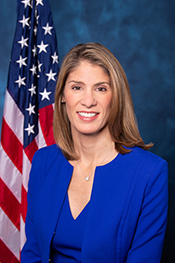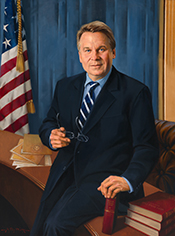
Smith, Moolenaar lead bipartisan letter to Sec. Mullin requesting update on DHS actions to implement and enforce Uyghur Forced Labor Prevention Act
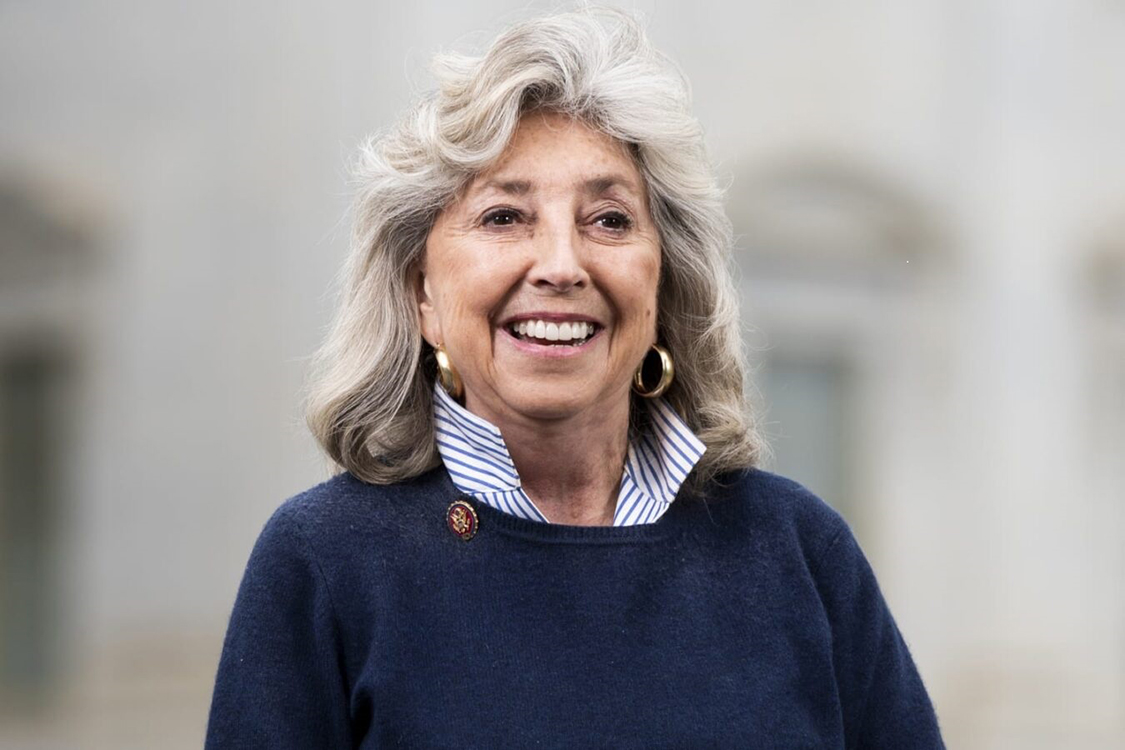
Today, Reps. Chris Smith (R-NJ), Co-Chairman of the Congressional-Executive Commission on China (CECC), and John Moolenaar (R-MI), Chairman of the House Select Committee on China, led six lawmakers in a letter to U.S. Secretary of Homeland Security Markwayne Mullin , requesting a briefing on the U.S. Department of Homeland Security’s (DHS) efforts to prevent goods linked to forced labor from entering the United States, as well as an update on the agency’s actions to implement and enforce the Uyghur Forced Labor Prevention Act (UFLPA). The letter marks another effort led by Rep. Smith—the original author of the landmark Trafficking Victims Protection Act of 2000 (TVPA) ( PL 106-386 )—to combat human trafficking and forced labor, as well as hold the Chinese Communist Party (CCP) accountable for its ongoing campaign of repression against Uyghurs and other predominantly Muslim ethnic groups in the Xinjiang Uyghur Autonomous Region (XUAR). In addition to Reps. Smith and Moolenaar, the letter was signed by CECC Ranking Members Sen. Jeff Merkley (D-OR) and Rep. Jim McGovern (D-MA); Select Committee Ranking Member Rep. Ro Khanna (D-CA) and Members Reps. Young Kim (R-CA) and Carlos A. Gimenez (R-FL); and House Committee on Homeland Security Ranking Member Bennie Thompson (D-MS). “Congress enacted these [trade] laws to ensure that illegally traded goods, particularly those made with forced labor, do not enter U.S. commerce and do not make American consumers complicit in atrocities, including genocide, in the Xinjiang Uyghur Autonomous Region (XUAR),” the group of bicameral and bipartisan lawmakers write. “Strong enforcement protects human rights, supports American workers, and helps ensure that U.S. businesses are not undercut by illegal and unfair trade practices,” they continue. In addition to requesting an update on DHS’ implementation of the UFLPA—with specific references to the forced labor allegations surrounding “Labubu” dolls and Chinese seafood supply chains—the eight Members of Congress urge Sec. Mullin to expand the UFLPA Entity List. “Timely designation is essential to preventing circumvention, deterring violative imports, and ensuring that the law is fully enforced,” the authors note. “If DHS has identified additional resources or authorities needed to strengthen UFLPA Entity List targeting, we welcome the opportunity to discuss those needs.” The DHS briefing requested by the eight Members of Congress should, within 30 days, address the following items: Current DHS, U.S. Customs and Border Protection (CBP), and Forced Labor Enforcement Task Force enforcement priorities across high-risk and priority enforcement sectors, including consumer goods, seafood, textiles and apparel, steel and aluminum, polysilicon, silane gas, silicon-carbon materials, critical minerals, and other advanced materials; Enforcement measures addressing forced labor exposure in seafood supply chains, including vessel-based labor abuses, transshipment practices, and coordination with other federal agencies; The status of efforts to update and expand the UFLPA Entity List and any barriers or resource constraints to the listing of additional entities; Data on shipments detained, released, excluded, or seized under UFLPA and Section 307 authorities, including trends over the past year, sector-specific data, and country-of shipment data; Current evidentiary standards required for importers to rebut the UFLPA presumption, including the types of supply-chain tracing, documentation, and verification CBP currently requires; Staffing levels and resources at CBP and DHS dedicated to UFLPA enforcement and FLETF duties, including any changes since 2024; How DHS is evaluating emerging supply chains, including silicon-carbon battery anodes, critical minerals, and other advanced materials, for forced-labor exposure; DHS’s efforts to investigate forced labor violations and other trade-related crimes, including in partnership with the Department of Justice’s Trade Fraud Task Force launched in August 2025 and other relevant federal agencies; DHS’s bilateral and multilateral engagements with foreign governments to promote enforceable forced-labor import bans, reduce diversion and transshipment, and strengthen international supply-chain accountability; and How DHS is leveraging artificial intelligence to validate shipment country-of-origin and supply-chain documentation to identify potential UFLPA violations or other inconsistencies in shipment data. ###
92d6c53a-c8c2-49f5-8816-15bf5ccbb0f1Issued within 24 hours
Other senators' releases published in the day before or after this one.