Booker, Hayes Reintroduce Bicameral Legislation to Strengthen Environmental Education and Sustainability Literacy in Schools
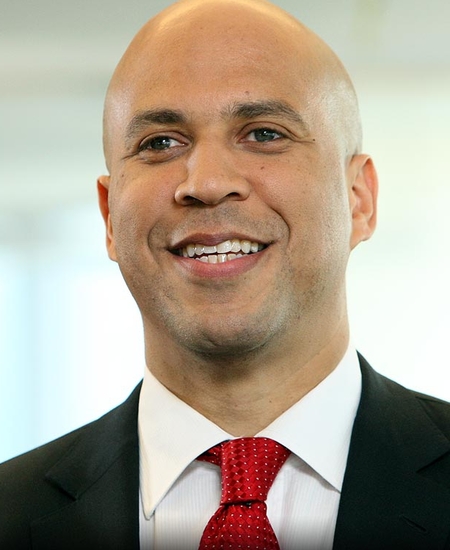
WASHINGTON, D.C. — U.S. Senator Cory Booker (D-NJ) and U.S. Representative Jahana Hayes (D-CT) have reintroduced the Green Ribbon Act , bicameral legislation designed to expand environmental education, promote health and wellness, and strengthen sustainability literacy in schools nationwide. The bill builds on the success of the U.S. Department of Education’s ED-Green Ribbon Schools Program, first established in 2011. The ED-Green Ribbon Schools (ED-GRS) Program is a federal recognition initiative that highlights schools, districts, postsecondary institutions, and early learning centers that implement cost-saving, health-promoting, and performance-enhancing sustainability practices. Since its launch, ED-GRS has honored more than 700 awardees—over 40 percent of which serve resource-constrained communities—helping drive the adoption of environmentally responsible practices across the nation’s education system. The program last issued awards in 2024. The Trump Administration quietly wound down the program last year, terminating more than a decade of recognitions. “Schools across the country are demonstrating that sustainability initiatives can lower costs, improve student health, and strengthen educational outcomes,” said Senator Booker . “This bicameral legislation builds on the success of the ED-Green Ribbon Schools Program by helping more schools—especially in underserved communities—adopt sustainable practices that improve air quality, reduce energy costs, expand environmental learning opportunities, and create healthier environments where students and communities can thrive.” “Expanding the Green Ribbon Schools program would encourage more students, faculty, and administrators to incorporate sustainable practices in schools, especially those in underserved communities,” said Congresswoman Hayes . “I am pleased to introduce the Green Ribbon Act with Senator Booker to strengthen environmental education and sustainability initiatives in schools.” The Green Ribbon Act includes three major components: Give the current program greater impact by strengthening the pipeline of school applicants for the award through greater engagement by participating states. Provide federal award winners with a modest honorarium, which would further encourage more applicants while enabling winners to join their peers in Washington, D.C. for the annual award ceremony. Extend the program to include awards for nonformal learning institutions (museums, libraries, zoos, aquaria, etc.), with the award program managed by the Institute of Museum and Library Services. The Green Ribbon Act is cosponsored by U.S. Senators Alex Padilla (D-CA), Ed Markey (D-MA), Dick Durbin (D-IL), and Ben Ray Luján (D-NM). The Green Ribbon Act is endorsed by the 21st Century School Fund, Action for the Climate Emergency, the American Federation of Teachers, the Association for the Advancement of Sustainability in Higher Education, Campaign for Climate Literacy, the Captain Planet Foundation, the Center for Green Schools at the U.S. Green Building Council, EcoRise, the Go Green Initiative, the Green Schools National Network, Green Schoolyards America, the International WELL Building Institute, the National Center for Science Education, the National Education Association, the National Wildlife Federation, New Buildings Institute, the North American Association for Environmental Education, SEI (Strategic Energy Innovations), the State Education and Environment Roundtable, the Cloud Institute for Sustainability Education, the Wild Center, Ten Strands, UndauntedK12, the U.S. Partnership for Education for Sustainable Development, and the Xerces Society for Invertebrate Conservation. Read the full text of the bill here.
9cbca9ad-cd53-42e7-b923-6798bf0a3c8bEdit history (1 prior version)
This release was edited after publication. Earlier captures are preserved below.
- Captured Jun 26, 2026, 1:36 PM EDT
Show prior body text
WASHINGTON, D.C. — U.S. Senator Cory Booker (D-NJ) and U.S. Representative Jahana Hayes (D-CT) have reintroduced the Green Ribbon Act , bicameral legislation designed to expand environmental education, promote health and wellness, and strengthen sustainability literacy in schools nationwide. The bill builds on the success of the U.S. Department of Education’s ED-Green Ribbon Schools Program, first established in 2011. The ED-Green Ribbon Schools (ED-GRS) Program is a federal recognition initiative that highlights schools, districts, postsecondary institutions, and early learning centers that implement cost-saving, health-promoting, and performance-enhancing sustainability practices. Since its launch, ED-GRS has honored more than 700 awardees—over 40 percent of which serve resource-constrained communities—helping drive the adoption of environmentally responsible practices across the nation’s education system. The program last issued awards in 2024. The Trump Administration quietly wound down the program last year, terminating more than a decade of recognitions. “Schools across the country are demonstrating that sustainability initiatives can lower costs, improve student health, and strengthen educational outcomes,” said Senator Booker . “This bicameral legislation builds on the success of the ED-Green Ribbon Schools Program by helping more schools—especially in underserved communities—adopt sustainable practices that improve air quality, reduce energy costs, expand environmental learning opportunities, and create healthier environments where students and communities can thrive.” “Expanding the Green Ribbon Schools program would encourage more students, faculty, and administrators to incorporate sustainable practices in schools, especially those in underserved communities,” said Congresswoman Hayes . “I am pleased to introduce the Green Ribbon Act with Senator Booker to strengthen environmental education and sustainability initiatives in schools.” The Green Ribbon Act includes three major components: Give the current program greater impact by strengthening the pipeline of school applicants for the award through greater engagement by participating states. Provide federal award winners with a modest honorarium, which would further encourage more applicants while enabling winners to join their peers in Washington, D.C. for the annual award ceremony. Extend the program to include awards for nonformal learning institutions (museums, libraries, zoos, aquaria, etc.), with the award program managed by the Institute of Museum and Library Services. Read the full text of the bill here.
Issued within 24 hours
Other senators' releases published in the day before or after this one.