May 13th, 2026Heinrich Joins 535 News to Discuss the Trump Administration's War on the West, Including Attacks on Public Lands, Wildland Fire Response, and Cost of Living
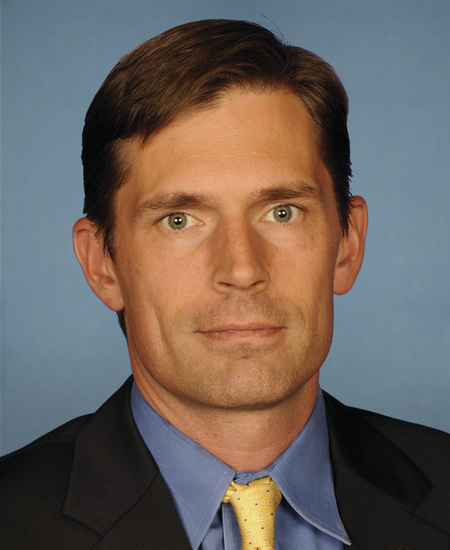
Video here WASHINGTON — U.S. Senator Martin Heinrich (D-N.M.), Ranking Member of the U.S. Senate Energy and Natural Resources Committee, appeared on 535 News with Igor Bobic where he spoke about President Trump’s war on the west — including attacks on public lands, wildland fire response, and skyrocketing gas prices. U.S. Senator Martin Heinrich, Ranking Member of the U.S. Senate Energy and Natural Resources Committee, live on 535 News with Igor Bobic, May 12, 2026. On President Trump Skyrocketing Electricity Prices: Igor Bobic: “What is Congress doing about these rising energy costs?” Senator Heinrich : “Well, we have a lot that we can be doing about rising energy costs, and unfortunately, we're at a time when the administration is making policy decisions that is moving the needle in the wrong direction. “So, whether that's the war in Iran, which has really driven gasoline and diesel prices incredibly high. Whether that was the tariffs that they put on all sorts of feed stocks to be able to generate electricity. Whether it's even, you know, the fact that they are slow walking, and have even issued stop work orders on cheap, clean generation because they disagree with the kind of color of electrons that you're putting on the, on the grid. Everything they've been doing is moving things in the wrong direction. So, resolving the war in Iran, getting rid of tariffs for good, putting more projects onto the grid — especially clean energy projects that right now are the cheapest electrons available — all of those things are what Congress should be doing.” On the Trump Administration Killing Clean Energy Projects that Would Have Lowered Utility Bills: Bobic: “ Is now the time to talk about renewables? And what kind of conversations are you having in Congress right now on the other side of the aisle?” Heinrich: “Well I think the most productive conversations are around permitting reform. And you know, I think to the extent that we can get rid of administrative discretion for both parties in terms of permitting, gives people the kind of certainty that they need to invest in the market. Renewables are cheaper right now. They're faster to develop. If we had a level playing field, in terms of permitting, they’d outperform the rest of the market.” Bobic: “Why is the president so averse to renewables like wind?” Heinrich: “Apparently, he saw some wind turbines offshore at one of his golf resorts, and that had some sort of personal impact on him. I believe that we should be developing our economy. You know, we're going to go through an energy transition. That should be a planned energy transition. We should embrace cheaper sources of electricity and energy broadly. And so, I think to the extent that we can work on bipartisan, durable solutions, I think that's the best path forward for the country.” Bobic: “Summer is coming up, obviously. How concerned are you about the energy grid right now? Ahead of summer? Obviously, a lot of trouble spots.” Heinrich: “There are a lot of trouble spots. I think it would help dramatically if we could get some of these projects — that have gone all the way through the regulatory process and are ready for a signature from a secretary — if we could get those connected to the grid. The faster we can connect those, the fewer problems we'll have.” On Permitting Reform Discussions in Congress: Bobic: “You mentioned permitting reform. Obviously, a lot of bipartisan interest in speeding up how we build, and the time it takes to build both renewable projects, oil projects, housing. So many issues there. You announced back in March, I believe, that you were restarting discussions about permitting reform with Republicans. How is that going? What is the state of play right now?” Heinrich: “I think the conversations have been very productive. And we had a good starting place because we did an effort in the last Congress that didn't make it across the finish line. But which, I think, had a really balanced and effective approach to things. So we didn't start from zero. “I think the biggest threat to permitting reform, right now, is the bad faith that this administration is showing. So, we've had a court ruling saying: ‘What the Secretary of Interior was doing — and not permitting fully vetted projects — is illegal.’ But those projects aren't moving off his desk. And then, when you look at the Department of Defense, there are something like 150 generation projects that have been just frozen at DOD — that would put cheap electrons onto the grid as well. So, when you show that sort of bad faith, it makes it harder for me, especially, to get individual senators in my caucus to embrace permitting reform if they think it's only going to be applied to one side of the ledger.” On the Trump Administration Undermining the Forest Service’s Firefighting Efforts: Bobic: “Are you worried about this upcoming fire season and what that's going to mean for, you know, Congress, policy here?” Heinrich: “I am deeply worried. I mean we're just looking at a Forest Service that has thousands fewer frontline staff than they did a year and a half ago. That concerns me. I'm seeing the numbers come back, in terms of the acres treated for fuels reductions, down something like 30 percent. That worries me. And you know managing our forests responsibly, and preparing and preventing wildfire, those are not partisan issues in the west. This fire season, I think, has everyone losing sleep.” Bobic: “You mentioned earlier these cuts at Interior. How are those going to affect, you know, how we address things like wildfires in this country?” Henrich: “It makes us less prepared. And we just have fewer people on the ground. You know, we also have the administration talking about moving the fire response from the Forest Service to Interior. I don't know if that's a good idea or a bad idea. But I sure as hell want to understand exactly how it's going to work before they pull the trigger. And I would hope that they wouldn't rearrange the deck chairs in the middle of the fire season. That's something to figure out ahead of time. Make sure you have fully vetted ideas. Understand how everybody's going to fulfill their role before you ever make a decision like that. Because it has life and death consequences for my constituents.” On Senate Republicans Using Congressional Review Act (CRA) Resolutions to Sell Off Public Lands: Bobic: “ You mentioned Boundary Waters, obviously a big vote last month. Are you prepared for similar actions to come from your Republican colleagues on this front, similar CRAs, and do you see that action by them as a precedent for future Congresses?” Heinrich: “ It's absolutely a precedent, and it's a terrible precedent. They basically changed the rules. CRAs were created as a legislative tool to deal with overreach in regulations — not land use plans. So, this is a brand-new way of them getting around the filibuster to be able to develop and give a Chilean mining company basically our copper. So that they can send it to China, refine it, and sell it back to us with a tariff on top — ironically enough. It shows that lack of balance. “And if there's a place where we should be cautious, my goodness, it's the Boundary Waters. I mean, it is such an impressive place. My family's been there. Teddy Roosevelt really worked hard to make sure that it was protected in perpetuity. And putting a copper sulfide mine right in the head waters of that special place... I just think that is the poster child of not having a balanced, thoughtful approach to development on public lands.” On Senate Republicans’ Attempts to Fund President Trump’s Illegal War with Iran: Bobic: “Could that sweeten the deal? Perhaps to get your vote on something like Iran funding? That's what they've talked about. Try to include it as part of a war funding package to help get some of these western Republicans and also some Democratic votes there. Do you think that's possible?” Heinrich: “Budget reconciliation is such a hyperpartisan tool. I think that's a heavy lift. And certainly, the kind of irresponsible spending that we've seen on a war that the American people don't support. [Trump’s war] that is raising their gas prices, and raising their diesel prices, and that diesel number is raising their grocery prices. That's a pretty big lift. I could not imagine voting for something like that.” ###
9f321e3d-8418-4bf2-9ed0-8c133d586846Issued within 24 hours
Other senators' releases published in the day before or after this one.