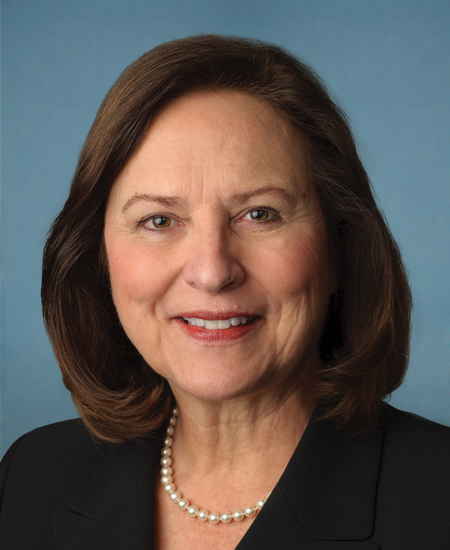
ICYMI: Fischer Makes Case for Strong, Modern U.S. Nuclear Deterrent on Atlantic Council Podcast
WASHINGTON – U.S. Senator Deb Fischer (R-NE), a senior member of the Senate Armed Services Committee (SASC), joined the Atlantic Council ’s “ So What’s the Strategy? ” podcast to share her vision for strengthening America’s nuclear deterrent amid growing threats from China and Russia. During the conversation, Fischer – who chairs the SASC Strategic Forces Subcommittee – outlined the need to modernize U.S. nuclear forces, maintain a credible nuclear triad, and ensure America has the capabilities necessary to deter its adversaries and protect its allies. Watch the full discussion here or by clicking the image above. On the cost of nuclear modernization : “Why spend so much? What’s our security worth? That’s what it boils down to. “What risks are we willing to take as a country, as a world, if the United States doesn’t follow through and continue our modernization? Can we meet those threats? “It’s a very small percentage of our defense spending in this country. But as I said earlier, it is the bedrock of our security. And it’s not just for us. We also offer a secure nuclear umbrella for our allies and partners. That keeps the world safer. We don’t see nuclear proliferation around the world because of that. It’s called deterrence for a reason. “We don’t ever want to have to use a nuclear weapon, but our adversaries need to know that we have a safe, credible, and secure triad, and we will use it if it becomes necessary.” On nuclear deterrence and assurance : “We always want our adversaries—we want everyone—to wake up every morning and say, ‘Not today. We are not going to do anything against the United States. Not today. Too risky .’” On the type of nuclear capabilities the U.S. needs : “ I believe we have certain capabilities that are the base of our deterrence. Whether that’s our ICBMs—the Sentinel program—that’s a program that has to happen. It has had some bumps in the road, but we have General White now … to handle that. We established that position to make sure whoever was in charge of that program, along with the bombers, would have a direct line to the secretary and could make things happen faster. “The Sentinel program is obviously our land-based leg. That has to remain strong. It’s going to give the president more options once it is installed and able to perform. … “Right now … we have a contract for 100 B-21 bombers. We’ve had every STRATCOM commander say that’s not enough. And it’s not enough. Whether it’s 150 or, now they’re talking about 200, that’s another important leg of the triad. “These bombers have to cover not just STRATCOM’s needs but also [PACOM’s] needs in a more conventional sense because of the capabilities they have. “Then, when we look at our subs, we’re really focused on the Columbia class to make sure that moves ahead. There’s a good argument to be made—and I think we ought to investigate it—that we should probably have more when you look at the maintenance required. That applies to the bombers as well. “When you look at maintenance time, especially on submarines, and we’re facing two peer adversaries who also have triads—land-based missiles, bombers, and subs—we need to make sure that’s covered. “We need more shipbuilding. We need to be able to look at new, more regional options that a president could tap into. “We heard many years ago in the Senate about Russia’s policy to ‘escalate to de-escalate.’ They never thought, with the size of the weapons the United States has, that we would ever respond. It lowered the credibility of our deterrence. … “ We want to make sure we have what we need to offer the president of the United States options that keep this country and our allies safe .” On the president’s $1.5 trillion defense budget request : “ I applaud the president for putting that number forward. I think it’s a firm number that addresses many of the threats we have. “You can look at things like hypersonics. You can look at things like Golden Dome, which I would point out we were able to get into the 2024 NDAA for FY 2025—the framework for the idea that we needed this layered defense system with radars, satellites, and interceptors. “That came from within Congress. It came from a bipartisan group of senators. I’m very pleased the president picked up on that and named it Golden Dome. “That is what we need to recognize the threats to our homeland. The missile defense system we need for this country has to be bolstered, and having Golden Dome move forward will help with that. “We had $24 billion … last year. That’s a start, but it’s going to take sustained commitment and appropriations to get that don e.” “…To me, the lack of [consistent] funding and the lack of certainty are concerns. “…We’re looking at CRs, which are devastating to our defense and national security. “ It’s important that we focus on regular order and on working together again in a bipartisan way to make sure we can fund what we need … to keep this country safe .” On arms control : “ I think arms control is important… But let’s look at history. “Russia has never been steady in its support of any treaty… They ignore it or they pull out. They pulled out of New START in 2023… “China has never participated in any talks and, as far as I know, publicly has never given any indication that they would participate in talks. “In fact, I was with a small group of senators the week before President Trump went to China, and we met with a number of officials. I asked about arms control. I think that might have thrown them a little bit, but I asked about it. “Their idea of arms control is that the United States should totally get rid of what we have, and then they’ll be happy to talk. Why would we do that? We would make ourselves vulnerable. “So I believe the strongest position we can take is to continue to strengthen what we need to meet the threats. “ Hopefully, we can engage in arms control, but it has to be with Russia and China. It can’t just be with one or the other because all that does is weaken us .” “… If the Chinese didn’t want to enter into discussions with Russia and the United States, they still need to enter into discussions with us and have those two tracks move side by side. “But I think having all three together would be the best way to have a solid arms control treaty come out of it. I don’t see that happening.” On the credibility of the U.S. nuclear umbrella for our allies : “I think it’s extremely important for the security not just of our country, but around the world, that we continue to provide that umbrella to our allies. “Let’s not forget that NATO is a nuclear alliance. That’s important for our allies to know—that we will continue to provide that. “It’s important that our EUCOM commander is also the Supreme Allied Commander Europe because of that nuclear component in NATO. “But I also hope it emboldens our allies to step forward, which they are doing in NATO and Europe, and provide more for their own security in their regions. “It’s difficult for the United States. It’s expensive for the United States to be everywhere. “So, when we have our allies in Europe and our partners and friends in the Pacific willing to work with us to provide security in those regions, that only makes America stronger and more secure. “I believe we have to continue developing and strengthening those relationships.” ###
af9c9e4c-a97e-4b52-a210-837acd4d1fd3Issued within 24 hours
Other senators' releases published in the day before or after this one.