Press Release
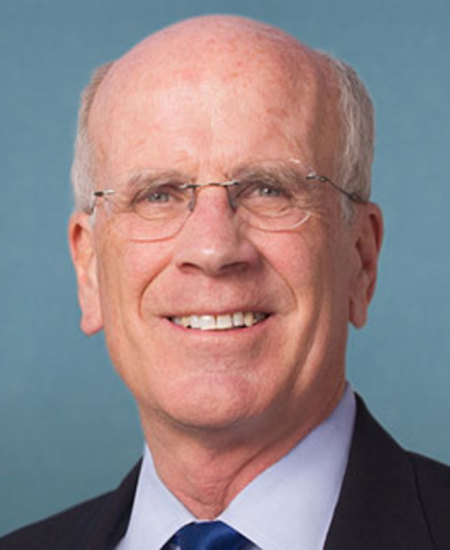
Bipartisan legislation would address the use of non-consensual digital replications in audiovisual works or sound recordings WASHINGTON, D.C. — U.S. Senator Peter Welc h (D-Vt.) , a member of the Senate Judiciary Subcommittee on Intellectual Property , today expressed support for the advancement of the Nurture Originals, Foster Art, and Keep Entertainment Safe Act (NO FAKES) Act , bipartisan legislation led by Senate Judiciary Committees colleagues Senator Marsha Blackburn (R-Tenn.) and Chris Coons (D-Del.) , which would empower artists to access the courts to protect their copyrighted works when they are used to train generative AI models, and protect creators from harmful deepfakes. “My colleague and our U.S. Representative in Congress, Becca Balint, had a deep-fake experience…It was pretty appalling. It was her image; it was her voice. It was not her words; it was not satire. It was asserting—through her mouth—positions that she absolutely and completely is against. And there was no indication that this was AI-enhanced. The reality of the world we live in is that it is very difficult for people to see that this is a fake; that this was a fake, and it was totally and completely realistic,” said Senator Welch . “The NO FAKES Act , I believe, is necessary to protect truth, identity, and creativity. So, I’m happy to be a cosponsor. But I think that none of us can underestimate the perils of what happens when image and likeness is appropriated illegally, now, to create confusion and chaos,” the Senator concluded . Watch the Senator’s remarks below : The NO FAKES Act would address the use of non-consensual digital replications in audiovisual works or sound recordings. Learn more about the bill here . In April, Senators Welch and Blackburn held a roundtable on Capitol Hill with more than 20 artists to discuss the Senators’ bipartisan TRAIN Act , which would help creators access the courts to protect their copyrighted works if and when they are used to train generative AI models. The artists visited Capitol Hill as part of the Recording Academy’s GRAMMYs on the Hill Advocacy Day. Currently, there is no reliable way for copyright owners to determine if AI companies used their works without permission to train AI models. Copyright owners—particularly small creators—are struggling to navigate novel legal issues posed by AI copying their work. There are very few AI companies that share how their models were trained and nothing in current law requires them to disclose training materials to creators. With the rapid advance of generative AI, artists and creators have already begun to see their voices and likenesses used without their consent in videos and songs created as nearly indistinguishable replicas. ###
b73e1d51-2169-4c52-9e19-4b2bd3291697Issued within 24 hours
Other senators' releases published in the day before or after this one.