Rep. Steube Introduces FLAFO Act to Rein In Warrantless ‘Flock Safety’ Surveillance
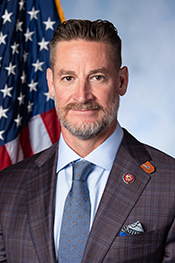
September 25, 2026 | Press Releases Rep. Steube Introduces FLAFO Act to Rein In Warrantless ‘Flock Safety’ Surveillance WASHINGTON – U.S. Representative Greg Steube (R-Fla.) today introduced the Facilitating Liberty and Accountability for Flock Observations ( FLAFO) Act, legislation prohibiting federal agencies from purchasing, leasing, operating, accessing, or sharing data with networked Automated License Plate Reader surveillance systems without a judicial warrant. The bill also conditions Department of Justice federal grant funding for state, local, and tribal law enforcement agencies on the adoption of substantially similar privacy regulations. “The Fourth Amendment is not optional. Americans should not be tracked everywhere they drive without a warrant,” said Rep. Steube. “Flock Safety’s surveillance network is expansive, and we have seen several instances across the country where this technology is too easily abused. The FLAFO Act limits warrantless surveillance by ALPR systems because the government has no business tracking law-abiding Americans.” Automated license plate reader systems, or ALPR systems, utilize cameras, sensors, or associated hardware or software systems to automatically capture, record, analyze, process, aggregate, or store a motor vehicle license plate, image, location, date, time, or other identifying vehicle information or characteristic. Flock Safety is the industry leader, accounting for more than 80 percent of ALPR systems operating in the U.S., but the FLAFO Act would also cover any other company utilizing ALPR systems. Automated license plate reader technology has expanded from localized tools for identifying criminal activity into large-scale surveillance mechanisms capable of aggregating sensitive location information across jurisdictions. By using artificial intelligence and machine learning, covered ALPR systems aggregate vehicle data into centralized databases, enabling detailed tracking of individuals’ movements, associations, and daily routines without individualized suspicion. The need for strict safeguards and federal oversight has been underscored by widespread reports of law enforcement officers abusing Flock camera networks to spy on personal acquaintances and conduct unauthorized searches. Recent investigations in Florida, Indiana, Illinois, and Wisconsin, have exposed officers using ALPR databases improperly, leading to administrative suspensions, resignations, and criminal reviews. Investigations across multiple law enforcement agencies have documented alleged misuse of Flock Safety technology, highlighting the severe gaps in centralized surveillance databases. Commercial operators and government entities have deployed networked ALPR systems across multi-jurisdictional databases with limited safeguards, allowing users to conduct historical searches across jurisdictions and track vehicles based on visual characteristics beyond license plate numbers. Federal agencies should not provide support or authorization for surveillance practices that infringe upon constitutionally protected civil liberties. The FLAFO Act closes that gap by prohibiting federal agencies from purchasing, leasing, operating, accessing, or supplying data to covered ALPR systems without a judicial warrant, while preserving limited exceptions for immediate threats to life, safety, and national security. The full text of the FLAFO Act is available here . ###
c56abf4b-3659-4190-879a-3547adb11702Issued within 24 hours
Other senators' releases published in the day before or after this one.