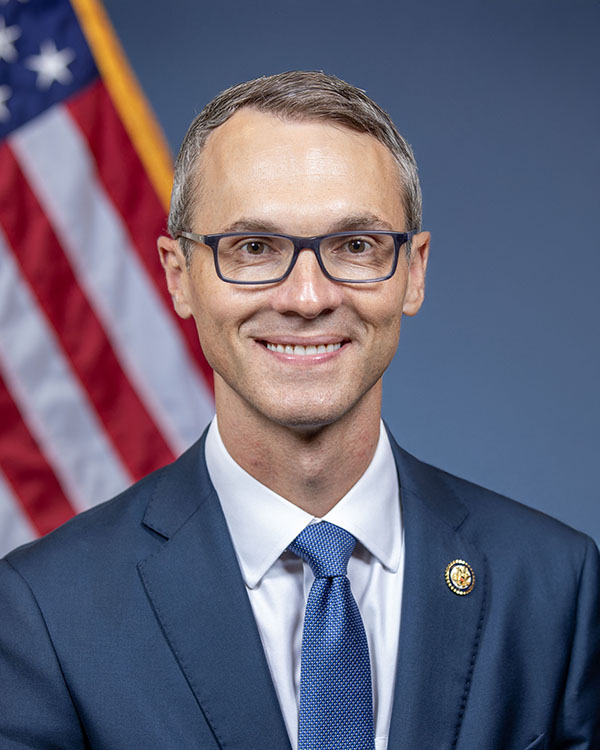
The Catholic Herald Op-Ed by Rep. Smith'Beijing's new ethnic unity law threatens faith, culture and freedom'
By Rep. Chris Smith & Miriam Lexmann MEP Published June 15, 2026 at 9:00 PM Beijing calls its new law “ethnic unity.” The phrase is meant to reassure the world. It should alarm it. Every country needs social peace. Every nation needs a shared civic identity. But the Chinese Communist Party is not asking Tibetans, Uyghurs, Mongols, Hui Muslims, Manchus, Cantonese speakers and others to participate equally in a common future. It is demanding that their languages, faiths, memories and children be remade to fit a Party-approved mold. That is not unity. It is erasure. Catholics should recognise this pattern. In China, even the public and institutional life of the Church is tolerated only insofar as it can be managed, monitored and made subordinate to the Party’s political ends – a reality that should weigh heavily on every discussion of Beijing’s promises of “harmony.” China officially recognises 56 ethnic groups yet increasingly treats many of them as acceptable for ceremonies, tourism and propaganda, but dangerous when they preserve their languages, practise their faiths or teach their children who they are. Adopted in March and set to take effect in July, the law gives state power to a campaign to “forge” a single national identity. In practice, that means Mandarin-first education, ideological indoctrination, pressure on religious communities to conform to Party doctrine and punishment for those accused of “damaging ethnic unity.” The law also reaches beyond China’s borders. Its extraterritorial provisions could place Uyghurs, Tibetans, Chinese dissidents, scholars, journalists, human rights defenders and advocates at risk in Europe, North America and across the democratic world. Beijing is claiming the right to punish speech and advocacy even when exercised on free soil. The danger is not theoretical. The law gives legal cover to abuses already underway in the Uyghur Region and Tibet. In the Uyghur Region, democratic governments and parliaments have recognised or condemned grave crimes against Uyghurs and other Turkic and Muslim peoples: mass detention, forced labour, forced sterilisation, family separation and the destruction or closure of mosques and other religious sites. People have been punished for ordinary expressions of faith, language and identity. In Tibet, assimilation has been aimed directly at children. United Nations experts have warned that roughly one million Tibetan children are forced to attend state-run residential schools designed to assimilate them culturally, religiously and linguistically into majority Han Chinese culture. This is how cultural erasure works: remove the child from the family, remove the language from the child, sever faith from daily life and call the result progress. Beijing will claim the law promotes harmony and development. But real harmony does not require a Tibetan child to lose Tibetan. Real development does not require a Uyghur family to live in fear of detention or separation. Real national unity does not need police, informants, boarding schools, forced labour programmes or internment camps. The United States, the European Union, the United Kingdom, Canada and other democratic partners should respond with more than statements of concern. First, transatlantic leaders should make clear that implementation of this law will carry consequences for relations with Beijing. Threats against people exercising their rights in Washington, Brussels, London, Prague, Berlin or anywhere else in the free world cannot be tolerated. Second, democratic governments should coordinate sanctions against officials and entities responsible for coercive boarding schools, religious repression, forced labour and transnational repression. The United States, the European Union, the United Kingdom and Canada already have powerful human rights sanctions tools. They should use them together. Third, national parliaments and legislatures across the democratic world should condemn this law for what it is and fund the survival of what Beijing is trying to erase. That means supporting language preservation, religious freedom, independent media, digital security and public diplomacy that reaches communities under pressure in their own languages. Fourth, transatlantic partners should raise the reputational cost of Beijing’s treaty violations. China has signed and ratified international commitments to protect children, family integrity, cultural life, religious practice and ethnic minorities. The Chinese Communist Party cares deeply about its global image. Democratic governments should press this issue at the United Nations Security Council, in the G20, at the Organization for Security and Co-operation in Europe and in every forum where Beijing seeks legitimacy for its autocratic model. Finally, the free world must recognise that this is not only a human rights issue. It is a strategic one. The contest with the Chinese Communist Party is not only about ships, chips and markets. It is about whether the world will accept Beijing’s claim that autocratic control is superior to democratic freedom. This law shows what that claim means in practice. Children are cut off from their mother tongue. Faith is subordinated to politics. Families are separated. Speech abroad becomes a threat to the state. Identity itself becomes a security problem. Pope Leo XIV recently asked the faithful to pray for Catholics in China, that they may bear witness to the Gospel amid daily trials and become seeds of hope and peace. That prayer is not an abstraction; it is a summons to conscience. The transatlantic community should answer by standing with all those in China whose worship, language and family life the Party seeks to control – and by saying plainly what Beijing is trying to hide: no government has the right to erase a people and call it unity. Representative Chris Smith is the Co-chair of both the Congressional-Executive Commission on China and the Tom Lantos Human Rights Commission. Miriam Lexmann is a Slovak EU member of Parliament for KDH/EPP. Both are known for their work on democracy, human rights and foreign policy and are members of the Inter-Parliamentary Alliance on China (IPAC). This article was published online on June 15, 2026 and can be found at https://thecatholicherald.com/article/beijings-new-ethnic-unity-law-threatens-faith-culture-and-freedom
d080c6ea-63bf-4cb8-b1b1-a7f43a7000f7Issued within 24 hours
Other senators' releases published in the day before or after this one.