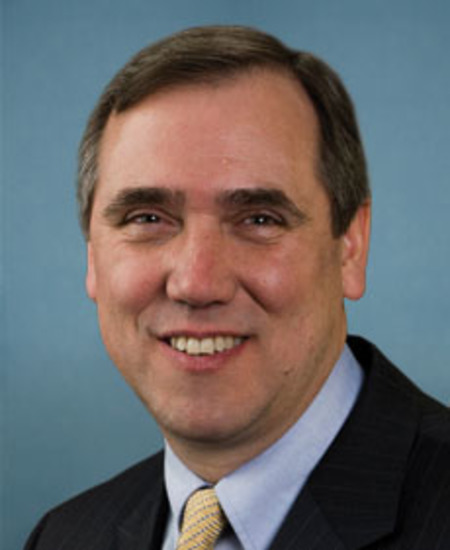
Merkley: Bipartisan Water Infrastructure Bill Advances in the U.S. Senate, Includes Key Priorities for Oregon
Merkley: Bipartisan Water Infrastructure Bill Advances in the U.S. Senate, Includes Key Priorities for Oregon July 16, 2026 Washington, D.C. – Oregon’s U.S. Senator Jeff Merkley—a senior member of the Senate Environment and Public Works (EPW) Committee—announced today the Water Resources Development Act (WRDA) of 2026 cleared a key hurdle by passing out of the EPW Committee. WRDA is critical, bipartisan legislation that authorizes U.S. Army Corps of Engineers (USACE) projects and policy initiatives in Oregon and across the nation. This includes maintaining Oregon’s ports, inland waterways, locks, dams, and other water infrastructure, as well as supporting flood and coastal storm management and ecosystem restoration work. The bipartisan bill now heads to the full Senate for a vote. “ WRDA 2026 has a lot of wins for our state, and I am pleased these critical Oregon priorities are one step closer to becoming law. I’ll keep fighting to ensure our waterways and water infrastructure are well-maintained and resilient for generations to come ,” said Merkley, who helped write the bill as a senior member of the Senate Environment and Public Works Committee. “Oregon’s coast and rivers are the lifeblood of our state. Updating and modernizing aging water infrastructure—including ports, levees, dams and much more—will better prepare our communities for droughts and floods and improve access to safe, reliable drinking water.” WRDA 2026 includes several projects and policy initiatives that benefit Oregon: Cole Rivers Hatchery – Prioritizes the completion of the hatchery project. Columbia River Treaty – Extends the flood risk management provision from the Columbia River Treaty through 2029. Columbia River Clean-Up Act – Includes this bill led by Senator Merkley and Representative Hoyle (OR-04) to reauthorize the region’s Geographic Program that helps reduce toxins in the Basin. Coos Bay – Clarifies that in the construction of the container port, the Corps will be responsible for routine maintenance up until the authorized depth level. Financial Assistance for Drawdown Impacted Communities – Authorizes a new Environmental Infrastructure Authority at $33 million for communities impacted by deep drawdowns in the Willamette Valley System and provides a mechanism for communities to access Emergency Army Corps funding for emergency clean water supply. Flood Risk Reduction – Authorizes a feasibility study for a flood risk reduction and watershed resilience project in Hood River County. Harmful Algal Blooms – Authorizes a project to mitigate harmful algal blooms at Ross Island Lagoon. Leaburg and McKenzie Hatchery Water Supply – Authorizes a feasibility study for the water supply at this fish hatchery. Lower Columbia River Turning Basin Improvements – Authorizes the construction of improvements to the Turning Basin near Longview, Washington, to enhance safety on the Columbia River. Tillamook Bay – Authorizes the establishment of a stepped channel and routine dredging at the entrance of Tillamook Bay to reduce hazards of breaking surf and restore predictable navigation conditions to the bay. Section 219 Environmental Infrastructure Authority – Modifies the most significant Environmental Infrastructure authority, Section 219, to allow non-Federal interests to lead design and construction and receive reimbursement for the Federal share of costs, which will streamline implementation and lower costs. Dredged Material Management Plan – Modifies the cost share to alleviate financial burdens for the construction of aquatic disposal facilities to hold dredged material. Aquatic Nuisance Funding – Modifies the cost share for the Corps’ Aquatic Invasive Species Program to 35 percent. Land Use – Removes restrictive covenants for federal land for the Confederated Tribes of the Umatilla Indian Reservation. Small Ports – Prioritizes the publication of implementation guidance from WRDA 2024 to assist with projects at emerging harbors (marina dredging). WRDA 2026 also contains critical Environmental Protection Agency (EPA) water infrastructure programs under the Drinking Water and Wastewater Infrastructure Act . Highlights include: Strengthening the Clean Water and Drinking Water State Revolving Funds, which provide funding for water and wastewater projects across the country. Clean Water State Revolving Fund (SRF) – $3.5 billion per year. Drinking Water State Revolving Fund (SRF) – $3.75 billion in FY 2027, increasing by $25 billion each year to reach $4.5 billion by FY 2030. Authorizes new uses for the Drinking Water SRF for rural and high-fire-risk communities that have projects that benefit drinking water and fire suppression activities. Increasing funding for the Merkley-created program Water Infrastructure Finance and Innovation Act (WIFIA) to $65 million. Supporting key programs and initiatives to reduce plastics in our environment such as: The Solid Waste Infrastructure for Recycling Grant Program at $55 million. The Trash Free Waters Progra
d4c3ed3e-ef79-479f-81d1-bda67455d0f0Issued within 24 hours
Other senators' releases published in the day before or after this one.