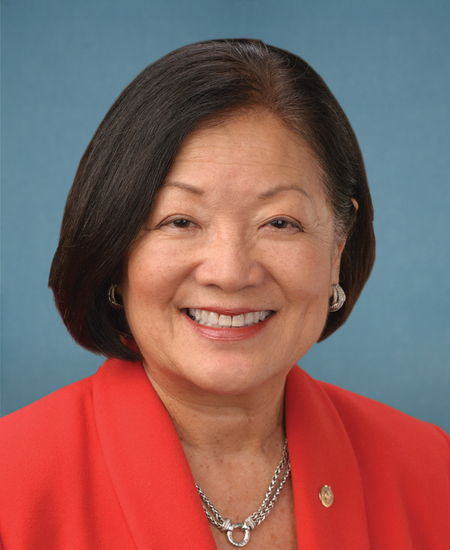
Hirono, Murphy, Kelly, Schiff Slam Attorney General Blanche for Illegally Allowing Sale of Guns to Teenagers, Increasing Likelihood of School Shootings
WASHINGTON, D.C. - U.S. Senator Mazie K. Hirono (D-HI) joined Senators Chris Murphy (D-CT), Mark Kelly (D-AZ), and Adam Schiff (D-CA) on Friday in a letter to U.S. Attorney General Todd Blanche demanding answers regarding the U.S. Department of Justice’s (DOJ) decision to break with decades of precedent and unilaterally refuse to enforce a prohibition against the sale of handguns to people under the age of 21. The Senators highlighted the enormous risks to public safety when teens have access to handguns: “The public safety implications of this decision are clear. Numerous mass shootings have been committed by perpetrators between the ages of 18 and 20, including the shooting at Robb Elementary School in Uvalde, Texas, where an 18-year-old fatally shot 19 students and two teachers and injured 18 others, as well as the shootings at a supermarket in Buffalo, New York; an Indianapolis FedEx facility and Marjory Stoneman Douglas High School in Parkland, Florida. These tragic examples underscore the public safety considerations at stake and the serious risks Congress sought to address.” The Senators laid out the decades-long, bipartisan consensus to ban gun dealers from selling firearms to teenagers: “Congress enacted this prohibition as part of the Gun Control Act of 1968, clearly stating that ‘it shall be unlawful’ for a [federally licensed firearms dealer] to sell or transfer a handgun to a person under age 21. Nearly 60 years later, the Department’s decision to stop enforcing this provision comes not because Congress repealed or amended the law, but because the Executive Branch has independently concluded that these provisions are unconstitutional. This decision raises serious questions about the Department’s execution of federal law, its communications with members of the gun industry, and the implications for the enforcement of federal firearms laws nationwide.” The Senators argued DOJ’s decision is another attempt to seize power from the judicial branch and Congress: “The Department’s OLC opinion acknowledges the constitutionality of age-based firearms restrictions has ‘deeply divided members of the federal bench.’ Given the ongoing nature of this legal dispute, the Department’s decision that it may cease enforcement of federal law by executive fiat, rather than continue defending and enforcing the statute, represents an expansive and concerning assertion of executive authority.” The Senators concluded by requesting Blanche provide the following information on the authority and research supporting his decision: A detailed explanation of the legal authority on which the Department relies to stop criminal and civil enforcement of these provisions, despite their continued status as federal law; All legal materials concerning the Department’s decision to stop enforcing 18 U.S.C. § 922(b)(1) and (c)(1) against federally licensed firearm dealers that sell handguns to individuals between the ages of 18 and 20; Any analysis conducted or reviewed by the Department regarding the potential public-safety consequences of changing federal enforcement policy for handgun sales to individuals between the ages of 18 and 20; and A list of all investigations, prosecutions, and civil or criminal enforcement actions affected by the Department’s decision, including any matters declined, suspended, dismissed, or otherwise modified, and the reasons for each action. While the State of Hawaii maintains the lowest rate of gun violence in the country because of its strict gun safety laws, Senator Hirono has long advocated for stronger, common-sense gun safety policies nationwide. In June 2026, Senator Hirono slammed the Supreme Court’s Wolford v. Lopez decision, which changed longstanding Hawaii gun regulation and made it easier for people to bring guns onto private property. In June of 2025, she introduced the Gas-Operated Semi-Automatic Firearms Exclusion (GOSAFE) Act , alongside the Banning Unlawful Machinegun Parts (BUMP) Act , designed to protect communities from gun violence, while safeguarding Americans’ constitutional right to own a firearm for legitimate self-defense, hunting, and sporting purposes. In March of that year, she championed the Extreme Risk Protection Order Expansion Act , designed to prevent individuals in crisis from accessing deadly weapons. In February 2025, Hirono introduced the Keep Americans Safe Act (KASA) to reinstate a nationwide ban on the sale, transfer, possession, import, or manufacture of high-capacity gun magazines that hold more than ten rounds. That month, the Senator also cosponsored legislation to raise the minimum age to purchase assault weapons and high-capacity ammunition magazines from 18 to 21. In sending this oversight letter to DOJ, Senators Hirono, Murphy, Kelly, and Schiff were joined by Senators Richard Blumenthal (D-CT), Lisa Blunt Rochester (D-DE), Cory Booker (D-NJ), Chris Coons (D-DE), Dick Durbin (D-Il), Kirsten Gillibrand (D-NY), Tim Kaine (D-VA), Andy Kim (D-NJ), Amy Klobuchar (D-MN), Ed Markey (D-MA), Alex Padilla (D-CA), Jack Reed (D-RI), Chuck Schumer (D-NY), Elizabeth Warren (D-MA), Peter Welch (D-VT), and Sheldon Whitehouse (D-RI). A full transcript of the letter is available below. A copy of the letter is available here . Dear Attorney General Blanche: We write regarding the U.S. Department of Justice’s (the Department) decision to cease enforcement of longstanding federal restrictions on the sale of handguns to individuals under the age of 21 by federally licensed firearms dealers (FFLs). This significant change in federal enforcement policy raises serious questions about the Department’s legal justification, and we request information regarding the analysis underlying its decision. On September 18, 2026, the Department’s Office of Legal Counsel (OLC) published a legal opinion concluding that 18 U.S.C. § 922(b)(1) and (c)(1)—the federal prohibition on FFLs selling handguns to 18- to 20-year-olds—violate the Second Amendment, and that federal prosecutors may no longer prosecute FFLs that sell handguns to 18- to 20-year-olds who are not otherwise prohibited from gun possession. [1] Congress enacted this prohibition as part of the Gun Control Act of 1968, clearly stating that “it shall be unlawful” for an FFL to sell or transfer a handgun to a person under age 21. [2] Nearly 60 years later, the Department’s decision to stop enforcing this provision comes not because Congress repealed or amended the law, but because the Executive Branch has independently concluded that these provisions are unconstitutional. This decision raises serious questions about the Department’s execution of federal law, its communications with members of the gun industry, and the implications for the enforcement of federal firearms laws nationwide. The Department’s OLC opinion acknowledges the constitutionality of age-based firearms restrictions has “deeply divided members of the federal bench.” Given the ongoing nature of this legal dispute, the Department’s decision that it may cease enforcement of federal law by executive fiat, rather than continue defending and enforcing the statute, represents an expansive and concerning assertion of executive authority. The public safety implications of this decision are clear. Numerous mass shootings have been committed by perpetrators between the ages of 18 and 20, including the shooting at Robb Elementary School in Uvalde, Texas, where an 18-year-old fatally shot 19 students and two teachers and injured 18 others, as well as the shootings at a supermarket in Buffalo, New York; an Indianapolis FedEx facility and Marjory Stoneman Douglas High School in Parkland, Florida. These tragic examples underscore the public safety considerations at stake and the serious risks Congress sought to address. The Department’s decision to unilaterally cease enforcement of this provision of law raises serious questions and concerns. Thus, we request the Department provide: A detailed explanation of the legal authority on which the Department relies to stop criminal and civil enforcement of these provisions, despite their continued status as federal law; All legal materials concerning the Department’s decision to stop enforcing 18 U.S.C. § 922(b)(1) and (c)(1) against federally licensed firearm dealers that sell handguns to individuals between the ages of 18 and 20; Any analysis conducted or reviewed by the Department regarding the potential public-safety consequences of changing federal enforcement policy for handgun sales to individuals between the ages of 18 and 20; and A list of all investigations, prosecutions, and civil or criminal enforcement actions affected by the Department’s decision, including any matters declined, suspended, dismissed, or otherwise modified, and the reasons for each action. Please provide the requested information and documents by November 16, 2026. ###
dc4df451-e5b7-420c-8509-13469806bae2Issued within 24 hours
Other senators' releases published in the day before or after this one.