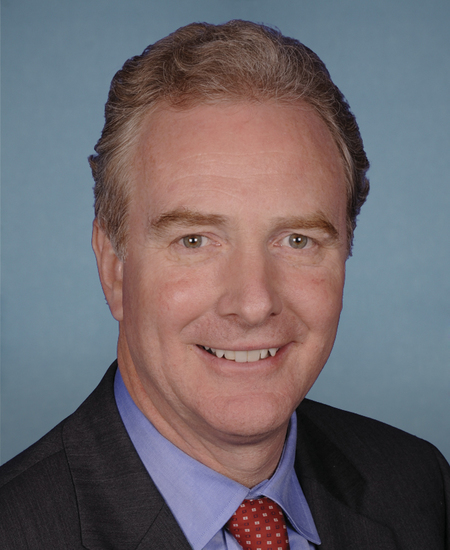
Van Hollen, Alsobrooks Announce Over $33 Million for Maryland Water Infrastructure Projects; Critical Investments in Maintaining Port of Baltimore, Additional Shipping Channels
Today, U.S. Senator Chris Van Hollen, a member of the Senate Appropriations Committee, and Senator Angela Alsobrooks (both D-Md.) announced $33,080,000 in direct federal funding for six projects throughout Maryland within the fiscal year 2026 Energy & Water Development appropriations bill – which was enacted into law as part of a 3-bill government funding package passed by Congress and signed into law in January. These investments in local projects – submitted and secured by the Senators – support water infrastructure improvements as well as Army Corps-led efforts to maintain navigational safety throughout the Chesapeake Bay, including around the Port of Baltimore; beach replenishment in Ocean City; and to study alternatives for a secondary water source for the Washington Region. “Federal dollars can make a big impact when we invest them directly in projects that support our communities’ needs – that’s why we fought to deliver these federal funds to local priorities. From bolstering access to clean water to ensuring our waterways and shipping channels around the Port of Baltimore and throughout Maryland are clear and open for business, these projects will play a critical role in improving the health of our communities and growing our state’s economy. The investments in this legislation were hard-fought to ensure we keep Maryland moving forward,” said Senator Van Hollen, a member of the Appropriations Committee. “It is our duty to protect our environment, and here in Maryland there is so much worth fighting for and safeguarding. That’s why it is critical that we continue to invest federal funding to protect our Chesapeake Bay, upgrade our water infrastructure, preserve our essential waterways, defend our unique habitats, and ensure clean drinking water for all Marylanders,” said Senator Alsobrooks. Highlights for Maryland in the Fiscal Year 2026 Energy and Water Development Funding Bill Congressionally Directed Spending Project Name: Atlantic Coast of Maryland Shoreline Protection Applicant: Army Corps of Engineers Project Description: Funds will be used for beach renourishment in Ocean City, Maryland to increase shoreline protection. Project Location: Worcester County Amount Included: $20,000,000 Project Name: Easton Utilities - EUC Water Tower (Section 219) Applicant: Easton Utilities Commission Project Description: Funds will be used for a new water tower necessary to provide essential pressure regulation, fire flow capacity, redundancy, and emergency supply for the new UMMS Shore Regional Medical Center. Project Location: Talbot County Amount Included: $2,625,000 Project Name: Interstate Commission on the Potomac River Basin Applicant: Interstate Commission on the Potomac River Basin Project Description: Funds will be used to support the activities of the Interstate Commission on the Potomac River Basin. Project Location: Montgomery County Amount Included: $650,000 Project Name: Northeast River Dredging Applicant: Army Corps of Engineers Project Description: Funds will support activities on the Northeast River. Project Location: Cecil County Amount Included: $3,200,000 Project Name: Slaughter Creek Dredging Applicant: Army Corps of Engineers Project Description: Funds will support dredging of Slaughter Creek. Project Location: Dorchester County Amount Included: $4,805,000 Project Name: Washington Region Secondary Water Source Study Applicant: Metropolitan Washington Council of Governments Project Description: Funds will be used to conduct a feasibility study on a secondary drinking water source and additional drinking water storage capability for the region. Project Location: Prince George's County Amount Included: $1,800,000 Additional priorities secured by the Senators in the FY26 Energy and Water Development funding bill include: Corps of Engineers highlights This bill provides $10.4 billion in total funding for the Army Corps of Engineers to maintain our ports and harbors, invest in keeping communities safe and prepared for extreme weather events, and strengthen our competitiveness. This includes funding for the following Maryland operations, maintenance dredging, and construction projects: $43,075,000 to maintain Port of Baltimore shipping channels $12,500,000 to support the continued construction of Poplar Island $20,717,000 for the Intracoastal Waterway, Delaware River to the Chesapeake Bay $5,450,000 to support dredging of the Wicomico River $1,030,000 for drift removal in Baltimore Harbor $250,000 for Cumberland, Maryland and Ridgeley, West Virginia $2,840,000 for Jennings Randolph Lake in Maryland and West Virginia $310,000 for Nanticoke River $5,000 for St. George Creek It also includes $14 million Army Corps of Engineers Coastal Ocean Data System – $4.2 million above President Trump’s request – which provides the long-term coastal wave and sediment observations, research, and data products needed to support sustainable coastal and navigation projects. Appalachian Regional Commission (ARC) $200,000,000 for the ARC, which supports projects in Garrett, Allegany, and Washington Counties. This includes $65 million for the ARC’s Partnerships for Opportunity and Workforce and Economic Revitalization (POWER) Initiative and $13 million to address the substance abuse crisis throughout Appalachia. Local governments and other entities in these Maryland counties have been awarded over $5.5 million in federal grant funding over the past two years. Department of Energy highlights The bill provides $16.78 billion – $3.76 billion above President Trump’s request – for the Department of Energy’s non-defense programs. Lowering Energy Bills: This bill provides $329 million – a $3 million increase over last year – for the Weatherization Assistance Program. This program reduces energy costs for low-income households by increasing the energy efficiency of their homes, saving families $372 per year on average. Protecting Our Energy Grid: The bill provides $190 million for Cybersecurity, Energy Security, and Emergency Response to help ensure the continued success of the Department’s programs aimed at strengthening the security and resilience of our energy sector and grid. It also provides $235 million for the Office of Electricity, $25 million for the Grid Deployment Office, and an additional $375 million in funding for electric grid infrastructure to help build out the electric transmission system and lower energy prices. Renewable Energy: The bill provides $3.1 billion for energy efficiency and renewable energy programs, rejecting President Trump’s proposed cut of over $2.5 billion and elimination of funding resources for solar and wind energy research programs. This funding continues to advance the ability of the US to develop, build, and deploy innovative clean energy technologies that will lower energy costs and create jobs. Scientific Discovery: The bill provides $8.4 billion in new directed funding –$160 million over FY25 levels and $1.3 billion above President Trump’s budget request – for the Office of Science. This funding will help continue implementation of the CHIPS and Science Act of 2022 and advance the highest priorities in materials research, high-performance computing, artificial intelligence, biology, and clean energy research to maintain and strengthen our global competitiveness.
dd1be38d-2898-490a-95d3-d69b3d53b9ccIssued within 24 hours
Other senators' releases published in the day before or after this one.