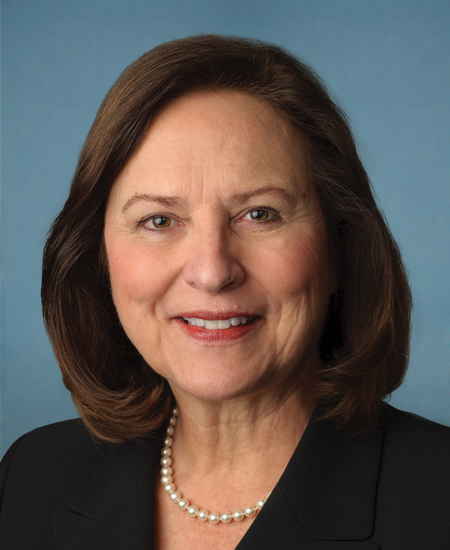
Fischer Questions Expert Witnesses on Grand Theft Cargo
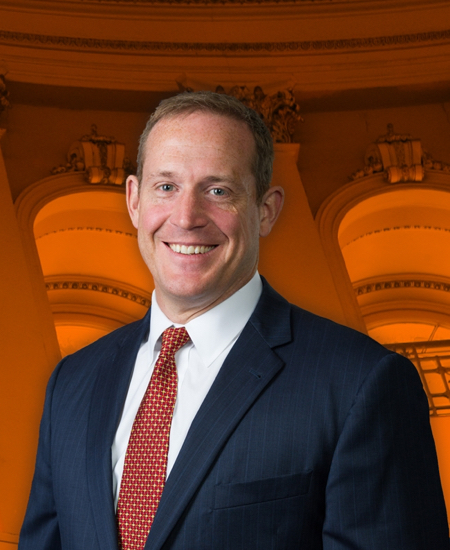
Today, U.S. Senator Deb Fischer (R-Neb.), a member of the Senate Commerce Committee, questioned expert witnesses on the importance of giving the Federal Motor Carrier Safety Administration (FMSCA) authority to enforce penalties against unauthorized brokers engaged in freight fraud.
During the hearing, Fischer questioned Chief Special Agent of the Burlington Northern and Santa Fe (BNSF) Railway Police Department Will Johnson about collaboration between local authorities and federal agencies on investigations that cross state lines.
She also asked Principal and CEO of Tanger Logistics and Double Diamond Transport Adam Blanchard and Executive Vice President of Owner-Operator Independent Drivers Association Lewie Pugh what additional tools and authorities could improve the enforcement of cargo freight fraud.
Click the image above to watch a video of Senator Fischer’s questioning
Click
here
to download audio
Click
here
to download video
Senator Fischer questions experts:
Senator Fischer:
Thank you, Mr. Chairman. Thank you, Mr. Pugh and Mr. Blanchard, for referencing my bill. I appreciate you doing that. I appreciate the support for the bill. I think it's extremely important that we get that to move. It's the Household Goods Shipping Consumer Protection Act that I've introduced with Senator Duckworth, and as you know, it would allow the FMCSA to impose those civil penalties against the unauthorized brokers, and it would require companies in the household goods sector to establish a principal place of business to prohibit fraudulent companies from skirting those existing regulations. I'd like to thank you also for bringing up suggestions on what else we can do to be able to combat this.
It's eye opening, the amount of money harm to companies, but also to consumers when we add all this together. So, thank you for that. Chief Johnson, in your testimony, you reference jurisdictional concerns that often arise when investigating cargo theft crimes, and I believe it's particularly important that local and state law enforcement agencies have the support of the federal government when dealing with crimes that pertain to interstate commerce. In your experience, what is the relationship like between law enforcement and agencies like the FBI and the HSI when investigating cargo theft that crosses state lines?
Will Johnson:
Ma'am, the short answer is they are good relationships. The challenge is not necessarily with the relationships, but the capacity of organizations to be able to balance or juggle the myriad of threats that they're faced with. Cargo theft, historically, has not risen to the same level of attention as maybe some other competing interests have for these federal entities.
Also, it's important to understand how those agencies prioritize the work within their AOR, or area of responsibility, and that's largely a local decision by local executive leaderships for those agencies involved, absent some sort of national direction coming out of headquarters or the Attorney General's office. I think for this topic, national direction either authorized by Congress for the task force that we've mentioned previously or prosecutorial direction coming out of the Attorney General's Office directing all of the United States attorneys to prioritize this issue and focus resources on effective prosecutions will aid in the assistance of bringing these cases forward.
Senator Fischer:
Thank you. You know, Mr. Blanchard, you spoke about your frustration in trying to just bring it to the attention of authorities—federal, state, I assume local as well that you were trying to work with. And when you mentioned some of your suggestions, I know Mr. Pugh wanted to chime in, so I'll let you chime in now on what needs to be done. And it's not, I don't think it's just throwing more money at being able to have more enforcement out there, necessarily. I think it's also to be able to put some teeth in what we need to do here and just have more awareness.
Adam Blanchard:
I'd be happy to start, Senator. And again, thank you for your support of our industry and your introduction of the Household Goods Shipping Consumer Protection Act. I think that's certainly a great first step. As I have come to understand, Senator, is currently, to piggyback off of Chief Johnson, the current threshold that's established by the United States Sentencing Commission for the DOJ to interdict in cargo theft cases requires the instance to be at least $1.5 million in losses. So, the average loss in a cargo case is around $200,000 today. So therefore, to reach that threshold of $1.5 million is going to require law enforcement agencies to be directed to look into the continual criminal activity of these organizations to meet that threshold—or for Congress to otherwise change that and create a new directive in order for them to start pursuing these through a unified task force, which is something that we have included in the Safeguard Our Supply Chains Act, which has not been filed. But certainly, we would appreciate any member of this committee to review that bill, and the willingness to author that would be fantastic. And that would provide the coordination between agencies and law enforcement.
And I think really, Senator, this begins with the FMCSA, and to further elaborate on Senator Young's question earlier, in terms of the FMCSA, we have to start with them. I think to your point, Senator Fischer, throwing money at the problem, I would agree, is not the solution. I think first, we need Congress to direct FMCSA on the things that need to occur and the coordination necessary to address this very issue that we're dealing with, they need to be able to distinguish between fraudulent businesses and legitimate businesses. DOT needs enhanced cyber capabilities and real time fraud detection tools and greater interagency collaboration with law enforcement to identify these frauds. FMCSA needs to be directed to remove fraudulent companies from the SAFER website. We rely on that heavily in order to vet companies that we work with. FMCSA needs to explicitly authorize to withhold registration from applicants who fail to provide verifications.
Also Congress, we believe, should conduct rigorous oversight of FMCSA transition to a single USDOT number, which we believe they're going to do in the future—or considering doing without placing undue burden on legitimate carriers. And DOT should expeditiously implement the 13 recommendations issued by the Government Accountability Office to strengthen FMCSA's national consumer complaint database.
And so those are things we believe that Congress could do without the necessity of additional funding in order to provide the coordinated effort necessary for law enforcement. Because we simply don't have the tools, Senator, to be able to do the reverse IP searches to break through the cyber space in order to find who’s spoofing our emails. I have a very sophisticated IT director, and he's great, but only law enforcement agencies have that capability.
Lewie Pugh:
I thank you, Senator Fisher, and you and Senator Duckworth on your bill. We very much appreciate that, and glad you're trying to do something different and to help these things. It will pay dividends if we can get it across the finish line. A couple other things is this whole national consumer complaint database. It seems to be that FMCSA needs to be directed more to do something with that. From our experience and with our members—and we tell members to send these complaints, plus many other complaints that happen to them in trucking—it seems like this is where all complaints go to die at FMCSA. Usually, they hear nothing back. Or if they get anything, it's just “Hey, thanks for letting us know.”
Also, we've said for a long time, it would probably be helpful to have a different name. Most of our small business people and truckers, they don't even realize that this is a place for them to go file a complaint because national consumer complaint database, who would think that's a trucking complaint hotline? So that would be helpful.
We feel FMCSA probably has enough funds to do some investigating on this. It's just to reallocate where they're putting, because they continually say that there's not a safety effect to this. So that's why they don't have to do anything with this. But we know there is because it's putting people out of business. It's causing people not to be able to maintain their equipment. So there's definitely a safety thing here. Plus, you know, who knows what happens to a trucker or something happens at gunpoint or something like that.
And I would agree with my colleague here, FMCSA is the first line of defense on this—100 percent, they have all this information. They have everybody's registrations and all that. And finally, I would say FMCSA needs to step back and take a long look of making the barrier of entry into being a motor carrier or a broker much harder, much stricter. We pretty much let people file for insurance, pay for it. We don't know who these people are, have no idea if they even know what they're doing—and maybe every 12 to 18 months, we audit them.
e44bef15-f43e-47f1-af61-bac68cc6998dIssued within 24 hours
Other senators' releases published in the day before or after this one.