Booker Calls on Trump to Convene Congress for Special Session on AI
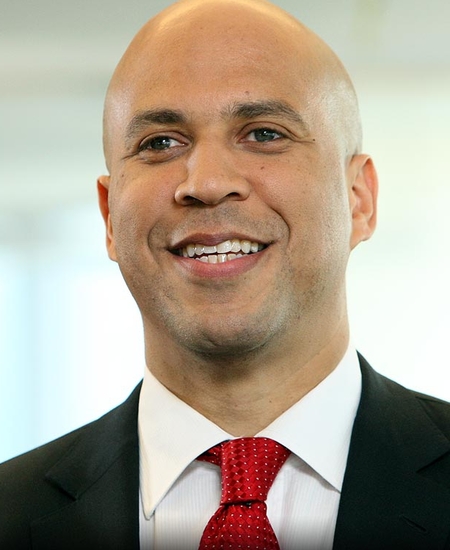
WASHINGTON, D.C. – Today, U.S. Senator Cory Booker (D-NJ) took to the Senate floor to call on President Trump to use his authority under Article II, Section 3 of the Constitution to convene Congress for a special session to address the rapidly evolving risks and opportunities presented by artificial intelligence. Article II, Section 3 gives the President the power, on "extraordinary occasions," to convene both Houses of Congress. "We find ourselves in such an extraordinary moment. The safety of artificial intelligence systems demands urgent attention. The President should convene Congress at once to address it," said Senator Booker. "This is not a moment for panic or despair. It is a moment for the government to govern," continued Senator Booker. "Congress will soon leave Washington for two months. Artificial intelligence will not recess." Americans are already experiencing the effects of AI through scams, privacy threats, workplace disruption, and surveillance, while increasingly powerful systems present new risks that policymakers have yet to fully address. Booker called for Congress to address three urgent challenges: protecting Americans from potentially catastrophic AI risks, including dangerous biological and cyber capabilities; confronting harms already affecting Americans; and ensuring Americans can benefit from AI's potential to advance science, improve health care and education, boost productivity, and help small businesses compete. "AI will not recess. These issues demand our urgent attention. Mr. President: It's time for a Special Session," concluded Senator Booker. WATCH FLOOR SPEECH HERE. Senator Booker’s Remarks as Prepared for Delivery: Article II, Section 3 of the Constitution gives the President the power, on “extraordinary occasions,” to convene both Houses of Congress. The last time a president used that power was Harry Truman in 1948. Seventy-eight years ago. We find ourselves in such an extraordinary moment. The safety of artificial intelligence systems demands urgent attention. The President should convene Congress at once to address it. This is not a moment for panic or despair. It is a moment for government to govern. To protect the American people and to prepare soberly for risks before they become crises. Presidents have invoked this authority at moments when the stakes were extraordinarily high—from the earliest days of the Republic through periods of war, economic crisis, and national emergency. That is the purpose of this power: to bring Congress together when circumstances demand it, and to give the country the full attention of its elected government. Congress will soon leave Washington for two months. Artificial intelligence will not recess. The technology will continue to advance. The risks will continue to evolve. And the consequences of getting this wrong will not wait for Congress to return. This should stand above petty partisanship. It should be about one thing: putting the safety and security of the American people first. There are three challenges before us right now. First, we must protect against potentially catastrophic harms. Serious people, including researchers and leaders inside the companies developing the most advanced AI, are warning about dangerous biological or cyber capabilities—and the emergence of systems that behave in ways humans cannot reliably predict or control. We do not know whether the most catastrophic scenarios will ever occur. But when credible experts warn of consequences this grave, responsible government does not panic and it does not dismiss them. It gets to work. Second, we must confront the harms happening right now. Americans are already encountering AI through increasingly sophisticated scams targeting seniors and families, mass surveillance, threats to privacy, disruption in the workplace, and systems that can affect the prices people pay. The future risks of AI demand our attention, but so do the people being harmed by it today. Finally, we must seize the extraordinary possibilities this technology offers. AI could help scientists discover lifesaving drugs, detect diseases earlier, accelerate scientific breakthroughs, transform education, increase the productivity of American workers, help small businesses compete, and give millions of people access to capabilities that were once available only to those with wealth and power. But none of these positive outcomes are possible without action by the government to make sure AI is safe, trusted by people, and that its benefits are broadly shared. AI cannot become another chapter in an old story where extraordinary new technologies create extraordinary new wealth and power for a small number of people while working Americans are asked to absorb the disruption, bear the costs, and wait patiently for the benefits to reach them. I have been calling for safety interventions for years. In July 2023, I wrote to the White House about the future of AI and what we should do as a country to prepare for it. It was clear to me then that we were seeing the early sparks of a technology that could have profound effects on our society, economy, and security. I advocated for: Rigorous pre-deployment testing of advanced models Independent evaluations and audits Incident reporting and investigation Supply chain security International coordination And the need for a careful and disciplined approach to the pace of AI development. In addition, we should: Establish whistleblower protections for lab employees Strengthen requirements for securing frontier model weights Establish a National Transportation Safety Board-like entity for investigating AI incidents Prepare for the potential emergence of AI systems capable of autonomously improving themselves Preserve states’ ability to protect their own people in the absence of meaningful federal standards Reject antitrust exemptions that hurt consumers and competition And yes, put the brakes on the development of capabilities whose risks outrun our ability to manage them Americans feel beat down right now. Forgotten. That feeling is justified. Prices are up. Rent, food, utilities. Hiring is flat. We have a government that moves too slow to deliver what people need, and corruption that moves too fast to protect people in power. And now, Americans are seeing multi-trillion-dollar firms building technology that they say will exceed humans at all cognitive and physical tasks. Their anxiety is warranted. It cannot be set aside. It cannot be dismissed like Donald Trump is doing—calling it a hoax. Americans are demanding that we act. They're demanding leadership. And we need to deliver. We have a rare convergence of early warning signs, practical options available, and a growing consensus for action—including among the American people, who understand what’s at stake and are rightfully demanding that policymakers step up. In my letter to the White House more than three years ago, I closed by emphasizing the importance of human agency: our collective responsibility to decide what role this technology should play in our lives, rather than letting the technology or its developers decide for us. That profound responsibility remains ours today. I am a prisoner of hope. I will never let despair have the last word. I know how technology can lift people up. I lived it. My dad came from humble beginnings and became one of IBM's top salesmen. But we will only unlock the promise of this technology if it's done in a democratic fashion. Where the people decide. Not the tech billionaires or trillionaires. Not Donald Trump. And it's ridiculous that the House of Representatives decided to pack up and leave town. Again, AI will not recess. These issues demand our urgent attention. Mr. President: it's time for a Special Session. Thank you.
e71168fa-3cd1-43be-ad82-8dfe54bbe0fdIssued within 24 hours
Other senators' releases published in the day before or after this one.