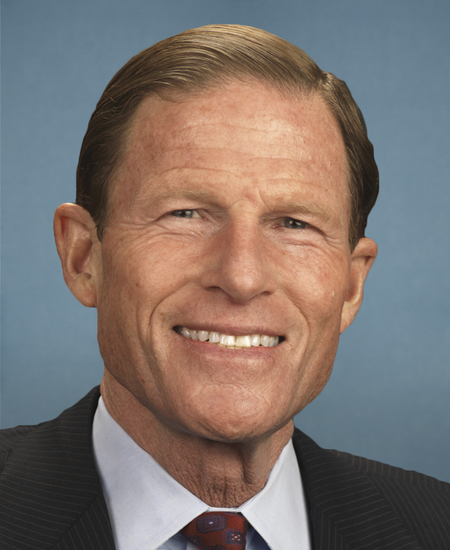
Whitehouse, Hawley Introduce Bipartisan Legislation to End Tax Breaks for Corporate Consolidation
Stop Subsidizing Giant Mergers Actwould eliminate wasteful subsidies for mergers involving large companies
Washington, DC– U.S. Senators Sheldon Whitehouse (D-RI) and Josh Hawley (R-MO) today introduced the Stop Subsidizing Giant Mergers Act, legislation to end tax-free mergers involving large companies that provide taxpayer subsidies for acquisitions that consolidate corporate power.
“Families who get stuck paying higher prices because of anti-competitive mega-mergers should not also have to subsidize them with their tax dollars,”said Senator Whitehouse.“It’s time we pass my bipartisan bill to stem the corporate freeloading and encourage competition.”
“For far too long, working Americans have struggled to provide for their families while being forced to subsidize the mergers of massive corporations. It is critical that Congress pass this legislation to protect families and make large companies pay their own way,”said Senator Hawley.
The volume of large mergers reported to federal antitrust agencies has nearly doubled over the past decade. Thevast majorityof such mergers fail to achieve their expected value, and when they do generate greater profits, it is more likelyattributableto concentrated market power than improved efficiency. Everyday Americans bear the costs of this corporate consolidation—as much as $5,000 each year for the typical household, according to onestudy.
When one corporation is sold to or merges with another, the acquiring firm typically pays tax on the appreciated gain of stocks and/or assets held by the target firm. However, the arcane tax code contains a major exception for certain types of mergers: if a corporate reorganization is structured so that the acquiring firm is exchanging stock, then the appreciation in value of the target firm’s stock and/or assets may be fully tax exempt. In other words, neither the corporation nor its shareholders may owe tax on the appreciation in value at the time of sale. While the tax is deferred rather than forgiven, in practice the corporation and its shareholders may escape tax forever.
This tax-free structure is a popular way for giant corporations to skirt tax responsibilities. Between 2007 and 2021,up to 40 percentof the aggregate value of all U.S. mergers have been structured in this way. In 2021, over half of mergers over $1 billion were tax-free. Examples of large mergers structured fully or partially tax-free include:
The Stop Subsidizing Giant Mergers Act would end this tax-free treatment for corporate mergers and acquisitions involving firms with combined average annual gross receipts exceeding $500 million during the prior three years. The legislation makes exceptions for mergers involving a small business, and corporations that are undergoing a purely internal reorganization would still be able to so without incurring a tax obligation.
Senator Whitehousefirst introducedthe Stop Subsidizing Giant Mergers Act in 2024 with then-Senator J.D. Vance, directly following Capital One’s announcement of its $35 billion acquisition of Discover Financial Services.
Text of the legislation is availablehere.
eeb0f3fb-c5e7-470f-bf7e-db6d9b3457dcIssued within 24 hours
Other senators' releases published in the day before or after this one.