Warren Presses Deputy Defense Secretary on Conflicts of Interest Related to Companies Bidding on Major “Golden Dome” Missile Defense Program
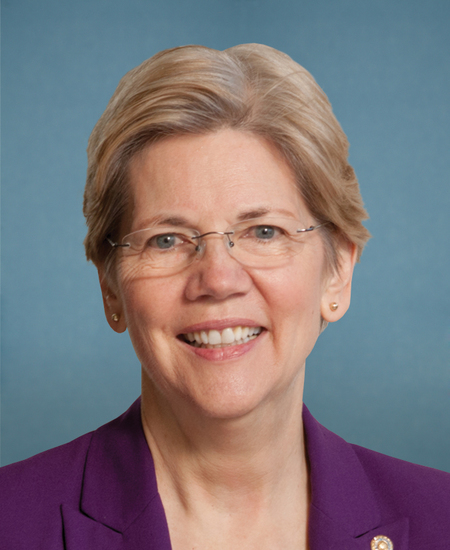
Feinberg was former head of private equity firm Cerberus; conflicts could be impacting military contracting decisions related to secretive $185 billion missile program Text of Letter (PDF) Washington, D.C. – U.S. Senator Elizabeth Warren, a member of the Senate Armed Services Committee (SASC), wrote to Department of Defense (DoD) Deputy Secretary Stephen Feinberg pressing him on his conflicts of interest related to major DoD contracts. Senator Warren urged Feinberg to cut all ties with his former firm, Cerberus, recuse himself from any Cerberus-related matters for his entire time at DoD, and increase transparency of contracting decisions for the Golden Dome missile defense program at DoD. Senator Warren has raised concerns with Secretary Feinberg continuing financial relationship with Cerberus, and that of his immediate family, and the fact that he had hired multiple key DoD staff with Cerberus ties. Mr. Feinberg has not yet provided a response. New reporting reveals Feinberg has “unprecedented control over the Pentagon’s vast procurement network, and a remarkable new ability to invest in defense companies with taxpayer dollars.” At least three companies reportedly linked to Cerberus have received Golden Dome contracts during Feinberg’s tenure. “These new reports make it even more important that you make the commitments that I asked of you in my April letter, and that you provide answers to my questions,” said Senator Warren . In addition to her requests for ethics commitments, Senator Warren asked Feinberg to share a list of Cerberus-backed or Cerberus-affiliated companies that have bid on the Golden Dome contract, explain DoD’s criteria for awarding Golden Dome contracts, and explain his role in awarding Golden Dome contracts. Senator Warren has led the fight to root out corruption and close the revolving door between government officials and the private sector: In May 2026, Senators Warren (D-Mass.) and Scott (R-Fla.) introduced the Banning Lobbying And Safeguarding Trust (BLAST) Act , a bipartisan bill to impose a lifetime ban on lobbying by former members of Congress. In April 2026, at a hearing of the Senate Armed Services Committee, Senator Warren (D-Mass.) pressed Secretary Hegseth on allegations that Trump administration officials are engaging in possible insider trading by placing bets on the Iran War through prediction markets. In February 2026, Senators Elizabeth Warren (D-Mass.) and Andy Kim (D-N.J.), along with Representatives Pat Ryan (D-N.Y.) and Deborah Ross (D-N.C.) pressed the Inspectors General (IGs) of 16 key agencies to open investigations into senior Trump officials who were recently lobbyists or “shadow lobbyists” and may be using their roles to benefit their former employers and clients. In January 2026, Senators Warren (D-Mass.), Richard Blumenthal (D-Conn.), and Andy Kim (D-N.J.), pressed Secretary of Defense Pete Hegseth on potential conflicts of interest surrounding the awarding of multiple lucrative Department of Defense (DoD) contracts and loans to companies associated with President Donald Trump’s son, Donald Trump Jr. In December 2025, Senator Elizabeth Warren (D-Mass.) and Representative Chris Deluzio (D-Pa.) pressed the Trump administration to follow through on promises to limit defense companies stock buybacks and incentivize them to increase research and development spending. In December 2025, Senators Elizabeth Warren (D-Mass.) and Richard Blumenthal (D-Conn.) called for then-Attorney General Pam Bondi to recuse herself from the Department of Justice (DOJ)’s review of any Warner Bros. merger due to potential conflicts of interest related to her former employer, lobbying firm Ballard Partners. In November 2025, Senator Warren (D-Mass.) wrote to Dr. Robert Kadlec, nominee to be Assistant Secretary of Defense for Nuclear, Chemical, and Biological Defense Programs at the Department of Defense (DoD) with concerns over his past management failures and conflicts of interest during his time at the Department of Health and Human Services (HHS), where he served as Assistant Secretary of Health and Human Services for Preparedness and Response (ASPR). Those allegations include exercising improper political pressure on career officials to financially benefit his former clients. Senator Warren’s Department of Defense (DoD) Ethics and Anti-Corruption Act , with now-Senator Andy Kim (D-N.J.), would limit the influence of contractors on the military, constrain foreign influence on retired senior military officers, and assert greater transparency over contractors and their interaction with DoD. In July 2025, Senators Warren (D-Mass.) and Rick Scott (R-Fla.), wrote to former Secretary of Defense Lloyd Austin seeking an explanation and further information on his recent decision to start a strategic advisory firm. Austin had publicly promised Senator Warren during his 2021 confirmation process that he would not become a lobbyist after his government service ended. In May 2025, Senator Warren (D-Mass.) wrote to Mr. Michael Obadal, nominee for Under Secretary of the Army, with concerns about his refusal to divest from major defense contractors. Obadal previously held between $250,000 and $500,000 in Anduril stock, and had refused to divest from ahead of his confirmation. In March 2025, Senator Warren (D-Mass.), a member of the Senate Armed Services Committee, wrote to Mr. John Phelan, nominee to be Secretary of the Navy, with concerns regarding his “serious conflicts of interest,” given his financial investments in defense contractors. Senator Warren asked Mr. Phelan to make a number of commitments related to his conflicts of interest ahead of the committee vote on his nomination. In March 2025, Senator Warren (D-Mass.) wrote to Deputy Defense Secretary Nominee Stephen Feinberg, urging him to recuse himself from all matters related to Ligado Networks. Mr. Feinberg’s private equity firm, Cerberus Capital Management, is heavily invested in Ligado, which has a pending $39 billion lawsuit against the Department of Defense (DoD) over highly sought-after telecommunications spectrum space that the military has said is “essential for its various satellite communications, radars and navigation systems” usage. In December 2020, Senator Warren (D-Mass.) and Representative Pramila Jayapal (D-Wash.) reintroduced the Anti-Corruption & Public Integrity Act , to strengthen ethics laws and crack down on government officials’ conflicts of interest across the government. ###
ef9d158b-b9b2-46cc-af89-4752877e55a7Issued within 24 hours
Other senators' releases published in the day before or after this one.