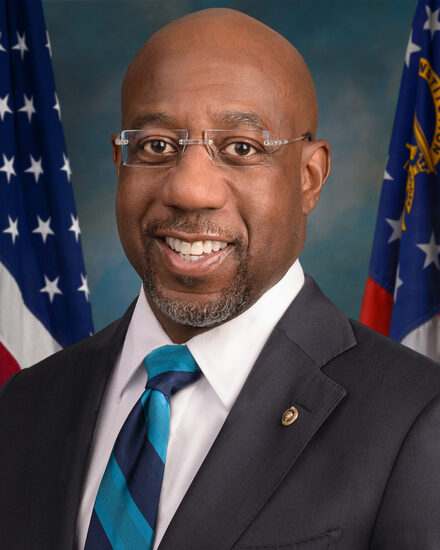
Warnock Calls on Georgia Department of Community Health to Preserve and Expand Health Coverage for Hardworking Georgians
In a letter to the Georgia Department of Community Health, Senator Reverend Warnock pressed the state to preserve and expand access to health care coverage for low-income Georgians Senator Warnock slammed the Kemp administration’s threat to eliminate Georgia Pathways unless the state receives a 90 percent federal match Senator Warnock is a leading proponent of Medicaid expansion and has long championed efforts to expand Georgians’ access to affordable health care Senator Reverend Warnock: “I urge the State to do everything in its power to keep as many people enrolled in affordable coverage” Atlanta, GA – Last month, Senator Reverend Raphael Warnock (D-GA) pressed the Georgia Department of Community Health over the state’s threat to shut down its health care coverage program for low-income Georgians, which would strip some of the state’s lowest-income residents of their health care coverage. Under Governor Brian Kemp’s direction, the state is demanding a 90 percent federal match to bankroll Georgia Pathways, Governor Kemp’s own deeply flawed health care coverage program, or threatening to suspend coverage for all enrollees. “I urge the State to do everything in its power to keep as many people enrolled in affordable coverage,” wrote Senator Warnock in a letter to the Georgia Department of Community Health. “If it does not, make no mistake: it is the State’s mismanagement of funds and poor construction of its ‘innovative program’ that will continue to doom the lowest-income Georgians to a life without health care.” Georgia has so far declined to fully expand Medicaid , rejecting federal incentives that at one point estimated to be nearly $2 billion in funding to support program expansion. Instead, Governor Kemp pursued Georgia Pathways to Coverage, a state-run program rife with bureaucratic red tape and arbitrary coverage restrictions. Despite hailing Pathways as a success after its launch, the Kemp administration now claims it cannot afford to provide health care coverage to the nearly 100,000 hardworking Georgians estimated to gain eligibility in 2027. Senator Warnock is a leading proponent of Medicaid expansion and has long championed efforts to expand Georgians’ access to affordable health care. Last year, he released a report titled “Healthy People, Healthy Economy,” which found that investing in Medicaid stimulates economic growth and promotes access to employment. In the report, Senator Warnock warned that if other states adopt Georgia’s flawed Pathways to Coverage model, millions of Americans could lose access to health care, government bureaucracy could grow, hospitals could close, jobs could be lost, and the economy could slow. Since then, Congressional Republicans have used Georgia’s Pathways to Coverage program as a model for the health care cuts and changes included in their July 2025 One Big Beautiful Bill, set to take effect in 2027. A copy of the letter can be found HERE and text is below: “Ms. Hicks, “I respectfully submit my written comments regarding Georgia’s Department of Community Health’s (DCH) proposed State Plan Amendment (SPA) implementing the Medicaid community engagement requirement under H.R. 1 and the CMS Interim Final Rule (CMS-2454-IFC). “While I have concerns with the deeply flawed Georgia Pathways to Coverage (“Pathways”) program, I am alarmed by insinuations that the State of Georgia (“the State”) will simply end the program without a 90 percent federal match. Such an abrupt termination would pull the rug out from the few Georgians currently covered by the program and cause even more Georgians to lose access to health care. I take issue with the State’s embrace of work reporting requirements, which have been shown to wrongfully prevent working adults from accessing care. However, it has always been my core belief that we must expand health coverage to as many Georgians as possible until we fully expand Medicaid and close the coverage gap. That is why the State must do whatever it can to protect and expand Medicaid coverage for Georgians. “When the State launched Pathways in 2023, it limited coverage to individuals who reported completing 80 hours of work, job training, education, or community service each month. At the time of its initial launch, Georgia was the only state in the country with active work reporting requirements in its Medicaid program. The State estimated that as many as 100,000 people would sign up and that up to 345,000 people could be eligible. “In January 2025, the State modestly increased eligibility and exempted parents and guardians of children up to age 6 from the work reporting requirements. Even with this change, the most recent estimate of enrollment in Pathways was just over 19,000 people — well short of the 100,000 enrollees predicted. “In July 2025, Congressional Republicans passed H.R. 1 to implement new federal work reporting requirements for the Medicaid expansion population starting after December 31, 2026, pointing to the ‘success’ of Georgia’s Pathways.4 The new federal reporting requirements, however, are more generous than Georgia’s current program. According to the SPA, the State is now being ‘forced to expand the program to 100,000 new individuals in order to maintain the coverage of approximately 20,000 hard- working Georgians.’ ‘Forced’ to provide healthcare to Georgians. That is quite the sentiment, especially when these new individuals are veterans, parents of school-aged children, children formerly in foster care, and other individuals classified as medicinally frail. These are the people the State does not want to be ‘forced’ to cover. “In 2022, the State initially predicted its program could cover as many as 100,000 people. Now, the State claims it cannot possibly cover this amount—at least, not without a substantially more generous federal match of 90 percent. Had the State simply expanded Medicaid in 2022, they would have received an automatic 90 percent federal match for over a decade. Congressional Democrats even enacted an additional federal incentive for states that newly adopted expansion, which was at one point was estimated to bring in nearly $2 billion in additional federal funding for Georgia. “Instead, the State spent tens of millions of dollars to launch a bureaucratic program that covered a fraction of the expected population. A report based on Pathways data through June 2025 found that Georgia spent about $13,597 per active enrollee on program costs.6 A U.S. Government Accountability Office (GAO) report from September 2025 found that the State spent over $54 million on administrative costs for the program. And now, the State is claiming it cannot afford to provide health coverage to as many as 100,000 working Georgia families, despite touting its ability to do just that 4 years ago. “I urge the State to do everything in its power to keep as many people enrolled in affordable coverage. If it does not, make no mistake: it is the State’s mismanagement of funds and poor construction of its ‘innovative program’ that will continue to doom the lowest-income Georgians to a life without health care. Sincerely,” ###
f4245b15-cab3-47fe-abfa-920c2562a7deIssued within 24 hours
Other senators' releases published in the day before or after this one.