Democrats Block Alaska’s Right to Produce Act 2.0
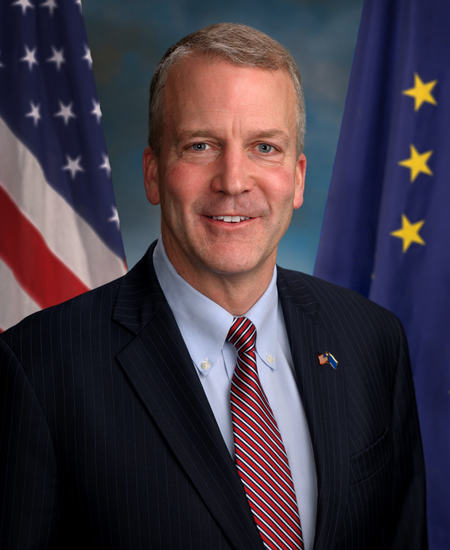
WASHINGTON —U.S. Senator Dan Sullivan (R-Alaska)today attempted to pass the Alaska’s Right to Produce Act 2.0 on the Senate floor, but the legislation was blocked by Senate Democrats. Authored by Sen. Sullivan, the legislation would protect Arctic National Wildlife Refuge (ANWR) leasing approvals and leases from future administrative reversals, establish a unit agreement system for coordinated development in ANWR’s Coastal Plain similar to what exists in the National Petroleum Reserve in Alaska (NPR-A), and prevent a return to the Biden administration’s restrictive 2024 rule for development in the NPR-A. Click here to watch Sen. Sullivan’s remarks on the Senate Floor. “Last year in the Working Families Tax Cuts Act , we got mandatory lease sales for the next ten years for the NPR-A, ANWR, and Cook Inlet. Then we passed Congressional Review Act resolutions—ripping the Biden rules out by the roots with CRAs here in the Senate,” said Sen. Sullivan . “This bill is the third prong of our ability to get Alaska to be developed again. What does this mean for Alaska? It’s about creating good-paying jobs and building stronger, healthier communities. That’s why this legislation matters. It’s about making sure Alaskans have the opportunity to build better lives for themselves and their families.” The bill is an updated version of the 2023 Alaska’s Right to Produce Act , which was introduced in the Senate by Sullivan and Sens. Lisa Murkowski (R-Alaska) and Cynthia Lummis (R-Wyo.), and which passed the House thanks to the leadership of Rep. Pete Stauber (R-Minn.). The new version reflects the mandated lease sales established by the 2025 Working Families Tax Cuts Act , the second Trump administration’s pro-Alaska development administrative actions in ANWR and NPR-A , and the 2025 Congressional Review Act resolutions that rescinded Biden administration actions in ANWR and NPR-A . Specifically, the Alaska’s Right to Produce Act 2.0 : Protects the ANWR Coastal Plain leasing program. Provides legal durability for federal approvals in ANWR and NPR-A. Limits the weaponization of judicial review and permitting litigation. Establishes a framework for coordinated development in ANWR. Expands flexibility for exploration and development in ANWR and NPR-A. Authorizes geological and geophysical exploration in ANWR’s Coastal Plain. Prevents renewed NPR-A development restrictions. Below is a full transcript of Sen. Sullivan’s remarks on the Senate floor. Mr. President, today I urge my colleagues to vote for the Alaska Right to Produce Act 2.0, which would provide greater certainty for responsible resource development on the North Slope of Alaska. It would benefit Alaskans—our great working Alaskans—but it would benefit America, Mr. President. A little bit of background here. You’ve heard me talk about this, but for years, Alaska, as a resource development powerhouse for America, has been recognized by Congress to be so important for our country, because of our extraordinary abundance of natural resources, that we have legislated many times about our state, getting resources to market for Alaskans, for Americans. It’s strongly in our national interests, and certainly good for my state and the people I am honored to represent—particularly hard-working union members and others who develop these resources, not just for Alaska, but for America. However, Mr. President, time and time again, when my Democratic colleagues get control of the Senate, of the House, of the White House, they have a core principle. One of their core principles is to come up to the great state of Alaska and try to shut it down, kill thousands of jobs, and try to turn this great state, my state, into a national park with no ability to develop our economy and resources. So, Mr. President, this is just the latest example of what I call the Last Frontier Lock-Up. This is during the Biden four years and the Senator Schumer four years when he was majority leader. The far-left Democrats—heck, all the Democrats—came after Alaska in a huge way. The Last Frontier Lock-Up: every part of the state—Southeast Alaska, North Slope of Alaska, everywhere. On resource development, they came after us. How’d they do that, Mr. President? What was the Last Frontier Lock-Up? Pretty hard to imagine: 70 executive orders and executive actions—70—exclusively and singularly focused on crushing Alaska. Seven-zero. As a matter of fact, day one of the Biden administration, they issued 12. They were ready to go. The Senate Democrats got power, the Democrats got power in the executive branch, and they’re like, “Let’s go. Let’s do what we always do. Let’s crush Alaska. Let’s kill thousands of jobs in Alaska.” Mr. President, when this was at, like, 50, I actually met with President Biden and his team. I said, “Mr. President, what are you doing? What are you doing? You’re sanctioning my state more than you sanction Iran and Venezuela’s oil and gas sector. And we’re Americans, and they’re terrorists! You’re putting thousands of hard-working Alaskans out of jobs. Why are you doing this, sir?” Three years ago, I did that with President Biden. Don’t even get me going about his answer. But he was clueless, as we all know. He was clueless on a lot of stuff, but he was clueless on that. 70! The White House, the executive branch, I don’t think, in the history of America has ever used its power to so forcefully single out one state to try to damage it and crush it. That’s what we went through with the senior senator from New York as majority leader, who was all in on it, by the way. We’re going to see one of the top guys who’s always against Alaska here in a minute, because I know he’s going to object to my bill. So, Mr. President, pretty crazy that they would do that. Imagine any other state—New Mexico—if the federal government said, “We’re just going to go crush New Mexico.” But they did it to Alaska. And it wasn’t just the seventy executive orders. On LNG, remember John Kerry, the climate czar guy, former senator? He went over to Asia—Korea, Japan—and told them, “Don’t buy Alaska LNG. Don’t buy American LNG.” I mean, this is almost treasonous, Mr. President. But that’s what they did. Four years—Schumer, Biden. That’s what my state got, Mr. President. But we’ve taken action. When Republicans gained control of the Senate, gained control of the House, gained control of the White House, we said, “We’re going to put Alaska back on top.” So, what did we do? We attacked the Democrats’ attacks on my state, which, again, hurt workers, hurt Alaska, but hurt America in a couple of different ways. First, last year in the Working Families Tax Cuts Act, we got mandatory lease sales for the next ten years for the NPR-A, National Petroleum Reserve of Alaska, for ANWR, for Cook Inlet. These are all federal and gas basins. We said, the Congress said, “Hey, regardless of who’s president in the coming ten years, they have to do lease sales in Alaska.” It’s good for the country, it’s good for Alaska, it’s good for our workers, it’s good for our families. It’s good in terms of reducing energy costs, for goodness’ sake! So, we got that in the bill. That’s in the law. So, if you have a president like Biden who is anti-Alaska and they come into office two years from now, they’re not going to be able to lock it up like Joe Biden did. And secondly, Mr. President, we passed Congressional Review Act resolutions. I led the effort on some of them: the Biden NPR-A rule that locked down this entire area, the National Petroleum Reserve of Alaska, set aside by Congress—for what? Oil and gas development. That’s why it’s a National Petroleum Reserve. We ripped that Biden rule out by the roots with a CRA here in the Senate. We did the same with the Biden lock-up of ANWR, and those got passed into law. So, it’s a two-pronged strategy, Mr. President, to prevent, unfortunately, my colleagues—which they always do—Democrat colleagues in the Senate, in the House, in the White House, if they gain power, which they will eventually, [from] coming back and try[ing] to shut my state down, which they always do. So, Mr. President, today, the Alaska Right to Produce Act 2.0 is the third prong of this strategy. First, we got mandatory lease sales in the Working Families Tax Cuts Act. Then we got these Congressional Review Act resolutions passed and signed into law to prevent more lock-ups of Alaska. This is the third prong. Now, this bill has some history, Mr. President. In 2024, the House passed the Alaska Right to Produce Act 1.0. The bill was sponsored by my good friend from Minnesota in the House, Representative Stauber, who’s done so much to help my state. Five Democrat House members, Mr. President, voted for it, despite the original co-sponsor of that bill—who represented Alaska at the time—changing her mind and urging her Democratic colleagues to vote against her own bill to help Alaska. Wow! You can’t make that up, Mr. President. But this is nothing new, as I’ve said, for Democrats in D.C., because a lot of Democrats in Alaska don’t agree with shutting down Alaska. But it’s here in the Senate. They’ve written over 16 letters to administration officials, Democrats and Republicans, opposing ANWR development, NPR-A development; six separate letters to insurers and financial institutions. Believe it or not, using the power of the Senate, writing to the CEOs of banks and insurance companies: “Don’t invest in Alaska.” It’s an abusive use of power. My colleague from New Mexico usually leads those efforts, by the way. They’ve tried to shut down our state not just legislatively, but [by] pressuring the private sector to not invest in Alaska. But still, Mr. President, five House Democratic colleagues understood how important Alaska was, and they voted for the Alaska Right to Produce Act and bucked pressure—bucked the pressure from far-left Democrats in the House, including the original co-sponsor of the bill. To them, I say thank you. Alaska says thank you. Our workers say thank you, and the country applauds your bravery. So, what does this bill do, Mr. President? It’s simple. For the Coastal Plain of ANWR, it protects oil and gas development and the non-wilderness portion of the Coastal Plain from being shut down or reversed by a future administration. In the National Petroleum Reserve of Alaska, it similarly protects oil and gas development in NPR-A from a shutdown by a future administration. And the bill is designed to give companies greater certainty in terms of the leases that they already have in these areas, that they can’t be canceled. Bottom line, Mr. President, this is the third prong of our ability to get Alaska to be developed again. It does something pretty simple: It protects Alaska’s existing oil and gas development opportunities from being shut down by a future administration. Now, Mr. President, it’s a little ironic, maybe fitting, that the senator from New Mexico is going to object to my bill. Pretty sure he’s not here to support it. He has been a leader in shutting down Alaska. He has led these efforts. He has led these letters. Can you imagine if every U.S. senator said, “I’m going to go after New Mexico. I’m going to go after their workers. I’m going to go try and hurt the Native people of their state. I’m going to write all the insurance companies and the banks saying, ‘Don’t invest in New Mexico’”? Could you imagine what a disaster this place would be? I wouldn’t do that. But he does it. He does it all the time. And there’s a little irony here. When the Biden administration and Senator Schumer were locking up my state for four years, it was “drill, baby, drill” in New Mexico, Mr. President. They were shutting down my state, led by the senator from New Mexico, and New Mexico, on federal lands, went from a million barrels of oil a day to two million barrels a day. If that’s not hypocrisy, I don’t know what it is, Mr. President. But that’s what we’re up against. By the way, if the Senate changes hands, it’s the senator from New Mexico who is going to be chairman of the Energy and Natural Resources Committee. Holy cow! My state will be crushed, because that’s what he does. So, I’m pretty sure he’s going to object to this. But, Mr. President, you know, I get a little hot about this issue because I think it’s unfair. I think when people treat their state way different than my state—imagine what they were doing: “Hey, Joe Biden, shut down Alaska. But, by the way, make sure you approve all these federal leases in New Mexico so we can drill, baby, drill.” That’s exactly what the senator from New Mexico did. But here’s why I get really hot about this, Mr. President. It goes beyond resource development. It goes beyond jobs. It goes to this chart. I’ve brought this chart out many times. This is a chart that depicts life expectancy in America from 1980 to 2014—what parts of America [where] people lived longer. Now, you see here, it’s a little complicated chart. The blue and the purple is where people are living longer. Green here—that’s 13 years over a 25-year period. Red is actually where we’ve actually lost life expectancy—really, really bad. You look at this map from 1980 to 2014, unfortunately, there were a couple of places in America where people weren’t living very long or [were] losing life expectancy. That’s kind of the opioid epidemic and other things. But the place where people lived longer for that 25-year period, more than any other state, was Alaska! Right here—the North Slope, Aleutian Island chain, Southeast, Northwest Arctic Borough—people were living 13 years longer. I’ve asked my colleagues many times: Give me a policy indicator more important of success than “Are the people you are representing living longer?” I don’t think there is one. So there was huge success up here in my state. Now, why did that happen, Mr. President? Why are the people of Alaska living longer? Well, in part—a sad story is—this is a lot of Native Alaskans, primarily Iñupiat people—great people, by the way; incredible patriots—they had very low life expectancy, some of the lowest life expectancy in the country, by far. But when we started developing our resources—oil and gas on the North Slope—people got jobs, people got hospitals, people got flush toilets, people got health clinics and hospitals, things that the rest of the country assumes that you have, but we didn’t have here. So, Mr. President, this issue for me is about the life and death of my constituents. So, when I have colleagues come and they block all this stuff, and yet they do it for their own state, which is really problematic, it riles me up, because I’m talking about the life and death of my constituents. By the way, the great Iñupiat people here—during the Biden administration, the head of the tribe, the head of the Alaska Native Corporation, the head of the borough, all the leaders, all Native Alaskans, came down to Washington, DC, eight times to try to meet with the Secretary of Interior and say, “Don’t lock up our land. You’ll hurt us.” You know how many times she met with them? Zero. Zero. And then they locked up their land, anyways. Canceling Native voices. So, Mr. President, I’m really hopeful, because of life expectancy, because of jobs, because of lowering health care costs, because of lowering costs of energy, because of our national security, that my colleagues will do the right thing and pass my legislation, the Alaska Right to Produce Act 2.0, right now. Therefore, Mr. President, I ask unanimous consent that the Senate proceed to the immediate consideration of Calendar Number 678 S.5438; further, that the bill be passed, be considered read a third time, and be passed; and that the motion to reconsider be considered made, and laid upon the table. # # #
f4b85910-bd51-49d6-9c4a-021c77cb3d5bIssued within 24 hours
Other senators' releases published in the day before or after this one.