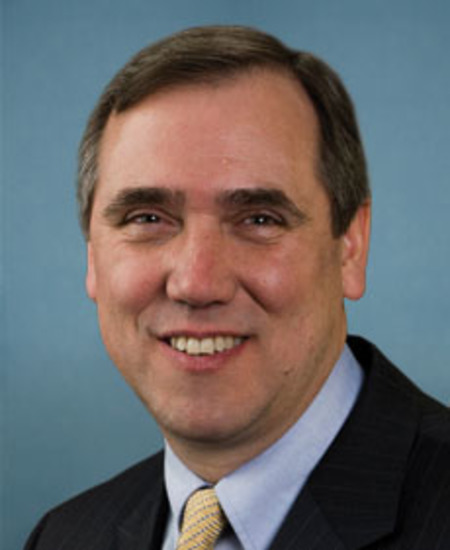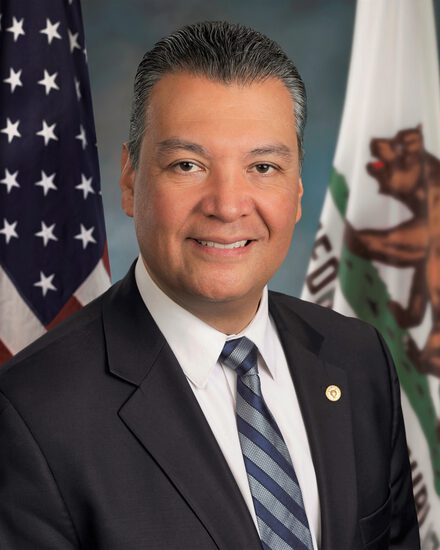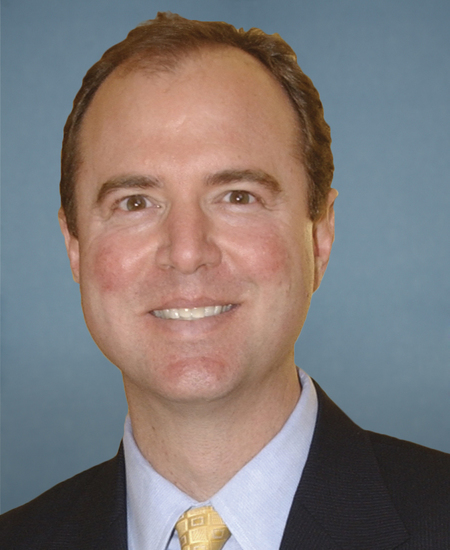
NEWS: Sens. Schiff, Wyden Press Flock CEO for Answers on Troubling Abuse of Technology Amid Surveillance Network Concerns, Push to Protect American’s Privacy
Washington, D.C. – U.S. Senators Adam Schiff (D-Calif.), a member of the Senate Judiciary Committee, and Ron Wyden (D-Ore.), Ranking Member of the Senate Finance Committee, are pressing for information regarding allegations of abuse of Flock’s surveillance platforms and whether their existing protocols are failing to protect Americans’ privacy. The inquiry follows increasingly troubling, documented reports of law enforcement officials abusing Flock’s nationwide license plate readers, camera network, and sensors to carry out extensive, unauthorized surveillance. “Despite a professed public commitment to responsible governance, Flock has repeatedly failed to implement the safeguards necessary to protect Americans’ civil liberties,” the Senators wrote. Multiple organizations and news reporting have revealed alarming concerns of unauthorized surveillance by Flock cameras. For instance, organizations have come forward to express concern that states restricting reproductive health care access are using Flock data to track down patients traveling to other states for care while other reports indicate Immigration and Customs Enforcement (ICE) officials are conducting immigration-related searches of Flock databases to pursue individuals without warrants. An analysis of police and court reports by The Washington Post revealed that at least 50 law enforcement officers have been charged or accused of misusing Flock’s surveillance system for unauthorized purposes. In their inquiry, the Senators express concern over how Flock has repeatedly failed to implement the safeguards necessary to protect Americans’ civil liberties and demand answers on how the company is protecting against misuse by law enforcement and others, as well as its compliance with existing privacy laws. They also direct Flock to preserve all records between the company, employees, consultants, and state, local, and federal agents regarding Flock cameras. The full text of the letter can be found here and below: Dear Mr. Langley: We write seeking information regarding allegations of potential abuse of Flock’s surveillance platforms and whether your existing protocols protect Americans’ privacy. Despite a professed public commitment to responsible governance, Flock has repeatedly failed to implement the safeguards necessary to protect Americans’ civil liberties. In the last two years, there have been increasingly troubling, documented reports of law enforcement officials abusing Flock’s nationwide license plate readers, camera network, and sensors to carry out extensive, unauthorized surveillance. In 2025, investigative reporting uncovered that a deputy in Johnson County, Texas accessed Flock cameras to track a woman by falsely claiming the case was about a “missing person,” when in fact the woman’s husband reported her to police for attempting to access reproductive health care. Since then, multiple organizations have come forward to express concern that states restricting reproductive health care access are using Flock data to track down patients traveling to other states for care. Numerous reports also indicate Immigration and Customs Enforcement (ICE) officials are conducting immigration-related searches of Flock databases to pursue individuals without warrants. While Flock claims to “not work with ICE,” and blames local customers who share information voluntarily with federal authorities for these searches, Flock has repeatedly failed to prevent ICE officials from accessing its data. In one instance, Kansas police went so far as to use Flock data to target a man who wrote an op-ed criticizing the department’s role in a local ICE operation. An analysis of police and court reports by the Washington Post revealed that at least 50 law enforcement officers have been charged or accused of misusing Flock’s surveillance system for unauthorized purposes. Despite these alarming developments, Flock continues to expand its network and collaborations with other data-sharing entities. A leaked corporate presentation reveals that Flock plans to partner with Nexar, a dashcam producer, to collect data from roughly 350,000 devices installed in rideshare vehicles. Nexar is currently in negotiations with AI company, Nauto, to create an “intelligence engine” of a scale “that no simulation and no single company’s dataset can match.” Flock and Nexar’s proposal to collect and disseminate data from hundreds of thousands of consumer and rideshare dashcams risks creating an expansive, pervasive surveillance network that lacks adequate consumer consent, transparency, or accountability. We understand that, in response to the recent public outcry against its products, Flock published a series of updates to its privacy standards. Unfortunately, these changes still leave many important questions unanswered. For example, although Flock shortened the default data retention timeline from 30 days to 7 days, it introduced a feature called, “Evidence Mode,” which allows detectives to “preserve specific [Automated License Plate] ALR data as evidence for an active investigation in cold storage.” Flock failed to explain how it plans to prevent misuse of this feature or what constitutes an active investigation. Flock also purported to add another capability, titled “offense filtering for sharing,” which would allow Flock users to limit searches of their data by outside agencies to certain types of offenses. However, a similar filtering requirement implemented in June 2025 failed to stop officers from querying restricted data using nonsensical, frivolous words to bypass the filtering system, including inputting the phrase “hehehe” to ostensibly circumvent prohibited search terms, instead of listing the actual terms they intended to search for. Clearly, this attempted corrective action was insufficient. Flock also updated its features to require law enforcement customers to adopt a program that automatically flags abnormal activity for administrator review. What qualifies as abnormal activity remains undefined. Furthermore, it is unclear whether Flock will also require those customers to adopt its “proactive lockout” feature, which would automatically suspend accounts exhibiting abnormal behavior. Flock claims to have the tools to protect the American people from further abuses of its platform. It must use them. As part of our legislative oversight to protect and preserve Americans’ privacy and civil liberties, we request responses to the following questions no later than September 25, 2026: Flock is currently subject to a patchwork of ordinances from cities, counties, and states across the country, how is Flock operating in that type of patchwork environment? Does Flock track if and when its technology is not compliant with any local ordinances or state laws? Does Flock request data on whether its technology violates any local ordinances or state laws? When will Flock mandate its “proactive lockout” feature for law enforcement partners? What additional safeguards has Flock included in its “offense filtering for sharing” feature to protect against misuse? What additional safeguards has Flock implemented to prevent law enforcement officials from querying sensitive information using pretextual justifications? Why did Flock choose to restrict transparency by switching to a generic dropdown menu rather than implementing stricter auditing of free-text entries? Furthermore, how does a pre-populated list prevent an officer from simply clicking a false, pretextual category to bypass oversight? Does Flock plan to periodically review whether its law enforcement customers are compliant with its safeguards? What specific safeguards has Flock deployed, placed in development, or evaluated to prevent system misuse of any kind? Please detail how each safeguard operates in practice, the rollout timeline for in-progress features, and the explicit reasons why any considered safeguards were rejected. Does Flock support or plan to support hardware authenticators, such as security keys or smart cards, to prevent sharing credentials and ensure every system action is tied to a single verified individual? Does Flock support or plan to support restricting system access so that searches are blocked unless the user is actively on duty, within an authorized location, and within an authorized time window? Does Flock support or plan to support mandatory two-person sign-off to approve searches? What corrective action does Flock plan to take to ensure that women seeking reproductive health care in states that protect access to reproductive health care do not have their data tracked by Flock Automatic License Plate Readers (ALPRs)? How is Flock ensuring that it is compliant with California’s privacy laws? What are the error rates for Flock’s data captures? What accountability and transparency policies does Flock have for error rates? Has Flock conducted a legal analysis of California’s privacy law in relation to its product and its use by local law enforcement? Although Flock’s proposed partnership with Nexar may not be in effect at this time, a leaked presentation for the Georgia Attorney General’s Office reveals that Flock actively pitched a plan to leverage approximately 350,000 rideshare and delivery vehicle dashcams as mobile license plate scanners. Does Flock still plan to partner with Nexar to collect data from rideshare dashcams? If so, will rideshare drivers be made aware that their dashcams are collecting data and be allowed to provide consent for such data collection? Will rideshare drivers participating in the program be required to disclose to their passengers that their data may have been collected by Flock? What steps does Flock plan to take to protect the privacy of rideshare drivers and their passengers who will be recorded by this or any other similar program? In addition to the information requests above, as part of our legislative oversight, please preserve all records and communications between you, your employees, consultants, contractors, agents, state and local law enforcement, Immigration and Customs Enforcement, and the Department of Homeland Security, regarding Flock cameras. This applies to internal communications and communications with U.S. departments and agencies. This includes but is not limited to: records and communications via email, whether official or personal; mobile devices; encrypted or disappearing messaging applications; social media; calendar entries; meeting notes; and voicemail and text messages. To the extent that you use any auto-delete functions, you should immediately suspend auto-delete functions and notify persons with control over potentially relevant records of their preservation obligations. This preservation request covers both past and current efforts, as well as any planned or in-development measures responsive to the issues raised in this letter. We look forward to your prompt response and appreciate your attention to this matter. ###
fa289216-f534-4748-8057-0ddabc391aa8Issued within 24 hours
Other senators' releases published in the day before or after this one.