New Mexico leaders decry Supreme Court's ICE ruling, say it will lead to racial profiling in state
Throughout her 11-year tenure at the American Civil Liberties Union of New Mexico, Maria Martinez Sanchez has never felt so personally implicated in a court ruling as she was by the one delivered Monday by the U.S. Supreme Court.
“I am a brown woman, and I am sitting here wondering — do I need to keep proof of my citizenship with me on at all times?” said Martinez Sanchez, the chapter’s legal director and a New Mexican whose family roots in Mora date back before statehood. “Because that’s apparently where we are at in this country after the Supreme Court decision.”
President Donald Trump’s national immigration crackdown got a boost Monday when the Supreme Court lifted a federal judge’s order prohibiting federal agents in Los Angeles from stopping people and asking them about their immigration status based solely on identifiers like ethnicity, accent, language and workplace.
While the 6-3 ruling specifically pertains to the aggressive immigration enforcement in Los Angeles, New Mexico leaders and critics were quick to decry the decision they said will imbue national immigration policy with racial profiling and open the floodgates to heightened enforcement in New Mexico — a state with high levels of Spanish-speakers and Hispanics that has until now largely been spared from the level and tactics of immigration enforcement deployed in states like California.
The case began with a temporary restraining order issued by U.S. District Judge Maame Ewusi-Mensah Frimpong in Los Angeles, who held in July it was illegal for federal agents specifically in Los Angeles to “conduct roving patrols which identify people based on race alone,” as a means to “aggressively question” and detain people without a warrant or “reasonable suspicion.”
Despite requests from the federal government to strike down her order and resume aggressive immigration enforcement actions in Los Angeles, a three-judge appeals panel in August opted to uphold Frimpong’s order.
The Supreme Court struck it down: In aconcurringopinion, Justice Brett Kavanaugh wrote the plaintiffs in the case, including U.S. citizen residents of Los Angeles who argued they had been racially profiled by immigration agents, had little legal standing “absent a sufficient likelihood” that they “will again be wronged in a similar way.” He also argued agents use the “totality” of circumstances and their own personal experience to make reasonable suspicion determinations, noting certain fields like landscaping, agriculture and construction “do not require paperwork and are therefore especially attractive to illegal immigrants.”
The high court’s three liberal justices dissented.
“The concurrence improperly shifts the burden onto an entire class of citizens to carry enough documentation to prove that they deserve to walk freely,” Justice Sonia Sotomayor wrote in a dissenting opinion. “The Constitution does not permit the creation of such a second-class citizenship status.”
New Mexico Attorney General Raúl Torrez said in a phone call Tuesday the court’s decision gives immigration authorities “a blank check to racially profile large segments of our society.”
“It harkens back to frankly the darkest chapters in America’s history, where certain racial and ethnic minority groups were treated as ... less deserving of fair and equal treatment under the law,” said Torrez, noting the Supreme Court has “absolutely forbidden” consideration of race or ethnicity in the context of college admissions.
Torrez said while the Monday ruling is not the final say regarding the case, the immediate implications will extend beyond California.
“The rules that ICE uses to operate in California are no different than what they’re doing in New Mexico,” Torrez said. “They’re no different than what they’re doing in Chicago.”
While New Mexico hasn’t seen the same “surge in resources for immigration” as Southern California and Chicago, Torrez predicted there to soon be a “rapid escalation” in immigration enforcement that he credited to a new threefold budget increase for U.S. Immigration and Customs Enforcement and the agency “reducing the training” required of new immigration agents.
That could spell trouble for New Mexico, the state with the highest proportion of Latinos and Hispanics, Torrez warned. About 48.6% of the population identifies as such, according toestimatesfrom the 2023 American Community Survey.
Torrez said he is disappointed by the “lackluster” response from Democratic leadership in focusing on “whether or not Donald Trump sent a birthday doodle to Jeffrey Epstein 20 years ago, and not ... whether or not Hispanics in this country are going to be treated as second-class citizens.”
It didn’t take long for New Mexico’s all-Democratic congressional delegation to lambast the changes as unjust and uniquely harmful to New Mexico.
Hours after the court delivered its Monday verdict, U.S. Rep. Teresa Leger Fernández took to the floor of the U.S. House of Representatives to deliver aspeechin Spanish citing her Latina identity, the 17 generations of Spanish-speaking New Mexicans that came before her and a court decision that has “condemned millions of Latinos to live in fear.”
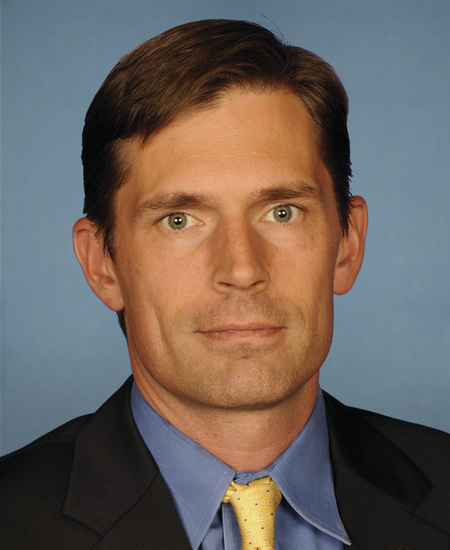
U.S. Sen. Martin Heinrich issued a similar statement in a news release Tuesday, calling the ruling “morally wrong and un-American.”
“When you look back in history, there is a distinct and dangerous turning point in authoritarian regimes when the courts are either disbanded or become complicit. Yesterday, President Trump’s handpicked Supreme Court majority became complicit,” he added.
State Sen. Pat Woods, a Curry County Republican and minority whip, said he doesn’t think the ruling will lead to racial profiling but acknowledged the damage immigration enforcement has had on his largely rural and agricultural district.
“If an ICE agent walks up to a guy and starts speaking English to him, and the guy talks English back to him, I think that would just zero out the argument that the guy was profiling,” Woods said. “But if he could not speak English, then ... I guess it would be an opportunity for the guy to ask him for his papers.”
Woods said the immigration raids have had a huge impact in the world of agriculture, which dominates the workforce in his conservative part of the state.
“It’s not one guy walking in and saying, ‘Guys, let’s see your papers,’ ” Woods said. “It’s an army going in and it is scaring the hell out of these guys, whether they’re legal or not.”
Woods raised one example of a dairy farmer who previously relied on immigrant workers. This year, the farmer went to the unemployment office to contract nine laborers with U.S. citizenship to milk cows for $18 to $20 an hour — and all nine quit in less than a week, Woods said.
“These [immigrants] are just people trying to make a living, and our immigration policies are pitiful,” Woods said. “There should be a way to let those people in, but they should come through the gate ... with all the facial recognition and stuff we have today.”
“?If a guy walks across the whole country of Mexico, I’d say he’s a pretty good damn worker,” he added.
Woods said he understands Republicans’ party line about stopping immigrants who come to the U.S. and commit crimes.
“But damn it, we need the labor,” he said. “We need the help. We have created a system that Americans don’t want to work hard. And how will that all end up? I don’t know. I’m an old man. Maybe someone else ... will figure that out.”
fee2390f-252d-4f19-bcb3-30f44049ba43Issued within 24 hours
Other senators' releases published in the day before or after this one.