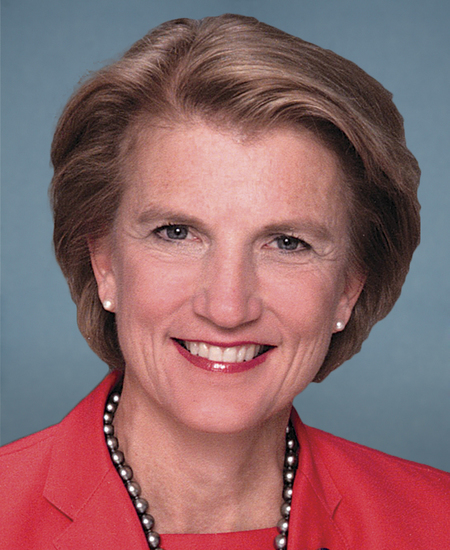
Capito, Colleagues Reintroduce Bill to Protect Federal Elections
WASHINGTON, D.C.–U.S.Senator Shelley Moore Capito (R-W.Va.), a member of the Senate Committee on Rules and Administration, joined Senator Katie Britt (R-Ala.) and their Rules Committee colleagues in reintroducing theCitizen Ballot Protection Act.
The bill would ensure States are able to better verify that only American citizens are voting in federal elections by codifying the ability of States to require that an applicant provide proof of American citizenship when registering to vote via mail-in application.
“The right to vote, which is a cornerstone of our democracy, is a distinct honor and privilege granted to American citizens. That is why I am proud to help introduce the Citizen Ballot Protection Act, legislation that further protects that right by strengthening states’ ability to ensure only American citizens are voting in federal elections,”Senator Capito said.
“Voting in our country is a sacred right that must solely be limited to American citizens. To allow States to uphold this principle should be simple commonsense,”Senator Britt said.“It should not be controversial that States have the legal right to prevent noncitizens – including illegal aliens and o?cial representatives of foreign adversaries – from voting in State and Federal elections. Cities that allow noncitizens to vote in local elections disenfranchise hardworking American citizens, insult those American citizens who came to our country legally and took the time and e?ort to go through the citizenship process, and undermine faith in our entire electoral system – which is a cornerstone of our nation that we cannot allow to crumble. I’m proud to work with Representative Palmer and my Senate colleagues to ensure that we pass this legislation and stand up for the right of Americans – and only Americans – to vote in American elections.”
BACKGROUND:
In 2024, Washington, D.C.,began to allow noncitizenswho have been residents for more than 30 days to vote in local elections, opening the door to the possibility that foreign nationals, including embassy sta? from countries such as China and Russia, could be casting ballots at the polls in our nation’s capital.
In recent years, cities in Maryland, Vermont, and New York have also passed measures allowing noncitizens to vote in local elections.
While States have the primary responsibility of overseeing federal elections, theNational Voter Registration Act(NVRA) of 1993 – also commonly referred to as the “motor voter law” – lays out certain registration requirements for federal elections.
TheCitizen Ballot Protection Actrelates speci?cally to Section 6 of theNVRA, which requires that each State accept and use the federal mail voter registration application form developed by the U.S. Election Assistance Commission.
Section 6 also allows a State to develop and use its own mail voter registration form as long as it meets all of the same criteria theNVRArequires for the federal mail voter registration form.
TheCitizen Ballot Protection Actsimply amends theNVRAto explicitly allow States to put in place a proof of citizenship requirement for both the federal mail voter registration form and any State mail voter registration forms that they might develop.
Speci?cally,NVRAstates that the federal mail voter registration form:
State modi?cations to the federal form are reviewed by the U.S. Election Assistance Commission. Unfortunately, both the Election Assistance Commission and the courts have interpreted the prohibition on “any requirement for notarization or other formal authentication” as precluding e?orts by some States to include a requirement of documentary proof of American citizenship with the federal form.
One of the most notable instances of this issue is a 2013 Supreme Court ruling which held that Arizona could not require documentary proof of citizenship on the federal registration form without U.S. Election Assistance Commission approval.
# # #
04e71d5a-f05a-4294-95a5-e1d9717c8eb0Issued within 24 hours
Other senators' releases published in the day before or after this one.