Daines Talks U.S.-China Relations at Nixon Foundation’s Grand Strategy Summit
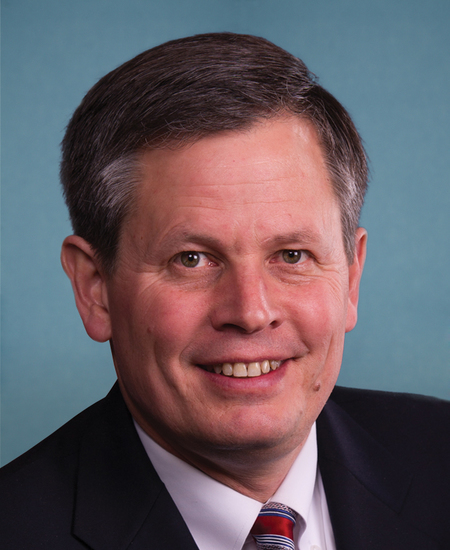
WASHINGTON, D.C. – U.S. Senator Steve Daines today spoke at the Nixon Foundation’s 2026 Grand Strategy Summit, where he laid out a vision for the future of U.S.-China relations. Watch Daines’ full remarks HERE. Daines on his background working in China: [My history with] China began back in 1991. I was a chemical engineer by degree, and I began work for Procter & Gamble in management…I spent seven years managing operations in the United States, and I got a call one day from our senior executive team that asked if we might be willing to go over to China 1991 to launch our businesses there, to take American brands, compete against the Chinese brands, and, of course, that massive consumer market. So my wife and I, we had 18-month-old little David at that point and little three-month-old Annie, we moved to Guangzhou in January of 1992. It was about a 400 billion dollar economy then… we got to see firsthand the incredible evolution, arguably an economic revolution, that’s occurred in China. We were the first non-state-owned enterprise allowed to recruit on the campuses of China…so I think part of my role here in Washington, I feel like Paul Revere, trying to just build awareness in terms of what’s at stake in the competition we face in China. It’s a world-class innovation ecosystem that is rapidly progressing. Daines on the tech ecosystem in China vs the U.S.: When I bring U.S. senators over to China, my goal is for them to understand the technology ecosystem. There’s a lot of goals you can have for a visit, but I want them to really understand that. Because there’s a lot of, I would call it, rear-view mirror thinking on China that’s primarily a supply chain issue…They can do a phase one clinical trial now in half the time that the United States does a phase one clinical trial to basically FDA standards. It’s not a perfect model, but more or less. So they’ve been able to get all the good coming from an FDA process for safety without the incredible regulatory burdens that we face sometimes that slow us down to getting drugs out to market faster. But number two, they do it at 20 percent of the cost…if you remember, Europe used to be the epicenter of pharma research and development and innovation. That shifted to the United States because of Europe’s overreaching regulation and government burden. It came to the United States. If you look at… clinical trial starts globally last year. The United States was at 45 percent a few years ago. It dropped down to 35 percent. China has come from nowhere to last year with 32 percent. So that’s one example. We talk a lot about AI, but I also keep an eye on the biotech and biopharma ecosystem. That’s very, very important. So if the… Innovation ecosystem supply chain shifts to China, which it’s doing right now as we speak. That becomes yet another, I think, concern for us in America as it relates to the next breakthrough, cancer drug, brain disease drug, Alzheimer’s, and so forth. Daines on China’s AI adoption: They’re [China is] doing a much better job of adoption, as I mentioned. At least Stanford’s ranking says number two. And you see it diffusing much more into their industry. At Zheijing university in Hangzhou, as I mentioned, it is an AI-driven curriculum now on the campus. They took us through. We met with the university officials. It’s pretty much free-form AI that the students use now to developing their learnings and by the way China graduates three times more PhDs every year than we do and five to ten times more engineers every year that we do and so not only is their ecosystem now becoming world class but it’s growing larger. Daines on peace between Armenia and Azerbaijan: What we did is we brokered a peace agreement between Azerbaijan and Armenia. And I was playing a shuttle diplomat between Baku and Yerevan, and I’ll tell you the secret sauce here was President Trump. They didn’t trust each other necessarily, but the United States had to step in the middle of that as the superpower and broker that deal. They came to Washington on August 8th last year and signed a peace agreement. I was up at UNGA last week, Wednesday, and we had the Central Asian and South Caucasus countries in one room. We had the foreign minister of Azerbaijan sitting next to the foreign minister of Armenia. And rather than talking about bloodshed and maybe thinking about a ceasefire and figuring out a way through this, you can see it in their body language and certainly their remarks, they’re both talking about their optimism right now economically as they’re opening up that corridor. As Brzezinski wrote in his book, The Grand Chessboard in the late 1990s, he said Central Asia is the wine bottle, the South Caucasus is the cork. We’ve popped the cork. And one of the best ways to understand that part of the world in a very simple… 10-second illustration. If you look at a, like, FlightAware, an app that shows where the air traffic is around the world, you can see the airplanes shoot the gap there between Georgia, Azerbaijan, Armenia, because they can’t overfly Russia, and they can’t overfly Iran, and then it explodes again. It spreads out again as they move through that little choke point. That choke point has just gotten opened up. And what that means is you’ve got incredible oil and gas reserves there certainly in Central Asia. Kazakhstan is the leading supply of uranium in the world. Turkmenistan is the fourth largest reserves of natural gas in the world. Severely underutilized. If we can start moving those resources, given what’s going on in the Strait of Hormuz at the moment, having an alternative kind of routing. that bypasses Russia and Iran and comes through the Caucasus, then you can go to the Black Sea, Turkey, or to Europe. This is absolutely a breakthrough moment for us. And so that whole Trans-Caspian opportunity is now opening up before our very eyes. And I credit Steve Witkoff and Areyh Lightstone and the President. ### Contact: Gabby Wiggins
10bfe2f6-3946-4a1a-bcc9-8c706305c8b5Issued within 24 hours
Other senators' releases published in the day before or after this one.