Barrett Introduces Legislation to Address Growing Threats from Artificial Intelligence, Other Emerging Technology
October 9, 2026 Press Release Office of Artificial Intelligence and Emerging Technology Threats Would Join Presidential Cabinet Ranks Washington, D.C. — Today,
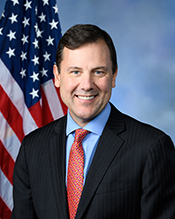
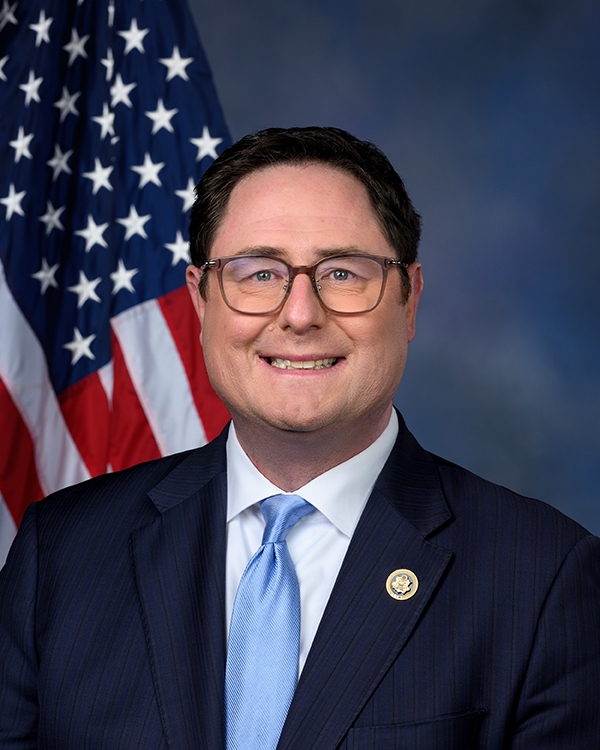
Congressman Tom Barrett (MI-07) formally introduced the Artificial Intelligence
Governance and Emerging Threats Act to address AI threats and increase
accountability in light of warnings from AI researchers about the risks
associated with this rapidly developing technology that companies are further
advancing by the day. Specifically,
the legislation would create the U.S. Office of Artificial Intelligence and
Emerging Technology Threats, which would be led by a representative
presidentially appointed and Senate-confirmed to serve in the president’s
Cabinet. The mission of the office would be to spearhead development and
implementation of federal policy on AI and other technological risks. “The United
States government has a fundamental responsibility to protect its citizens from
all threats, including those we might not see coming. The rapid development of
AI technology, which has potential to improve our society, has exposed the
serious dangers that can come with it,” said Barrett. “We are
already seeing it replace American jobs, threaten our national security, and
degrade human dignity. These risks cannot be ignored, so it’s time to create a
seat at the table for someone to monitor AI technology, ensure strong
guardrails are in place, and prepare us for this new era of technological
innovation and beyond.” The
representative in charge of the Office of Artificial Intelligence and Emerging
Technology Threats would serve as the principal adviser to the president on AI
and emerging technological threats; coordinate among federal departments to
ensure a cohesive federal approach to AI; and monitor risks and opportunities
related to AI and other technologies. The representative would also be required
to testify regularly before Congress on AI developments and threats. The Office
of Artificial Intelligence and Emerging Technology Threats would be housed
within the Executive Office of the President. In addition to the
representative, the office would have five Senate-confirmed deputy
representatives to spearhead specific responsibilities: Deputy representative for intergovernmental
coordination; Deputy representative for international
engagement; Deputy representative for private sector
engagement; Deputy representative for national security
and emerging technology threats; and Deputy representative for economic and
workforce impacts. The Office
of Artificial Intelligence and Emerging Technology Threats is patterned after
the Office of the Director of National Intelligence, which coordinates among
federal intelligence agencies and also traditionally has a seat in the
president’s Cabinet. Background Barrett has
been a leader on increasing accountability and transparency for artificial
intelligence and data centers. Last week, he wrote a letter calling on Secretary of
State Marco Rubio and U.S. Ambassador to the United Nations Mike Waltz to work
with other nations to negotiate a treaty setting international guardrails on
AI. In addition to his call for international collaboration, Barrett has introduced
or co-sponsored the following bills in Congress: The Human Authority over
Autonomous Weapons Act ( H.R. 9729 ) to ensure that no autonomous or artificial intelligence-enabled weapon
system used by the United States military can carry out an intentionally
lethal strike without meaningful human oversight or a human decision-maker
in the loop. The Children
Harmed by AI Technology (CHAT) Act ( H.R. 7218 ) to require AI chatbots to implement age verification measures to protect
minors. The bill requires parental consent for minors using chatbots, bans
chatbots from engaging in sexually explicit communications with minors,
and requires chatbots to notify a minor’s parent if the minor’s chat shows
signs of suicidal ideation. The AI
Threat Output and Monitoring Incident Containment Act ( H.R. 9965 ) to test advanced AI systems to prevent risks to nuclear safety. The Doctors Not AI Act ( H.R. 10210 ) ,
introduced by Barrett and Landsman, to ensure that artificial intelligence
cannot make or dictate health insurance coverage decisions involving
medical judgment. The VA Claims AI
Accountability Act ( H.R. 10418 ) to require VA employees — not AI — to make the final decisions for
approval of disability claims or benefits. The bill also strengthens
oversight and accountability for the VA’s digital benefits system. The VA AI Transparency Act ( H.R. 10417 ) to require the VA to disclose to every veteran any use of AI by the VA,
including in claims processing and customer service chats. The Protecting Local
Control of Data Centers Act ( H.R. 10119 ) to prohibit federal agencies from overriding local land-use, zoning,
siting, or permitting authority related to data centers. The No Data Center NDAs Act ( H.R. 10118 ) to prohibit members of Congress from signing non-disclosure agreements
(NDAs) about data centers, including any information about possible
locations or how much water or energy a facility is expected to consume. The No Secrets for Data
Centers Act ( H.R. 10570 ) to prohibit and invalidate NDAs signed by federal, state, and local
government officials to conceal details of data center projects. The bill
would also prohibit data center operators from receiving government
incentives if the conditions include entering an agreement to keep
information about the project confidential. CLICK HERE to read the bill.
14222d4b-3c08-4306-935d-e917f38b055bIssued within 24 hours
Other senators' releases published in the day before or after this one.