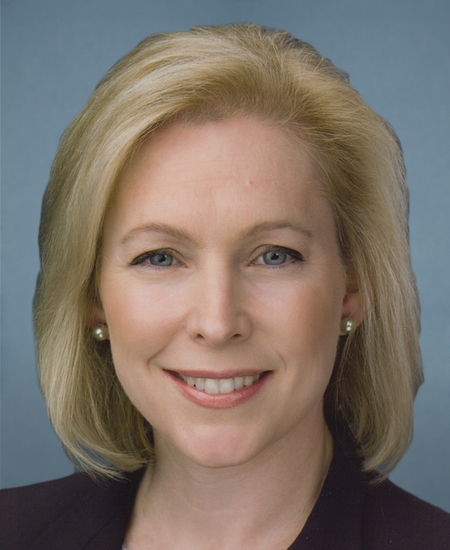
Gillibrand Demands Action To Combat Doctor Shortages In New York
Trump Administration Bottlenecks In J-1 Visa Processing Are Causing Physician Shortages Across New York International Medical Graduates Make Up Over One-Third Of New York’s Physician Workforce Today, U.S. Senator Kirsten Gillibrand (D-NY) demanded action to combat New York’s physician workforce shortage by addressing administrative backlogs at the U.S. Department of Health and Human Services (HHS). Currently, an administrative bottleneck within HHS’ Office of Global Affairs (OGA) is preventing hundreds of qualified, foreign-trained physicians from beginning their service around the United States, including at healthcare facilities in some of New York’s most rural and medically underserved areas. “International medical graduates are absolutely critical to New York’s physician workforce, especially in rural areas of our state,” said Senator Gillibrand. “New York’s healthcare providers cannot afford to lose qualified doctors to administrative red tape. I’m urging HHS to immediately address these backlogs so that New Yorkers can get the high-quality care that they deserve.” International medical graduates make up over one-third of New York’s physician workforce, more than in nearly every other state. Persistent clinician shortages, which have been reported at medical centers across New York, have a devastating impact on patient care, increasing wait times, delaying patient care, and overburdening providers. Physician shortages are particularly acute in New York’s rural and medically underserved areas. As Senator Gillibrand notes in her letter, “ A 2025 report highlights that 16 of the state’s rural counties face alarming gaps in care, with several counties lacking even a single pediatrician or OB-GYN. On average, these counties have only four primary care physicians per 10,000 residents, which is less than half the statewide ratio.” To improve care in these areas, New York hospitals rely on the J-1 visa waiver program, which allows international medical graduates to waive their two-year home residency requirement and stay in the United States if they commit to working in a Health Professional Shortage Area . However, monthslong delays processing J-1 waiver recommendations is exacerbating physician shortages, preventing hundreds of qualified physicians from beginning their service and creating challenges for New York hospitals creating staffing plans for the upcoming year. HHS has not provided a timeline for improvements of this process. The text of the letter can be found here or below: Dear Secretary Kennedy, I write to express my serious concern regarding significant processing delays at the Department of Health and Human Services (HHS) for J-1 visa waiver recommendations under the HHS Exchange Visitor Program. The current administrative bottleneck within the Office of Global Affairs (OGA) is preventing hundreds of qualified, foreign-trained physicians from beginning their service around the United States, including at healthcare facilities in some of New York’s most rural and medically underserved areas. Particularly as New York relies more heavily on international medical graduates than nearly every other state, this backlog disproportionately impacts the ability of my constituents to access necessary care in a timely manner. I urge you to address these delays and provide a clear path forward for these essential medical professionals to support our healthcare system. New York faces a severe physician shortage that is particularly acute in its rural and medically underserved communities. A 2025 report highlights that 16 of the state’s rural counties face alarming gaps in care, with several counties lacking even a single pediatrician or OB-GYN. On average, these counties have only four primary care physicians per 10,000 residents, which is less than half the statewide ratio. To bridge this gap, New York hospitals rely on the J-1 visa waiver program, which allows international medical graduates to waive their two-year home residency requirement and stay in the United States if they commit to working in a Health Professional Shortage Area as designated by the Health Resources and Services Administration. Over one third of New York’s physicians are international medical graduates, more than nearly every other state, making it an essential tool in addressing the state’s physician workforce crisis. The impact of the current delay is substantial. My office has received multiple reports from New York hospitals and constituent physicians who have received employment offers from major hospital systems but have remained in administrative limbo for months without clear guidance from HHS. These administrative hurdles are not merely inconvenient; they threaten the stability of our healthcare system and the well-being of New Yorkers who face delays in treatment or an inability to access care altogether. The timing of these delays is particularly perilous because many physicians currently finishing their residency programs face a July 30th deadline to avoid a mandated return to their home countries. If their waivers are not recommended by HHS in time for subsequent processing by the State Department and U.S. Citizenship and Immigration Services, these doctors may be forced to leave the country and New Yorkers will bear the consequences. These vacancies are historically difficult to fill, and under the impending deadline, it would be nearly impossible to recruit a candidate that does not require visa support or trigger significant financial consequences for these New York hospitals. Under the Presidential Proclamation of September 19, 2025, titled “Restriction on Entry of Certain Nonimmigrant Workers,” if a physician’s status lapses, the employer must pay a new $100,000 fee to re-initiate the hiring process for each candidate seeking H-1B status. This is plainly infeasible for New York’s rural and safety-net hospitals, many of which already experience severe labor shortages. Prior correspondence from HHS to my office dated April 13, 2026, acknowledged OGA is processing a large volume of applications while implementing procedural improvements, but the agency has not given an estimated timeline for these improvements. In the immediate term, more must be done to address the timeliness of application processing. The lack of case-specific timelines presents significant difficulty for New York hospitals creating staffing plans for the upcoming year. Given that the OGA has historically reviewed these cases in a one-to-three-week timeframe, the current months-long delay is untenable. New York’s healthcare providers cannot afford to lose qualified doctors to administrative red tape. I request answers to the following questions by June 15, 2026: How many J-1 waiver applications are currently pending a recommendation from the HHS Exchange Visitor Program? Of the total pending applications, how many involve physicians committed to working at facilities located in New York State? What is the current average processing time for a J-1 waiver recommendation from HHS, and how does this compare to the average timeframe from previous fiscal years? What specific process improvements is the OGA currently implementing, and what is the estimated date by which these changes will result in a return to standard processing speeds? Given the impending July 30 deadline, will HHS commit to implementing an expedited review or emergency batch processing for physicians with signed contracts in high-need areas? Thank you for your attention to this matter. I look forward to your timely response. ###
2d612e4f-fcb7-473f-881c-9c615d408c5eIssued within 24 hours
Other senators' releases published in the day before or after this one.