EPW Committee Advances Sullivan’s Cold Weather Diesel Reliability Act
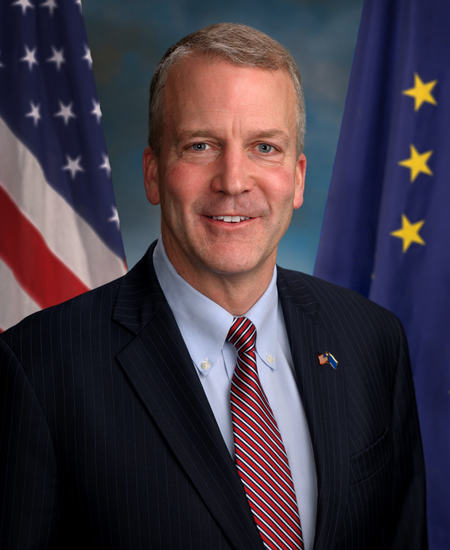
WASHINGTON —U.S. Senator Dan Sullivan (R-Alaska), a member of the Senate Environment & Public Works (EPW) Committee, today welcomed the committee’s passage of his Cold Weather Diesel Reliability Act . The legislation, introduced by Sullivan and Sen. Cynthia Lummis (R-Wyo.), directs the Environmental Protection Agency (EPA) to update its regulations to account for how diesel engines actually operate in cold-weather states, like Alaska, to prevent the automatic shutdowns (or ‘derates’) caused by cold-related emissions faults, and to provide year-round exemptions from DEF system requirements for vehicles and equipment that operate primarily in cold weather climates. “When a truck or piece of heavy equipment is forced by EPA mandates to shut down in extreme cold because of a faulty sensor not made for the cold, it’s not just an inconvenience—it can quickly become a life-threatening situation,” said Sen. Sullivan. “For too long, the men and women who keep Alaska moving have been forced to contend with one-size-fits-all EPA diesel mandates that simply don’t work in our state. I want to thank my committee colleagues today for joining me in taking an important step toward fixing this issue once and for all. The Cold Weather Diesel Reliability Act will bring common sense to EPA rules and ensure that trucks and heavy equipment can continue operating safely and reliably in the nation’s coldest regions.” Click here or the image above to watch Sen. Sullivan’s remarks in the hearing. Under current EPA regulations, adopted under the Obama administration, diesel trucks and heavy equipment are required to use emissions systems that can trigger engine shutdowns if the system detects a fault. In cold weather, these emissions components—including but not limited to diesel exhaust fluid (DEF)—often struggle to reach or maintain proper operating temperatures, causing the system to register faults even when the engine itself is running normally. These systems have created life-threatening situations for truckers, including one trucker whose vehicle shut down in a blizzard on the Dalton Highway, a 400-mile stretch of road leading to Prudhoe Bay with only one gas station. Below is a timeline of Sen. Sullivan’s work on the Cold Weather Diesel Reliability Act : In November 2025, Senators Sullivan and Lummis introduced the Cold Weather Diesel Reliability Act . On March 11, 2026, the EPW Committee held a hearing on Senator Sullivan and Lummis’ legislation, which included testimony from Ryan Anderson, commissioner of the Alaska Department of Transportation and Public Facilities (Alaska DOT) and other expert witnesses. On July 3, 2026, the President issued a full pardon for Wasilla diesel mechanic and small-business owner Mackenzie “Mac” Spurlock after Sen. Sullivan requested a full and unconditional pardon for Spurlock, who was convicted by overzealous federal prosecutors for modifying emissions systems on diesel engines for Alaska businesses to keep their vehicles operational in the state’s extreme cold climate conditions. On September 3, 2026, the President issued full pardons for Daniel Chase, owner of DC 907 Diesels repair shop, and Michael Hanzuk Jr., owner of Arm Rippin Toys repair shop, who were similarly convicted under the Clean Air Act for modifying vehicle emissions systems. Below is a transcript of Sen. Sullivan’s remarks in the committee mark-up today. Thank you, Madam Chair. Fittingly, during National Truck Driver Appreciation Week, today’s passage of my bill, the Cold Weather Diesel Reliability Act, is a huge step forward for truckers, farmers, mechanics and operators who keep Alaska and our nation moving. For over a decade, Washington has forced a one-size-fits-all mandate on hard-working Americans as it relates to their diesel engines, especially Alaskans. EPA regulations require modern diesel engines to run on diesel exhaust fluid, or “DEF,” and mandated automatic shut-offs that instantly kill engine power if fluid runs low or a sensor glitches to ensure compliance. In the real world, that’s a disaster. DEF freezes at just 12 degrees Fahrenheit, which is a balmy day in my state. Even with onboard heaters, these systems can’t compete with -40 degree weather, which we often see in Alaska. So when those lines freeze, fully functional engines actually are forced to shut down. Think about an ice road trucker going up to the North Slope, keeping the Alaska economy humming. Madam chair, as you saw during our hearing on this bill, this isn’t a one-off occurrence. It’s happening all across my state and other states throughout the country. It means Alaskans are left stranded on a remote, icy highway with no cell service—not because of any kind of mechanical failure, but because of literally digital red tape that shuts down their engine. Every single time, working families are left on the hook for a hefty maintenance bill. At that hearing, Madam Chair, you might remember the Commissioner of Transportation for the State of Alaska, Ryan Anderson, testified to this committee that DEF-related failures cause up to 80 percent of the State of Alaska’s fleet maintenance issues—80 percent of all trucks driving for the Department of Transportation in Alaska, which is thousands. We heard Alaskans loud and clear. As this issue has gained momentum, we’ve seen an outpouring of support from folks not just in my state, but literally across the country, how these faulty sensors negatively affect their daily lives. And it’s not just trucks and tractors. It’s fire trucks. It’s school buses. It’s airport plow equipment. So my bill, the Cold Weather Diesel Reliability Act removes this dangerous compliance trap. It directs the EPA to update its rules to end the automatic shutdown of engines during extreme cold, guaranteeing that zero-degree weather or below-zero weather doesn’t turn a sensor glitch into a life-threatening emergency. While it’s disappointing my Democratic colleagues voted against this basic safety fix, I do want to work with Senator Whitehouse and others to try to get a bipartisan way forward on this bill. I think the hearing that we had a couple of months ago really impacted everybody—every senator in this hearing room—where we saw that this was an issue not just in Alaska, but across America. I look forward to bringing this bill to the Senate floor soon and delivering a win for Alaskans, but also Americans across the country who keep our economy moving. # # #
34bc768d-3fee-4b95-9790-d784ccf71525Issued within 24 hours
Other senators' releases published in the day before or after this one.