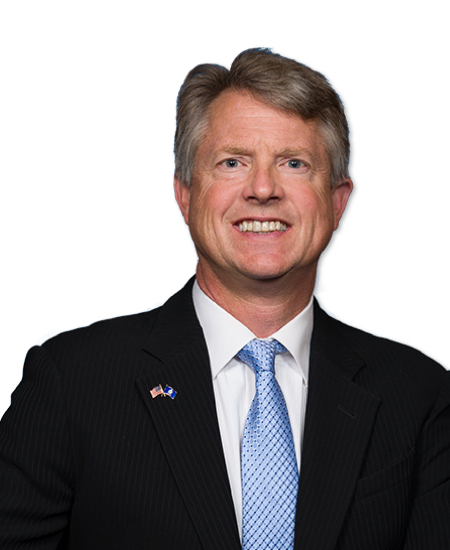
Senator Marshall: I Want the Next Generation to Have the Same Shot at the American Dream I Had
Senator Marshall Joins 13 th & Park Podcast Washington – U.S. Senator Roger Marshall, M.D. (R-Kansas), joined Adam Goodman on the 13 th & Park Podcast to discuss his 10 th statewide tour of Kansas and what he is doing to address the issues Kansans are facing, what bipartisanship looks like in Washington, the Rural Health Transformation Fund and finding a solution to the challenges of rural healthcare, President Trump’s support for American farmers, and how he hopes to give the next generation of Kansans the same chance at the American Dream that he had. Click HERE for the full interview. Highlights from the interview include: On what he learned from his 10th tour of every Kansas county: “Well, I think the number one thing I hear is the cost of gas, the cost of groceries. We had four years of cumulative inflation under Joe Biden, so housing went up 50%, healthcare, childcare. So, people are still feeling the brunt of that in so many ways. On the one hand, you have the strong economy — we can talk about that more — but there is a group of folks out there, typically under the age of 40, and I call this a slow-lane economy. They graduated from college with a lot of debt, their credit cards are maxed, they didn’t buy their home. They chose to do other things than buy their home, and now homes are unaffordable. If you’re under the age of 40 and you’re a person in middle-income America, you cannot afford to get into a house unless mom and dad help. And then your property insurance and your property taxes are so high and a high interest rate — you know, it’s really hard right now.” “I always figure prosperity and security are my goals. I want your family to be safe and secure, and I want you to be prosperous as well. So certainly, a focus on what’s going on with the economy — sitting down very specifically with people in manufacturing, agriculture, ranching and targeting those types of people. I figure if economically you’re in good shape, your family’s safe and sound, then those are good starters. So, trying to target housing — housing’s a top three issue back home, so every community that I go to, ‘How’s housing? What’s working? What’s not working?’ And even part of it is spreading the good word. Salina, Kansas is knocking it out of the park right now on housing. Well, how come? They’ve got, first of all, a young lady that’s doing a great job — she understands the grant systems inside and out, and she’s out hustling. And so, when I go to the next community, and they say, ‘We just can’t figure it out,’ I say, ‘Hey, why don’t you pick up the phone and call Lucy over in Salina and say How is she doing it? Matter of fact, invite her to have a cup of coffee and come over and talk to your city commissioners or whatever it is as well.’ So, I’m kind of out there identifying best practices. Gosh, childcare: when I was in Congress nine years ago, we started doing roundtables on childcare. Fentanyl poisoning: I was one of the first people in the country saying, ‘My gosh, this fentanyl poisoning is going to be really, really, really bad.’ Mental health in farmers, suicide in farmers, we started doing roundtables with that, and trying to push people together and say, ‘How are we going to solve this? One community at a time — your community’s way, not Washington D.C.’s way.’ And then, you bring those concepts back to D.C. and put loose guardrails around it and say let’s empower each one of their communities to figure out housing, or childcare, whatever, to help them figure out how to do it their way.” On passing Whole Milk for Healthy Kids and bipartisanship in Washington, D.C.: “Whole milk is a very simple example: whole milk was taken out of our school systems by the Obama administration — typical Washington, D.C. telling Kansans what we should eat or drink. And really there wasn’t enough science to say why we should take it away from children, and then because of that, we have several generations of children that didn’t drink any milk. Have you ever drunk 1% milk? It’s horrible. I was raised on whole milk. So, we found a partner — the senator from Vermont, Peter Welch. He and I have a real relationship; we work out in the gym together. Not that we try to, but we’re kind of on that same timetable between four and six o’clock. We sneak into the gym; we don’t tell our staff where we’re hiding — they can’t walk in there because it’s off limits to staff. So, it took leadership on his part. Amy Klobuchar, the ranking member of Ag, did a great job blessing it and getting it across the finish line as well, and of course, John Boozman, the chairman of the Ag Committee on our side. So, it takes leadership, and that’s how we get it done. But the problem up here now, if it’s anything on the front page — if you’re a Democrat supporting anything that the Republicans or administration are doing, you’re going to get crucified in the nightly media. And vice versa is true as well. So, on the major issues, it’s going to remain a challenge. Like funding the government.” On the Rural Health Transformation Fund and solution to rural healthcare: “So, I’m so proud of what we’re doing with these monies. If you think about rural America right now, first of all, we have a chronic illness problem — and that’s true wherever we live. And then number two is: what do we need in rural America for healthcare? Well, what you really want is an A+ emergency room and then outpatient services: a pharmacist, physical therapy. These hospitals in rural America, in rural Kansas, average 1.6 inpatients per night — a 25-bed hospital, they’re averaging 1.6 inpatients. So, if I gave you a 25-bed hotel, and you averaged 1, you would say, ‘No, I can’t afford the taxes on it and the upkeep on it,’ right? So, we need a different model. And what we’re hoping with this funding is that there’s a transition to this next model. And we have something out there: we developed a prototype called a Rural Emergency Hospital. By the way, on average these hospitals are losing $600,000 a year — that is what the average loss is on these Critical Access Hospitals. So, every one of those that we’ve done, that have flipped from this traditional Critical Access Hospital to this Rural Emergency Hospital model, has gone from losing money to making a little bit of money. And then we’ve got to talk about primary care just for a second. 90% of Americans have a chronic disease. So, what are we going to do to address this chronic disease problem? And the solution in rural Kansas may be different than it is in suburbia or urban America.” On agriculture in Kansas and President Trump’s support for American farmers: “People in agriculture are the salt of the earth — there’s no doubt about it. Point at the cattle industry — most farmers also have some cattle, and that cattle industry is so important to Kansas. If you put all of our commodities together, we’re the largest grower in the world of wheat and typically lots of soybeans, corn, and sorghum — but our cattle industry is worth maybe 5 or 10 times more in dollars and cents than all those others put together. When we turn that corn into beef, or we turn soybeans into bacon, or we turn sorghum into ethanol, that’s when the American farmer is making money. We have taught Brazil how to grow — they can grow two crops a year to our one crop. So, we’re never going to be able to outproduce other countries like we used to — we can’t make it up just on volume. So, you know, my message to them is focus on value-added products. And that would take us to 45Z, which is a tax credit that I worked on with President Trump. A week before the election, I took four farmers to Mar-a-Lago and sat down with the President and said, ‘Mr. President, I got one request — and that’s that you support this 45Z tax credit, because that’s going to beef up our ethanol industry as well as the jet fuel. And farmers and ranchers are going to get 40-60 cents a bushel more if they practice regenerative agriculture.’ So, this is the win-win. This is where I put my medical mind with my agriculture mind, put all the pieces together, and then address their chronic illnesses. If they’re doing environmentally friendly practices, if they’re growing more with less, if we’re putting more nutrients back in the soil and having healthier food, we’re going to reward the farmer to do that. And the mechanism to get it done was through this 45Z tax credit for ethanol, and then biologically derived jet fuel.” On what he wants to leave for the next generation of Kansans: “Yeah, I want them to have the same shot at the American dream that I had. I’m a fifth-generation farm kid, a first-generation college student. My American dream was to go to med school and go back and practice medicine in rural Kansas, raise a family in safety, security, and freedom. So, I want to protect their future, and I hope they have the same shot at the American dream that I have, and they maintain the same values that we had. And I think those go hand in hand.” ### Contact: Payton Fuller
36fabc3d-6b11-4372-ad8d-a846d4de76a2Issued within 24 hours
Other senators' releases published in the day before or after this one.