Whitehouse & Reed Introduce Disaster Relief Fairness Act to Counter Trump’s Politicization of Federal Emergency Management Decisions
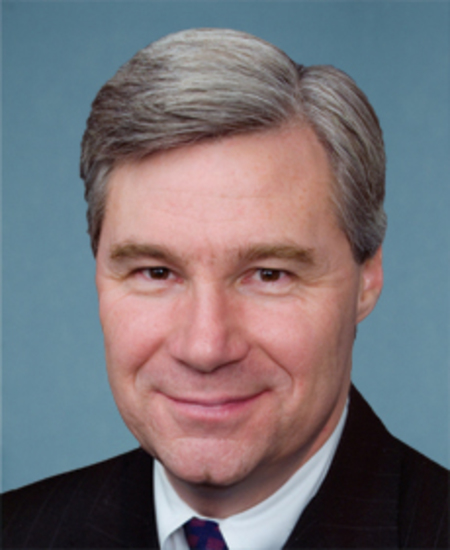
Washington, D.C. — When catastrophic natural disasters strike, the federal government has historically used a merit-based, non-partisan process to do its part to assist states in the aftermath of major hurricanes, wildfires, earthquakes, floods, or blizzards, presuming impacted states can prove the severity of the damage caused by the event. On February 22-23, 2026 Rhode Island was hit by a severe snowstorm that shut down the state for days. Over three feet of snow fell on the state in a 24-hour period – the highest one-day snowfall on record for Rhode Island. The storm hit Rhode Island with the intensity of a Category 2 hurricane, with heavy winds up to 74 miles per hour. It caused widespread power outages and tragically resulted in two fatalities and hundreds of emergency room visits. Local businesses faced prolonged closures due to disruptions to transportation, utilities, and public services across the state. The historic blizzard caused over $19.3 million in damages across Rhode Island – amounting to more than nine times the threshold required for a Major Disaster Declaration under Federal Emergency Management Agency (FEMA) regulations. Rhode Island emergency management officials worked hand-in-hand with FEMA to prepare a package documenting the damage, and a request was made to President Trump to make the necessary declaration to unlock funding to help with the recovery. Under federal law, only the president can approve a major disaster declaration. Under any other administration, Rhode Island’s disaster declaration request would have been approved on the merits, given the blizzard’s historic nature and FEMA’s own damage assessment guidelines. However, on July 2, the Trump Administration denied Rhode Island’s request — along with similar requests from other northeastern states that were severely hit by the snowstorm, but whose states did not vote for Trump in the last election. This is not a one-off: According to the Associated Press , President Trump “has approved more than three-fourths of the requests from states that voted for him in the 2024 election but less than half the requests from states that did not.” No other president in history has such a disparity in denials between states that supported him politically and those that did not. For example, during the Obama Administration, President Obama’s approval rate was identical for states that voted for and against him. The same week President Trump denied applications from Rhode Island, Massachusetts, New Jersey, and New York – states that are led by Democratic governors and that voted for Kamala Harris in the last election – he approved disaster declarations for nine Republican-leaning states. During Trump’s second term, the White House has approved 89 percent of disaster aid requests from Republican governors, and 23 percent of Democratic-led states, according to a memo compiled by minority members of the House Transportation and Infrastructure committee . These unfair denials negatively impact state, city, and town budgets and property tax rates for residents. Now, in an effort to counter Trump’s unfair, unwarranted politicization of federal emergency management decisions, U.S. Senators Sheldon Whitehouse (D-RI) and Jack Reed (D-RI) are teaming up to introduce the Disaster Relief Fairness Act ( S.5018 ). Under current law, major disasters are declared pursuant to Section 401 of the Stafford Act and based on consideration of several factors included in regulations at 44 CFR § 206.48. One key factor is a comparison of the cost of the disaster’s impact to the state’s ability to handle the event, a metric that is typically calculated by multiplying the per capita indicator by the state’s population. While the declaration process included in Section 401 leaves significant discretion to the president, no other president has ever before made politics the deciding factor in which states receive federal aid and which do not. The Whitehouse-Reed bill would prevent Donald Trump from maliciously denying disaster assistance to states and communities when they have met the criteria to qualify. “When disaster strikes, Americans have always thrown partisanship out the door to support their neighbors and local businesses in need,” said Senator Whitehouse. “President Trump plays a dangerous, cruel game when he injects partisanship into the decision to deny much-needed disaster aid for states that didn’t vote for him. Our legislation would remove the President’s whims from the disaster aid process and ensure Rhode Islanders get every cent they are due.” “Time and again, President Trump has shown that he can’t see past his own personal grievances and partisan biases when it comes to providing disaster aid,” said Senator Reed. “The Disaster Relief Fairness Act would ensure that the disaster declaration process is both impartial and consistent. Our bill would prevent Trump from using disaster assistance for political leverage or retribution by ensuring that every request for disaster assistance made during his presidency will be approved as long as it meets FEMA’s established requirements and thresholds. This will guarantee that states and tribes will get the relief they need to fully recover from disasters.”
439f893a-4348-4032-904a-f1dfd1982209Issued within 24 hours
Other senators' releases published in the day before or after this one.