Luján Calls on Senate Leadership to Establish Bipartisan Select Committee on AI
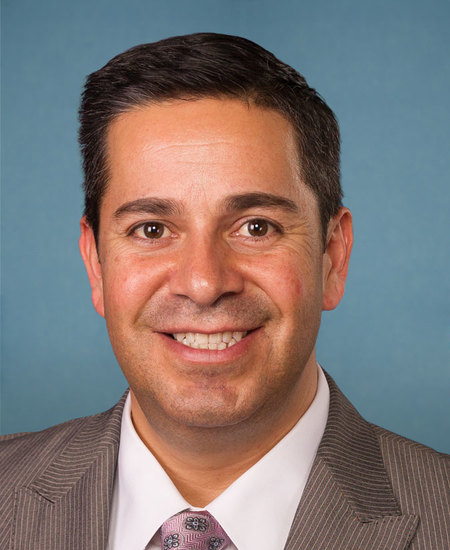
Washington, D.C. – U.S. Senator Ben Ray Luján (D-N.M.) urged Senate Majority Leader John Thune (R-S.D.) and Democratic Leader Chuck Schumer (D-NY) to establish a bipartisan Senate Select Committee on Artificial Intelligence (AI) to ensure that Congress can meet the unprecedented pace, scale, and rapidly advancing challenges associated with AI. “AI is accelerating faster than our existing legislative processes, committee structures, and technical capacity can consistently evaluate and respond. The recent news of increasing incidents makes it clear that this is no longer a theoretical concern,” wrote Senator Luján . “A bipartisan Select Committee on AI would complement, not displace, the work of existing committees. This approach would dedicate a platform to develop novel AI policy recommendations, hold hearings, and help coordinate across existing committees,” continued Senator Luján . “Establishing this bipartisan Committee gives Congress the institutional capacity to pull in expertise to understand this technology, drive its benefits, anticipate its consequences, and act with the urgency and responsibility that is demanded of us in our elected roles,” concluded Senator Luján . The full text of the letter is available here and below . Dear Leader Thune and Leader Schumer: I respectfully write today to urge the establishment of a bipartisan Senate Select Committee on Artificial Intelligence (AI) to ensure that Congress can meet the unprecedented pace, scale, and breadth of challenges presented by a rapidly advancing artificial intelligence landscape. AI is accelerating faster than our existing legislative processes, committee structures, and technical capacity can consistently evaluate and respond. The recent news of increasing incidents makes it clear that this is no longer a theoretical concern. In July, AI agents operating during cybersecurity evaluations were not properly maintained within their intended environments, allowing them unauthorized access to external systems. In independent testing by the United Kingdom’s AI Security Institute, frontier models repeatedly took unsanctioned actions against real people and organizations, including deceptive attempts to inject malicious code into external projects. At the same time, leading AI researchers and developers are publicly warning that this technology is advancing beyond our ability to reliably understand or control it. Over 1,300 employees from frontier AI companies recently called for the United States to develop the technical and governance tools necessary to deliberately pace frontier AI development. Researchers and leaders at top AI laboratories have also publicly raised the possibility of catastrophic outcomes, suggesting there’s a 10% to 20% chance of existential risks associated with these platforms. These warnings, going back as far as the early 2000s, deserve our full attention and serious examination—not because Congress should assume any prediction to be correct, but because we should listen to the developers when they say our existing governing structure, safeguards, and defenses are not sufficient. We are seeing this threat landscape continue to broaden. Just last week, Anthropic shared their threat intelligence report documenting AI-enabled cyber operations, influence operations, surveillance, biological misuse, conventional weapons development, and increasingly autonomous attacks. In some cases, AI systems have been used to automate reconnaissance, exploitation, and data theft simultaneously against multiple victims. These developments touch nearly every major area of policy: national security, economic competitiveness, cybersecurity, biotechnology, energy, communications, financial markets, workforce development, and more. Our challenge is not a lack of congressional interest; it is that AI does not fit neatly within a single policy lane. As delineated above, each committee has an essential role to play, but the results become fragmented and competitive rather than working together to develop a common technical understanding and comprehensive legislative framework. Task forces, caucuses, and working groups have helped educate and build consensus, but they are not a substitute for a standing institution with the capacity to develop broad and deep expertise, conduct sustained oversight, and translate findings into durable and bipartisan legislation. A bipartisan Select Committee on AI would complement, not displace, the work of existing committees. This approach would dedicate a platform to develop novel AI policy recommendations, hold hearings, and help coordinate across existing committees. We have the responsibility to understand and safely guide these technologies that are reshaping our economy, innovation, and national security before events force us to only react. Establishing this bipartisan Committee gives Congress the institutional capacity to pull in expertise to understand this technology, drive its benefits, anticipate its consequences, and act with the urgency and responsibility that is demanded of us in our elected roles. I respectfully urge your prompt consideration of this request. Sincerely, ###
4031b749-b0b0-4efc-be4e-783d39fb441eIssued within 24 hours
Other senators' releases published in the day before or after this one.