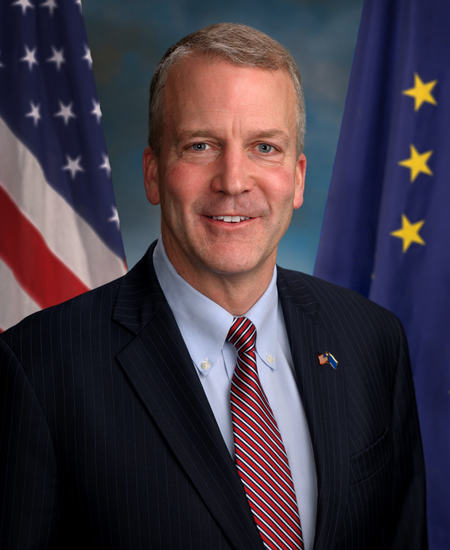
Commerce Committee Passes Sullivan’s Bycatch Reduction Act
WASHINGTON —U.S. Senator Dan Sullivan (R-Alaska), a member of the Senate Commerce, Science, and Transportation Committee, today celebrated the committee’s passage of his Bycatch Reduction Act , comprehensive legislation to reduce bycatch, protect seafloor habitat, and strengthen transparency and accountability in federal fisheries management. The Bycatch Reduction Act is an updated version of bycatch legislation Sen. Sullivan introduced last year that incorporates extensive input from Alaska stakeholders. The legislation is an outgrowth of Sen. Sullivan’s Alaska Salmon Task Force Act , which was signed into law in December 2022 and created the Alaska Salmon Task Force. “Today is an exciting day for the countless Alaskans—from subsistence harvesters to commercial and recreational fishermen, residents of coastal communities to upriver villages—who’ve rightfully demanded action to reduce mid-water and bottom trawl bycatch and gear contact with the seafloor to better protect our fisheries,” said Sen. Sullivan . “My Senate Commerce Committee colleagues and I passed my legislation that takes a comprehensive approach to these concerns: setting clear standards and strict enforcement measures, improving monitoring, increasing transparency, and helping test and deploy new gear and equipment that reduce bycatch and habitat disturbances. Each of these priorities came from conversations with and input from hundreds of Alaskans, and I can’t thank them enough for their ideas and support. Now, this legislation moves to the Senate floor, taking an important step toward safeguarding the long-term sustainability of the fishery resources so many Alaskans rely upon.” Click here or the image above to watch Sen. Sullivan’s remarks in the hearing. Sen. Sullivan’s Bycatch Reduction Act creates a robust toolkit to reduce bycatch and seafloor habitat impacts from mid-water and bottom trawl fishing vessels and strengthen reporting transparency and accountability. These tools include establishing clear standards and monitoring requirements to ensure trawl nets remain off the seafloor; mandating proven salmon excluder devices; investing in salmon tagging, faster genetic sampling, and ecosystem analyses; creating a new flume tank testing facility that simulates real ocean conditions to evaluate new gear and tools; and reauthorizing the National Oceanic and Atmospheric Administration’s (NOAA) Bycatch Reduction Engineering Program (BREP). Finally, the Bycatch Reduction Act would provide the public with greater access to participate in the North Pacific Fishery Management Council regulatory process and NOAA data monitoring. Background Several fish and crustacean species that spend all or part of their life in the marine environment have been experiencing increased variability in their productivity and abundance. The Bycatch Reduction Act builds on recommendations identified by the Alaska Salmon Task Force , which sought to disentangle environmental and human-caused factors that may be contributing to species declines and survivability, including bycatch in the marine environment. The task force was originally convened as a result of legislation authored by Sen. Sullivan, which was signed into law in December 2022. The Bycatch Reduction Act builds on the success of the Alaska Salmon Task ForceAct by: Reducing impacts on seafloor habitats and protecting species that live on the bottom with improved trawl gear and technology to keep nets off the seafloor and through monitoring and enforcement measures. Requiring proven bycatch reduction measures like salmon excluders on vessels. Improving transparency and public participation in regional fishery management councils through recorded meetings, expanding public comment opportunities, and a review of conflict-of-interest processes. Reconstituting the Alaska Salmon Task Force (ASTF) and giving Alaskans direct oversight of NOAA data collection and reporting on mid-water and bottom trawl gear impacts to the marine environment and seafloor habitat, and a direct role to decide what NOAA investigates next. Requiring the tracking of Alaska salmon migrations in the ocean through salmon tagging to reduce bycatch, genetic testing, and a thorough ecosystem analysis across the Bering Sea, Aleutian Islands, and Gulf of Alaska looking at ocean conditions like food availability, marine heatwaves, sea ice loss, and ocean acidification to understand how Alaska’s changing oceans impact the survivability of salmon, halibut, crab, and other species Alaskans depend on. Encouraging modern technology for all commercial fishermen , including small boats, to obtain NOAA experimental fishing permits to test innovative gear, equipment, or technology that reduces bycatch and seafloor contact. Requiring NOAA to publicly post observer coverage requirements and bycatch information in plain language , so all Alaskans can understand how bycatch is being tracked. Authorizing new funding and infrastructure that help all fishermen across Alaska access and test improved gear to reduce bycatch and protect marine seafloor habitats. Further background on Sen. Sullivan’s work supporting fishermen and coastal communities In addition to several other pieces of legislation that Sen. Sullivan was able to pass supporting fishermen, subsistence harvesters, and coastal communities, Sen. Sullivan has passed legislation and finalized executive branch actions in a whole host of areas supporting healthy marine environments, sustainable fishing, healthy salmon runs, and going after illegal foreign trawl fleets, particularly from Russia and China. Sen. Sullivan led a years-long fight to impose a comprehensive ban on the import of Russian-origin seafood into the United States given Russia’s non-reciprocal ban on the import of U.S.-sourced seafood. Sullivan initially succeeded in securing a 2022 executive order to ban Russian seafood imports, but that ban was circumvented as Russian seafood was shipped to and transformed in other countries, especially China, and then shipped into the United States almost duty-free. Sen. Sullivan then worked to secure a new December 2023 executive order and resulting U.S. Department of the Treasury determination to close this loophole. In 2025, he worked with President Trump to keep these 2022 and 2023 Russian reciprocity executive orders in place. Alaska Salmon Task Force Act —Signed into law in 2022 ( Public Law No. 117-328) . This legislation required NOAA to convene an Alaska Salmon Task Force. The task force reviewed and reported on research about Pacific salmon in Alaska, identified applied research needed to better understand salmon migrations and declining salmon returns in some regions of Alaska, and supported sustainable management of salmon. In 2024, Sen. Sullivan led the filing of an amicus brief in the U.S. District Court for Alaska in support of the North Pacific Fishery Management Council’s approval of Amendment 123. This action established a variable limit for halibut bycatch allocated to the commercial groundfish bottom trawl “Amendment 80” sector that is determined based on halibut abundance levels annually. This lawsuit was dismissed in 2024, with the court ruling that the Council had acted lawfully in its decision. Fighting Foreign Illegal Seafood Harvest (FISH) Act —A bill to combat foreign illegal, unreported, and unregulated (IUU) fishing by blacklisting offending foreign fishing vessels and strengthening enforcement by NOAA and the U.S. Coast Guard. Illegal, Unreported, and Unregulated Fishing Enforcement Act —A House bill (H.R. 774) signed into law in 2015 ( Public Law No . 114-81) . Sen. Sullivan was an original cosponsor of the Senate companion version of this legislation and is responsible for shepherding it through the Senate Commerce Committee. This legislation implemented the Port State Measures Agreement, increased coordination, and strengthened Coast Guard and Commerce Department enforcement against IUU fishing. FY 2026 National Defense Authorization Act —Signed into law in December 2025 ( Public Law No: 119-60) . A provision by Sen. Sullivan was included in the FY 2026 NDAA to prohibit military dining facilities and commissaries from purchasing or selling seafood that originates or is processed in the People’s Republic of China (PRC) to help Alaska fishermen and deny a market for Chinese fishermen. FY 2026 Agriculture Appropriations —Signed into law in November 2025 (Public Law No: 119-37) . Beginning in 2023, Sen. Sullivan passed an amendment on the Senate floor to prohibit the use of funds to procure seafood from China for use in U.S. Department of Agriculture (USDA) programs. This amendment has been carried forward in subsequent agriculture appropriations bills, including the recently enacted FY 2026 bill. # # #
441bda75-fda1-479f-aeed-332a675cc18aIssued within 24 hours
Other senators' releases published in the day before or after this one.