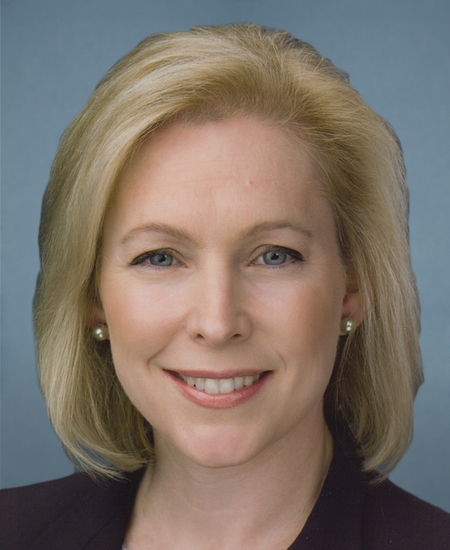
Gillibrand Holds First Ever Congressional Hearing On Menopause
**Watch The Hearing Here ** Today, U.S. Senators Kirsten Gillibrand (D-NY) and Rick Scott (R-FL), ranking member and chairman of the U.S. Senate Special Committee on Aging, held the first ever congressional hearing on menopause. At the hearing, expert witnesses testified about the urgent need to improve menopause research, training, and care. Additionally, Gillibrand and Scott made a bipartisan request to the Government Accountability Office (GAO) to investigate how the federal government currently coordinates and funds menopause research and care. “Menopause impacts over half of our population, and the fact that Congress has never held a hearing on it is absolutely disgraceful,” said Senator Gillibrand. “Today’s hearing was a critical step toward getting this issue front and center so that we can find the best ways to improve research, training, and care for women experiencing menopause. I am committed to working with all of my colleagues—men and women, Democrats and Republicans—to meet the moment on menopause.” Menopause is one of the most under-researched, undertreated, and underdiagnosed fields of medicine. Women in midlife make up about a third of the U.S. population. However, less than 1% of federal women’s health research funding is allocated to menopause. Additionally, 80% of OB-GYN residents admit to being ill-prepared to discuss menopause—meaning that women who seek medical care for symptoms of menopause are often left untreated . The lack of treatment for menopause also has massive economic implications. A study by the Mayo Clinic found that menopause costs the U.S. economy $26.6 billion per year, including $1.8 billion in lost work time alone. One in ten women leave the workforce because of menopause, taking decades of knowledge and experience with them. Gillibrand and Scott’s bipartisan letter to GAO requests a report on the federal government’s role in menopause care and research. This report will help us better understand remaining gaps in menopause-related research, education, and treatment, and what the federal government can do to address these gaps. The text of the letter can be found here . ###
084cea1a-001a-4e8f-b337-fdebdb4aade3Issued within 24 hours
Other senators' releases published in the day before or after this one.