Chairman Emeritus McCaul Discusses Evolutions in Counterterrorism 25 Years After 9/11 at CHS Hearing
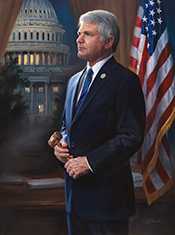
September 16, 2026 Press Release WASHINGTON – At today's House Homeland Security Committee hearing, Congressman Michael McCaul (R-Texas) — chairman emeritus and current vice chair of the committee — spoke with DC Fire and EMS Department Chief John Donnelly, FDNY Chief of Fire Prevention Thomas Currao, and Chief Secretary Officer for the Port Authority of New York and New Jersey Greg Ehrie. They discussed the strides made in protecting Americans from terrorism 25 years after 9/11 and the need to continuously adapt and innovate our technologies. Rep. McCaul also asked the witnesses about the evolving aviation threat posed by modern drones. Image Click to watch Full Exchange: McCaul: You know, I vividly remember that day as we all do. Horrific day. For us, it's living history. For many now, it's textbook history in the schools. After 9/11, I became the Chief of Counterterrorism and National Security in the Western District of Texas. I became a student of counterterrorism, and then became chairman of this committee. [I] worked very closely with NYPD and the New York Fire Department as well. I remember [in] 1993, we had a pre-warning: Ramzi Yousef trying to bring down the World Trade Center. And it was originally a plot to hit 12 synagogues simultaneously, symbolizing the 12 tribes of Israel. He modified his plan to take down the symbol of economic power, the World Trade Center, one pillar, one building toppling over the other. As you all know, he came actually relatively close to achieving that goal if the bomb had gone off closer to one of the pillar beams. But then he escapes, meets with his uncle Khalid Sheikh Mohammed. He develops the Bojinka plot. I knew the Diplomatic Security Corps officer who arrested him, and eerily, they found baby dolls in his apartment stuffed with chemical explosives to [bring] onto airplanes to blow them up. The Bojinka plot also being 12 airliners, symbolic of the 12 tribes of Israel. He conspires with Khalid Sheikh Mohammed on 9/11. The idea that planes could be turned into suicide missions was something that was not imaginable, and it was a failure of imagination. We saw planes hijacked, but not turned into cruise missiles targeted at buildings. In this case, three symbols of power: economic, military, and what in Arabic [is] called the building of laws, which was the United States Capitol. The threat was aviation then. I believe it's also aviation today. I chaired the special events task force on the FIFA games, and the number one focus [was] drones and the impact that drones could have. I just got back from Ukraine, saw the amazing drone capabilities they've developed in this war against Russia, this conflict. But the modern aviation threat 25 years later is my question for the three of you. We worked very hard, and the chairman passed the Safer Skies Act to help federal, state, and local to protect these events. But I'd like for the three of you to comment now on what I consider to be an old threat being aviation, but in a more modern capacity, and that is the threat of drones. Perhaps I could start with Chief Donnelly and work my way through. Donnelly: Drones bring a new threat to us, and we don't clearly understand it—meaning the evolution of drones and what their capabilities really are and really aren't leaves us in a spot where it's hard to prepare. We are preparing that these weapons can do things in our community that could be delivered by a car or by some other method, so we prepare [for] that. I think the second part of the challenge is awareness of drones. As you know here in the District of Columbia, the airspace is extremely restricted, and any drone that's up should be official. But sometimes there's so many different agencies with them up here, it takes a while to sort out whether or not it's an official one. And that isn't a local thing, that's a federal thing. That's all the different federal agencies putting them up. So here in the district, we are working with our partners in the Secret Service, with Capitol Police, with the Metropolitan Police Department. McCaul: Well, you have a lot of federal buildings, including the United States Capitol. I know there are federal agencies assigned to that, but I do think coordination, like with the Safer Skies Act, the intent behind that should apply. Donnelly: Yeah, and that's where we want to be. We want to be coordinated so that when a drone's up, we know if it's good or bad. I'm confident that we can respond to the threats that they bring, but the coordination, the awareness of what their real capabilities are would be helpful. McCaul: Thanks. Chief Currao? Currao: Thank you very much for the question. First of all, thank you for the support. It was grant funding that allowed the FDNY to really build a very robust drone and robotics program. It is a program that's come to quite significant fruition. We use it a lot in our fire and rescue operations in a marine environment. And we have actually been a leader working with a lot of our counterparts to actually develop policy. I think from our perspective, our biggest concern is the threat of even just a drone over a special event, over a large area, mass panic. We readily identify—you mentioned Ukraine—that these, uh, drones can be weaponized, and we're concerned about chemicals, biologicals, other dispersion methods. And I agree with Chief Donnelly, we're still trying to understand what is the real threat vector, right? How effective would it be? But in many ways, I’m very concerned about the fact that we could have a mass panic situation at something like the New York City Marathon, [or] any of those particular areas. McCaul: Or the Boston Marathon. Currao: Boston Marathon, absolutely. McCaul: And by the way, Firehouse 10 is the most dramatic experience, and seeing the flag that flew on 9/11 just always blows me away when I see it. But, Mr. Ehrie? Ehrie: No, sir, I agree with your assessment. We, like my colleagues, we’re watching this, and the technology is outstripping our ability to identify and mitigate the technology. And certainly what we're seeing over in Ukraine is the perfection of drone warfare, and that can be extended out across the full spectrum of threats we're going to face, everywhere from criminal, a delivery system, all the way up to a catastrophic counterterrorism attack. As you well know from your work with FIFA, it was our biggest fear that there was going to be something that came out in a drone that we could not either identify, and we certainly have a very limited capacity to mitigate that threat if we did identify it. Uh, as the chairman asked, we are extremely near [the]aviation industry, [you] see this over the airports. It was years ago in Scotland that a drone basically parked itself over the airfield, didn't do anything, but it stopped all transportation. The airport had to shut down. That threat is still existent today. We would not have a way to take that drone down unless it was a kinetic piece, so we're working very closely. If there's something this committee could do, especially on the federal level, a regulation they could put out there, but we need to identify the right technologies to counter this threat. McCaul: Very helpful. I yield back. Issues : Homeland Security
5874dc7e-d715-4633-ac15-c0d3b71a984dIssued within 24 hours
Other senators' releases published in the day before or after this one.