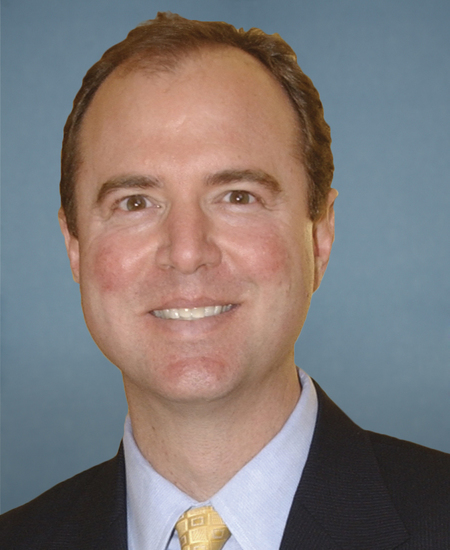
ICYMI: Sen. Schiff Talks AI Guardrails, Competition with China, and Outlook for Tech Regulation in New Congress at Punchbowl News Tech Summit
San Francisco, CA — This week, U.S. Senator Adam Schiff (D-Calif.) discussed his view on rapidly developing AI capabilities and the role of Congress in regulating the technology during an interview with Punchbowl News co-founders Jake Sherman and Anna Palmer at the publication’s first-ever Tech Summit in San Francisco. In the wide-ranging discussion, Schiffhighlighted his legislation to ensure private industry pays for the energy they use amid the buildout of data centers – so that Americans are not forced to pay higher energy costs as a result of the AI boom – and discussed Democrats’ approach to AI oversight next year, noting that Americans should “expect constructive oversight, not destructive oversight.” Schiff also discussedthe risks he sees in rapidly advancing AI models and argued that concerns about competition with China should include prioritization of safety, developing a skilled workforce, and improving education. View the full interview here . Key Excerpts: On Democrats’ AI priorities should control of Congress flip: […] I think the industry should expect constructive oversight, not destructive oversight. I think it should expect a Democratic majority that wants technology to succeed, wants these jobs to stay in America, wants their contribution to the economy and medicine and science but believes in regulation. Does not believe that any group of people be by dint of their wealth are empowered to make decisions affecting all of society for themselves. I think that’s what they should expect. […] What I do want to see is oversight that leads to sensible regulation of an industry that can do a lot of good and can do a lot of harm. To minimize the harms, to protect against the harms, do what government is supposed to do. I want to see a Congress that does what we have done in the past when we also had massive powerful corporations but we’re not afraid to regulate them. That is a basic function of government. On why Congress must move quickly to put guardrails on advanced AI: […] I do think we need to put in place protocols and monitors, a system to make sure that as these frontier models are developing, they’re developing safely. That there are processes in place where we don’t have to simply take the word of the companies that ‘don’t worry we’re doing it safely.’ I certainly don’t believe the self-policing; the moral authority argument is sufficient. There’s just too much profit motive, too much of a collective action problem that confronts the whole industry globally. […] You train the power of AI to find out everything it can about a single individual. Do we really think that their health records or their purchases or their subscriptions or any of their data is beyond the reach of an AI agent, sophisticated model, trying to find out the personal information? And with all the Flock cameras and with all the other CCTV cameras and the vulnerability of those systems, are we going to have any privacy left? And I think unless Congress acts, there won’t be any privacy left. On ensuring AI development is safe as we compete with China to establish AI dominance: […] I get that we should be very concerned about China’s advances in this area. I don’t want to dismiss that argument. That’s an argument that says that we need to reach some kind of an accord with China, which won’t be easy to do, but we need to do our best. It is not an argument though that, because China is making advances and we want to stay ahead of China, that we should rush headlong with the development of these models and regenerative AI in such a way that well, ‘let’s be sure that if we kill ourselves we do it first rather than letting China do it.’ We still want to make sure what we’re doing is safe for our people and safe for others. […] Why don’t we focus on improving our education system? Improving STEM education, making sure that everyone who graduates from high school has a good solid education, that the doors of higher education are open. Let’s compete with China on a skilled workforce. Let’s compete with China in how we think about the integration and the manufacturing of products that will incorporate AI. That’s where a lot of the economic benefits are going to come. On passing legislation to protect Americans from absorbing higher costs from data center buildouts: […] I introduced an early bill on this that would insist essentially that these data centers pay their own way. That they not only develop their own energy, but also that they have additional capacity to put energy into the grid during peak times. That they are responsible for the upgrades to the regional system that those costs are not socialized to others. It’s not hard to require that. It’s certainly not going to be done just by some kind of, ‘well, we give you our word.’ […] There should be complete transparency. I don’t think people should be misled about a project and then suddenly learn it’s going to be a data center in their backyard. But I don’t think everywhere is the same and I think communities should make the decision. Do they want it? Do they not want it? And some communities may want it, and many will not want it and that ought to be a decision that is made locally and I think not nationally. But we should be insistent nationally that those costs and burdens not be socialized onto others. On the Senate’s latest proposal for permitting reform: […] We absolutely need permitting reform, and it looks like we may be close. What I’m going to be particularly looking at, and the text was just released, so we’re all kind of digging through it, is this going to be just regulatory reform for the oil and gas industry? Is this really just going to be used to advance those two sources of energy or, is this going to be advantageous to renewables? And what about in an administration in which there is almost a theocratic objection to anything but oil and gas? We’ve seen our state punished repeatedly by this president who only represents those states that he won. Is that going to continue? Are there any meaningful limits on that in this permitting reform? That’s what I’m going to be looking at. ###
7a5fa754-83ec-4041-a2f7-39d87e9b843eIssued within 24 hours
Other senators' releases published in the day before or after this one.