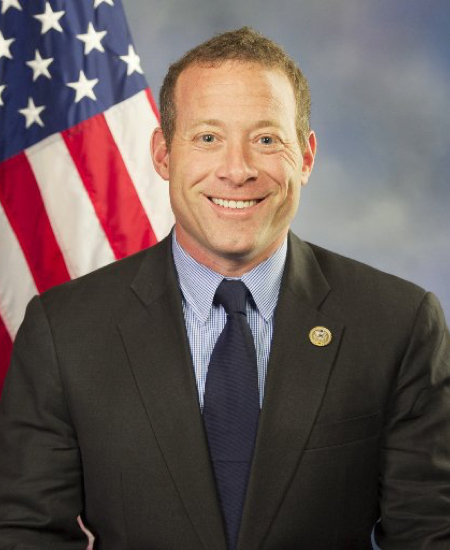
RELEASE: Gottheimer Announces Bipartisan BUSES Act to End NYC’s Bus Bounty Hunter Scheme, Protect Seniors and Passengers with Disabilities
Resources / Press Share on RELEASE: Gottheimer Announces Bipartisan BUSES Act to End NYC’s Bus Bounty Hunter Scheme, Protect Seniors and Passengers with Disabilities Establishes Federal Idling Standard for Motorcoaches Jun 16, 2026 Press Above: Gottheimer Announces Bipartisan Buses Act. NEW YORK, NY — Today, U.S. Congressman Josh Gottheimer (NJ-5) joined leaders, bus drivers, and small business owners from the American Bus Association, the Bus Association of New York State, and the Business Council of New York State to announce the bipartisan Buses Utilizing Safety and Environmental Standards (BUSES) Act, introduced this week with Representative Nick Langworthy (NY-23). The bill would establish commonsense federal guardrails for over-the-road bus idling rules and end New York City’s bottom-feeding, bounty-style enforcement program that has weaponized private citizens against bus operators serving seniors, children, and passengers with disabilities. “This bus idling tax is not just bad policy. It is an offense to every principle of access and inclusion this country stands for. Operators are being put in an impossible position: do the job right and risk a fine, or cut corners on safety to beat an arbitrary clock. No one should ever have to make that choice,” said Congressman Josh Gottheimer (NJ-5). Gottheimer continued, “ In the last five years, the price of motorcoach tickets has increased by thirty-five percent. That’s yet another tax on Jersey families at a time when people are already getting crushed under the cost of living.” Watch Gottheimer’s Full Remarks Here . Watch Gottheimer discuss the challenges of current laws with a bus driver here . “Bus operators, who often travel across state lines and multiple jurisdictions, should not be forced to navigate a confusing maze of conflicting regulations just to do their jobs,” said Congressman Langworthy (NY-23). “This legislation creates a commonsense national standard that protects transportation providers from excessive mandates while ensuring they have the flexibility needed to safely operate, especially in regions where safety, traffic, and weather conditions are a legitimate concern. This bill also rightly puts an end to the disturbing big brother bounty programs that are nothing more than a cash grab.” Under New York City law, buses and trucks may not idle for more than three minutes in the city or for more than one minute adjacent to a school. The city enforces these rules through the Citizens Air Complaint Program, which pays residents 25% of any fine collected when they report an idling vehicle; residents who file complaints directly with the Office of Administrative Trials and Hearings (OATH) can collect 50%. Fines range from $350 to $2,000 per violation, with companies subject to fines up to $15,000. Some bottom-feeding New Yorkers have turned bus bounty hunting into a full-time profession — the top five earners have collectively pocketed an estimated $3.6 million. Complaints under the program have skyrocketed from 49,000 in 2022 to 124,000 in 2024, with more than 62,000 already filed in 2026 alone — putting 2026 on track to be the biggest year yet for complaints. The current NYC law makes no clear distinction between a bus sitting idle for no reason and a bus actively serving passengers. In practice, it penalizes operators for basic, legally required operations like federal safety inspections, loading passengers who are elderly or have disabilities, or keeping passengers with health risks cool during extreme heat. The bill is supported by The ARC of New Jersey — a community that advocates for people with disabilities. And it’s supported by JSDD — an organization that advocates for the developmentally disabled. Since 2020, more than 4,000 summonses have been issued against private bus carriers in New York City, resulting in hundreds of thousands of dollars in fines. Academy Express, a well-regarded Jersey bus operator, was hit with $120,000 in idling fines in a single day. ABA survey data shows the consequences: 35% of affected operators have reduced trips into New York City, 20% have turned down charters, and 10% have stopped operating in the city entirely. Meanwhile, MTA buses and city vehicles idle on the same streets — without penalty. Private carriers play by one set of rules; the city’s own fleet plays by another. The bipartisan BUSES Act will: Establish a 15-minute federal floor for idling restrictions on over-the-road buses — sufficient time to complete a federally required safety inspection, lower a wheelchair lift, and prevent dangerous heat buildup for passengers. End bounty-style enforcement mechanisms tied to bus idling violations. Prevent citizen suits from being weaponized against operators for basic operational necessities. The bill does not eliminate anti-idling laws, authorize unlimited engine operation, or weaken national air quality goals. It establishes a narrow, reasonable federal standard that distinguishes between unnecessar
9210ae1b-56be-4121-8433-87cb2a8b2736Edit history (1 prior version)
This release was edited after publication. Earlier captures are preserved below.
- Captured Jun 16, 2026, 5:58 PM EDT
Show prior body text
Resources / Press Share on RELEASE: Gottheimer Announces Bipartisan BUSES Act to End NYC’s Bus Bounty Hunter Scheme, Protect Seniors and Passengers with Disabilities Establishes Federal Idling Standard for Motorcoaches Jun 16, 2026 Press Above: Gottheimer Announces Bipartisan Buses Act. NEW YORK, NY — Today, U.S. Congressman Josh Gottheimer (NJ-5) joined leaders, bus drivers, and small business owners from the American Bus Association, the Bus Association of New York State, and the Business Council of New York State to announce the bipartisan Buses Utilizing Safety and Environmental Standards (BUSES) Act, introduced this week with Representative Nick Langworthy (NY-23). The bill would establish commonsense federal guardrails for over-the-road bus idling rules and end New York City’s bottom-feeding, bounty-style enforcement program that has weaponized private citizens against bus operators serving seniors, children, and passengers with disabilities. “This bus idling tax is not just bad policy. It is an offense to every principle of access and inclusion this country stands for. Operators are being put in an impossible position: do the job right and risk a fine, or cut corners on safety to beat an arbitrary clock. No one should ever have to make that choice,” said Congressman Josh Gottheimer (NJ-5). Gottheimer continued, “ In the last five years, the price of motorcoach tickets has increased by thirty-five percent. That’s yet another tax on Jersey families at a time when people are already getting crushed under the cost of living.” Watch Gottheimer’s Full Remarks Here . “Bus operators, who often travel across state lines and multiple jurisdictions, should not be forced to navigate a confusing maze of conflicting regulations just to do their jobs,” said Congressman Langworthy (NY-23). “This legislation creates a commonsense national standard that protects transportation providers from excessive mandates while ensuring they have the flexibility needed to safely operate, especially in regions where safety, traffic, and weather conditions are a legitimate concern. This bill also rightly puts an end to the disturbing big brother bounty programs that are nothing more than a cash grab.” Under New York City law, buses and trucks may not idle for more than three minutes in the city or for more than one minute adjacent to a school. The city enforces these rules through the Citizens Air Complaint Program, which pays residents 25% of any fine collected when they report an idling vehicle; residents who file complaints directly with the Office of Administrative Trials and Hearings (OATH) can collect 50%. Fines range from $350 to $2,000 per violation, with companies subject to fines up to $15,000. Some bottom-feeding New Yorkers have turned bus bounty hunting into a full-time profession — the top five earners have collectively pocketed an estimated $3.6 million. Complaints under the program have skyrocketed from 49,000 in 2022 to 124,000 in 2024, with more than 62,000 already filed in 2026 alone — putting 2026 on track to be the biggest year yet for complaints. The current NYC law makes no clear distinction between a bus sitting idle for no reason and a bus actively serving passengers. In practice, it penalizes operators for basic, legally required operations like federal safety inspections, loading passengers who are elderly or have disabilities, or keeping passengers with health risks cool during extreme heat. Since 2020, more than 4,000 summonses have been issued against private bus carriers in New York City, resulting in hundreds of thousands of dollars in fines. Academy Express, a well-regarded Jersey bus operator, was hit with $120,000 in idling fines in a single day. ABA survey data shows the consequences: 35% of affected operators have reduced trips into New York City, 20% have turned down charters, and 10% have stopped operating in the city entirely. Meanwhile, MTA buses and city vehicles idle on the same streets — without penalty. Private carriers play by one set of rules; the city’s own fleet plays by another. The bipartisan BUSES Act will: Establish a 15-minute federal floor for idling restrictions on over-the-road buses — sufficient time to complete a federally required safety inspection, lower a wheelchair lift, and prevent dangerous heat buildup for passengers. End bounty-style enforcement mechanisms tied to bus idling violations. Prevent citizen suits from being weaponized against operators for basic operational necessities. The bill does not eliminate anti-idling laws, authorize unlimited engine operation, or weaken national air quality goals. It establishes a narrow, reasonable federal standard that distinguishes between unnecessary idling and the limited engine operation required to safely transport passengers. Motorcoaches are among the greenest passenger vehicles in operation — a single fully loaded coach produces up to 80% less CO₂ per passenger than private vehicles on the same route and takes up to 50
Issued within 24 hours
Other senators' releases published in the day before or after this one.