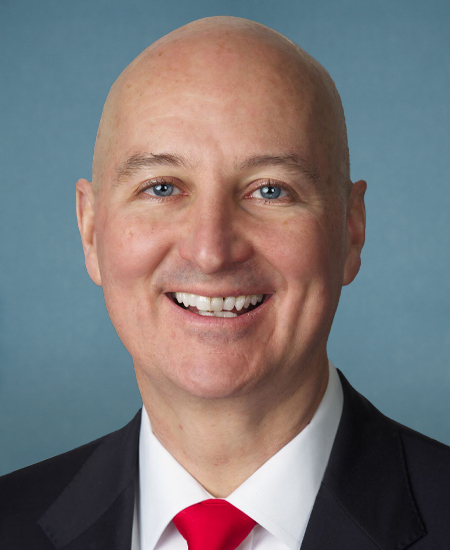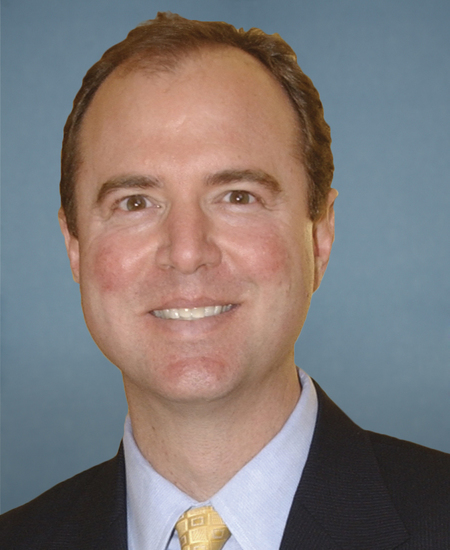
As the Administration Continues Dangerous Effort to Exploit Federal Workers’ Health Records, Warner and Schiff Demand End to Violation of Privacy
WASHINGTON – Following the White House Office of Personnel Management’s (OPM) failure to suspend their proposed collection of the personal medical records of millions of federal workers, retirees, and their families to be weaponized in employment actions, U.S. Senators Adam Schiff (D-Calif.) and Mark Warner (D-Va.) are leading their colleagues in urging the administration to end this illegal effort and demanding safeguards to protect the data of federal workers. Earlier this year, Warner, Schiff, and 17 senators urged the administration to reverse course on the dangerous decision to seek unprecedented access to personal medical records. In addition to OPM’s failure to address the Senators’ inquiry, the System of Records Notice (SORN), published in June, confirms their intention to collect identifiable data of federal workers. “The modified SORN does not resolve the fundamental privacy, legal, and constitutional concerns raised in our initial letter regarding a federal personnel agency maintaining a longitudinal repository of highly sensitive health information on more than eight million people…Most concerningly, the SORN states that OPM retains the right to re-identify pseudonymized records. In combination, these features create an extraordinarily detailed longitudinal health history that remains linkable to a specific person,” the senators wrote in a new letter to OPM Director Scott Kupor. The senators point to the administration’s clear intent to target vulnerable communities by using sensitive health information in employment actions, including the hiring and firing of federal workers. The SORN revealed OPM is “utilizing ZIP code, birth year, provider, service dates, diagnoses, procedures, and drug information to reveal highly specific patterns of care.” “We support responsible efforts to protect the integrity of federal health-benefit programs. However, OPM’s proposals create an unnecessarily broad, decades-long, re-identifiable medical history of millions of workers, retirees, spouses, children, and other family members. We strongly urge OPM to suspend further implementation while these concerns are addressed and to work with Congress, federal employees and retirees, health plans, privacy and civil-rights experts, reproductive-health advocates, and other affected stakeholders to establish safeguards commensurate with the sensitivity of the information at issue,” the senators concluded. Additionally, the senators are requesting that OPM brief Congress to provide answers on their work to protect federal workers’ families and OPM’s automated detection system, which has the potential to result in the wrongful targeting of individuals. In addition to Sens. Warner and Schiff, the letter is signed by U.S. Sens. Angela Alsobrooks (D-MD), Richard Blumenthal (D-CT), Tim Kaine (D-VA), and Chris Van Hollen (D-MD). Full text of the letter can be found here and below. Dear Director Kupor, We write to express serious concern regarding the System of Records Notice (SORN) published by the Office of Personnel Management (OPM) on June 23, 2026, following OPM’s December 2025 proposal to obtain detailed health claims information from millions of federal employees, retirees, and their family members. On April 20, 2026, we urged you to immediately reverse course on OPM’s potentially illegal and dangerous decision to seek unprecedented access to personal medical records. The modified SORN does not resolve the fundamental privacy, legal, and constitutional concerns raised in our initial letter regarding a federal personnel agency maintaining a longitudinal repository of highly sensitive health information on more than eight million people. The June SORN describes OPM’s intent to use identifiable data of federal employees, retirees, and their family members to create person-level longitudinal records that include persistent unique identifiers. Furthermore, OPM would enable authorized personnel to retrieve records using member identifiers for approved linkage, validation, and data-quality activities. Most concerningly, the SORN states that OPM retains the right to re-identify pseudonymized records. In combination, these features create an extraordinarily detailed longitudinal health history that remains linkable to a specific person. While the SORN claims that pseudonymization will reduce some routine internal exposure, this change alone is not equivalent to eliminating identifiability. The National Institute of Standards and Technology (NIST) cautions that not all techniques that merely mask personal information provide sufficient de-identification and recommends that agencies evaluate re-identification risk, adopt measurable de-identification standards, and conduct governance and risk assessment around data releases and access. In the case of OPM’s recent SORN, a stable identifier permits repeated encounters to be linked over time, utilizing ZIP code, birth year, provider, service dates, diagnoses, procedures, and drug information to reveal highly specific patterns of care. OPM itself maintains the mechanism needed to reconnect the pseudonymized history to the individual, negating any intended anonymization of data. The Privacy Act requires federal agencies to only maintain information about an individual that is relevant and necessary to accomplish a purpose required by statute or Executive Order. OPM has failed to provide any justification for the collection of person-level data, instead relying on broad references to program integrity, fraud prevention, or cost evaluation. Additionally, the SORN concerningly permits disclosure of personal data to federal, state, local, territorial, tribal, or foreign law-enforcement authorities whenever OPM believes a record indicates a potential violation of criminal, civil, or regulatory law. It also permits disclosures to other federal agencies to address suspected fraud, waste, and abuse in programs under those agencies’ purview. These overly broad allowances to share sensitive health information are extremely concerning, given this administration’s clearly stated goals of targeting vulnerable populations. In our April 20, 2026, letter, we specifically expressed concern that sensitive health information could be used in employment actions, including hiring, suitability determinations, appeals, reductions in force, disability accommodation requests, labor-management relations, and performance reviews. We have yet to receive a response to that letter. Furthermore, the June SORN fails to confirm that collected data will not be used for these purposes or related personnel actions. We urge OPM to make these prohibitions explicit and enforceable, extending those protections to matching claims information against personnel systems or other OPM databases. The SORN also incorporates a National Archives and Records Administration Records Schedule directing OPM to retain Health Claims Records for 30 years, materially increasing the consequences of breach or misuse of highly sensitive health data. OPM has failed to explain why identifiable or re-identifiable longitudinal health claims must persist for decades. At a minimum, OPM should adopt a substantially shorter retention period for identifiable and pseudonymized person-level records, with automatic destruction of linkage keys after the operational need has expired to protect individuals’ data. OPM’s proposal covers not only federal employees but also annuitants, spouses, former spouses, family members, Postal Service employees and their families, certain tribal employees, separated employees, and former family members. Many of these individuals are not federal employees and have no employment relationship with OPM. Young-adult dependents may receive reproductive, sexual-health, mental-health, substance-use, or other sensitive services that should not be accessible to the federal government, regardless of their family member’s Federal Employee Health Benefits (FEHB) coverage. OPM should preserve strict separation among family members’ records and prohibit use of one individual’s claims information to infer or investigate another family member’s conduct. Lastly, reports indicate that OPM intends to use claims data to identify potential anomalies and that records deemed suspicious by analysts may be referred to OPM’s Office of Inspector General for investigation. However, claims data are not complete clinical narratives and may reflect rare diseases, complex pregnancy, disability, chronic illness, fragmented care, referral patterns, or coding practices rather than fraud. We are deeply concerned that adverse referral or action based solely on automated scoring or anomaly detection, without documented human review, will result in wrongful targeting of individuals with complex health needs and subject them to unwarranted administrative or law enforcement scrutiny. Before OPM proceeds further with expanded collection and use of federal employee health data, we urge OPM to take the following actions: Suspend implementation of any expanded person-level collection under the modified SORN. Publish a field-by-field necessity analysis identifying the statutory purpose served by each data element and explaining why de-identified, aggregated, limited, or sampled data would be insufficient. Use genuinely de-identified or aggregated data by default and permit re-identification only after a documented, individualized showing of necessity, with dual authorization, immutable audit logging, and periodic independent review. Adopt an enforceable firewall prohibiting use, disclosure, matching, or linkage of claims data for any employment or personnel decisions. Prohibit use or disclosure of OPM records to other federal agencies or any law enforcement entities, including – but not limited to – records related to an individual’s for seeking, obtaining, providing, or assisting with lawful health care. Prohibit the use or referral of any health information for unrelated civil, criminal, or regulatory enforcement, particularly when based merely on a potential violation of law and require senior-level legal and privacy review before any external law-enforcement disclosure. Reevaluate the 30-year retention schedule for health claims records and adopt much shorter retention periods for identifiable and pseudonymized person-level data, including time-limited retention of re-identification keys. Establish independent oversight and public transparency, including annual reporting on the number and categories of re-identifications, external disclosures, law-enforcement referrals, access-control violations, security incidents, and disciplinary actions for misuse. Provide specific protections for dependents and family members, including strict separation of family members’ claims and a prohibition on using one family member’s health data to infer or investigate another family member. Describe the validation, human-review, error-correction, and anti-bias safeguards that will govern any automated or algorithmic fraud or anomaly detection before a person or provider is referred for investigation. We support responsible efforts to protect the integrity of federal health-benefit programs. However, OPM’s proposals create an unnecessarily broad, decades-long, re-identifiable medical history of millions of workers, retirees, spouses, children, and other family members. We strongly urge OPM to suspend further implementation while these concerns are addressed and to work with Congress, federal employees and retirees, health plans, privacy and civil-rights experts, reproductive-health advocates, and other affected stakeholders to establish safeguards commensurate with the sensitivity of the information at issue. We request a written response and briefing by OPM on the office’s efforts related to the above requested actions no later than September 25, 2026. ###
9bf1411d-437a-4f69-8b4c-f34b3494319fIssued within 24 hours
Other senators' releases published in the day before or after this one.