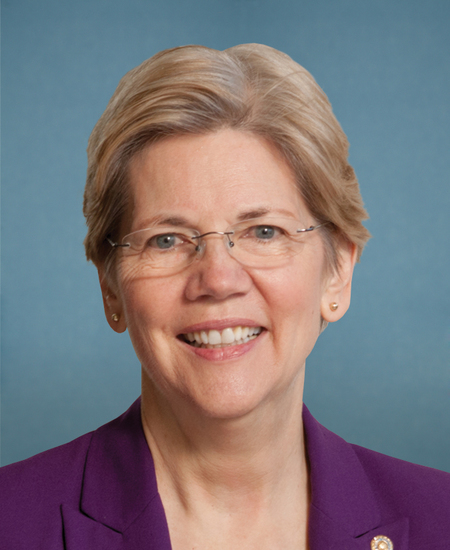
Warren, Scanlon, Pressley, 46 Lawmakers Renew Push To Reduce Violence Against Individuals with Mental Health Conditions and Disabilities
One-Pager (PDF) | Bill Text (PDF) Washington, D.C. — U.S. Senator Elizabeth Warren (D-Mass.) and Representatives Mary Gay Scanlon (D-Penn.) and Ayanna Pressley (D-Mass.), along with 46 of their Democratic colleagues, reintroduced the Mental Health Justice Act to reduce violence against individuals with mental health conditions, substance use disorders, and intellectual and/or developmental disabilities. The bill would fund grants for state and local governments to send trained mental health professionals instead of police when 911 or 988 is called because an individual is experiencing a mental health or substance use crisis. “Part of keeping our communities safe is keeping people suffering from a mental health or substance use crisis safe,” said Senator Warren. “Rather than criminalizing mental health, this legislation would make it easier for trained mental health professionals to respond when someone needs help or support.” “Individuals experiencing a mental health crisis should be connected with mental health professionals, not put on a one-way track to jail,” said Representative Scanlon . “Too often we see the tragic consequences of encounters between people in crisis and law enforcement officers who lack the appropriate support or training to handle mental health issues. I’m proud to introduce this bill with Senator Warren to keep both citizens and law enforcement professionals safe.” “Community members experiencing a mental health crisis should be met with compassion, resources, and care—NOT criminalization,” said Representative Pressley. “Criminalizing mental health crises only makes our communities less safe. That’s why I’m proud to reintroduce the Mental Health Justice Act alongside Senator Warren and Congresswoman Scanlon to ensure mental health professionals—instead of police—can support people in moments of crisis.” Per the National Alliance on Mental Illness, between 2015 and 2020, a quarter of all fatal police shootings involved someone with a mental illness. When individuals experience a mental health crisis, they are often charged with minor offenses and unnecessarily contribute to the overcrowding of our jails and prisons. The Mental Health Justice Act would: Create a federal grant program for state, local, and Tribal governments to hire, train, and dispatch mental health professionals as first responders in place of police during mental health and substance use emergencies; Prioritize funding for communities with high rates of arrest and incarceration of people with behavioral health needs, and reward jurisdictions that successfully reduce incarceration rates and death rates for people with mental health conditions and intellectual and/or developmental disabilities; Fund the training of mental health first responders and dispatch centers in de-escalation techniques and developmentally appropriate interventions; Require grant recipients to report to HHS on key program outcomes, and direct HHS and DOJ to study the long-term impact of these programs on diversion from arrest and incarceration; Direct HHS and DOJ to assist jurisdictions with implementation of alternative crisis response programs and to publish best practices to assist local leaders with implementation. This bill is joined by Senators Cory Booker (D-N.J.), Tina Smith (D-Minn.), Amy Klobuchar (D-Minn.), Adam Schiff (D-Calif.), Alex Padilla (D-Calif.), Mazie Hirono (D-Hawaii), Ron Wyden (D-Ore.), and Representatives Jim McGovern (D-Mass.), Mark Pocan (D-Wis.), Raja Krishnamoorthi (D-Ill.), Stephen Lynch (D-Mass.), Bonnie Watson Coleman (D-N.J.), Kevin Mullin (D-Calif.), Jill Tokuda (D-Hawaii), Betty McCollum (D-Minn.), Melanie Stansbury (D-N.M.), Deborah Ross (D-N.C.), Judy Chu (D-Calif.), Jonathan L. Jackson (D-Ill.), Hank Johnson (D-Ga.), Lois Frankel (D-Fla.), Greg Casar (D-Texas), Becca Balint (D-Vt.), Troy Carter (D-La.), Nikema Williams (D-Ga.), Ritchie Torres (D-N.Y.), Norma J. Torres (D-Calif.), Scott Peters (D-Calif.), Lauren Underwood (D-Ill.), Nydia Velázquez (D-N.Y.), Eleanor Holmes Norton (D-D.C.), Juan Vargas (D-Calif.), Sharice Davids (D-Kan.), Mike Quigley (D-Ill.), Josh Gottheimer (D-N.J.), Madeleine Dean (D-Pa.), Adam Smith (D-Wash.), Delia Catalina Ramirez (D-Ill.), Ed Case (D-Hawaii), J. Luis Correa (D-Calif.), Debbie Wasserman Schultz (D-Fla.), Nanette Barragán (D-Calif.), André Carson (D-Ind.), Debbie Dingell (D-Mich.), Yvette Clarke (D-N.Y.), and Lizzie Fletcher (D-Texas). The Mental Health Justice Act is endorsed by 31 advocacy organizations: American Civil Liberties Union, Center for Policing Equity, the Orange County Sheriff’s Office, National Alliance on Mental Illness, The Kennedy Forum, CommunicationFIRST, Access Ready Inc., Autistic Women & Nonbinary Network, Bend the Arc: Jewish Action, National Association of Criminal Defense Lawyers, Autism Society of America, American Foundation for Suicide Prevention, American Association on Health and Disability, Lakeshore Foundation, Association of University Centers on Disabilities, Postpartum Support International, Union for Reform Judaism, National Association of Councils on Developmental Disabilities, Alternative Mobile Services Association, Justice in Aging, American Society of Addiction Medicine, National Health Care for the Homeless Council, Clinical Social Work Association, National Association of County Behavioral Health and Developmental Disability Directors, American Association of Child and Adolescent Psychiatry, Association for Behavioral Health and Wellness, National Action Network, American Association of Suicidology, Bazelon Center for Mental Health Law, American Psychological Association, and the Disability Rights Education & Defense Fund. ###
9c14bfa3-86d5-4e01-a825-90daf62b5d88Issued within 24 hours
Other senators' releases published in the day before or after this one.