Curtis Raises Alarm on Undersea Cable Threats, Pushes for Stronger U.S. Action
Senator highlights legislation to protect Taiwan’s undersea communication cables against “gray zone tactics” used by China
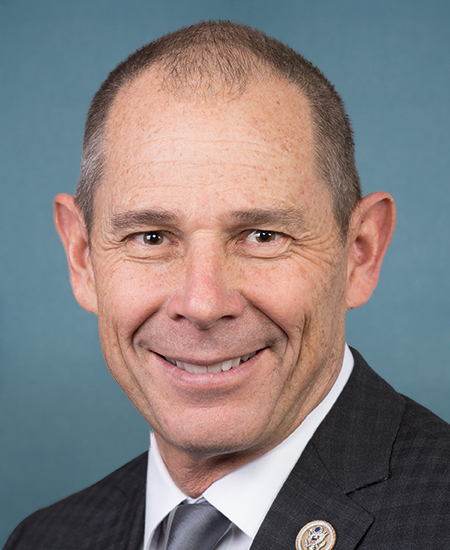
WASHINGTON —During a U.S. Senate Foreign Relations Committee hearing, Senator John Curtis (R-UT) raised urgent concerns about the vulnerability of global undersea cable infrastructure, emphasizing the need for stronger U.S. leadership to protect critical economic and security lifelines amid malicious “gray zone” activities by the People’s Republic of China (PRC). The cables—critical for global communication and commerce—have been a primary target of the PRC for covert sabotage to undermine Taiwan’s security and sovereignty.
Senator Curtis also highlighted insights from a recent bipartisan delegation visit to Taiwan, where he observed firsthand the growing risks to undersea cable systems that carry the vast majority of global internet and communications traffic.
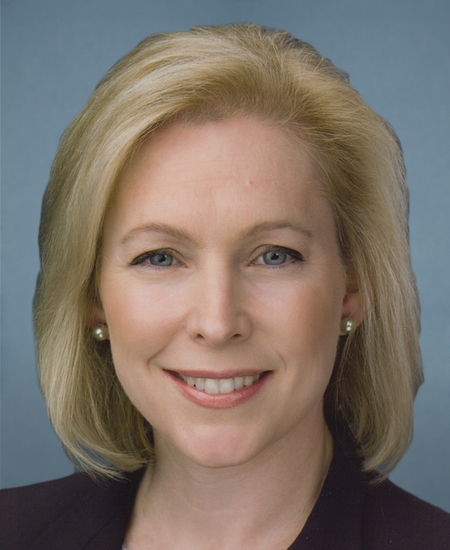
Curtis also highlighted bipartisan legislation he is leading with Senator Jacky Rosen, which would mandate the establishment of an initiative, led by the Secretary of State and in coordination with other agencies, to prioritize the protection and resilience of undersea cables near Taiwan.
The full transcript of the exchange is below, and video can be found here .
Senator Curtis: This Committee recently passed a bill that I have with Senator Rosen, the Critical Undersea Infrastructure Resiliency Act . The bill contains an initiative to harden and monitor Taiwan’s undersea cables and proposes new sanctions. I was in Taiwan with the Ranking Member just a couple of weeks ago. We visited one of the factories that actually produces the cable. We were all very curious about what they were doing to prevent breaks, whether it’s undersea monitoring or cameras, and what we found is zero motivation because they produce cables. Their answer was just lay more cables.
And I’m curious what your experience is. Do we have a motivation problem here, and it just feels like there was very little effort to put in equipment that could monitor and see a problem coming before it got there. What’s your experience?
Dr. Benjamin Schmitt: So, this is an energy security question for Taiwan as well as these cables connect to their offshore wind and can interconnect to their outlying islands. One of the things that is this is more from a physics standpoint. If you put a fiber optic cable on the seabed, you can start to monitor the vibro-acoustic environment, the vibrations of subsea vessels, sea surface vessels and things like this around it.
And so, this is actually what happened in the case of the Chunghwa Telecoms line, when last year the Hong Thai 58, this vessel from China, cut the cable. The Taiwanese coast guard was alerted by Chunghwa Telecom right before that cable cut took place because they knew this vessel was sitting there. And then they acted just a few hours later when they got their armada together to seize this vessel.
And what they found, this was an empty Chinese vessel that was a bulk carrier that had no bulk on it. Its cargo doors were actually rusted shut so that it couldn’t be used for that. So, it was only used as a sabotage vessel. And the prosecutor that I talked to likened it to a ‘pawn sacrifice’ from the PRC.
In other words, he is sending out a vessel that he doesn’t care if he loses. I wanted to see that vessel, but it’s already been deconstructed and scrapped.
Curtis: If there’s major disruption to Taiwan with both cables, What’s the impact militarily and economically that potentially could happen?
Schmitt: There was often a discussion that Taiwan does have redundancy—something like 14 cables connecting out to the global internet. There’s also cables to the Penghu Islands, Matsu Islands, Kinmen, others like this. I’ve often been asked, you know, well, we have this redundancy. So, China couldn’t possibly cut all 14 cables. I said, you’ve got another thing coming because guess what? If they can cut 1 or 2 cables by dragging an anchor pretty easily, in an all-out military assault or invasion or even a blockade or a quarantine, those can be cut pretty quickly. What that will have is immediate impact on the global economy.
It’s kind of like the Strait of Hormuz closure by the IRGC for the internet, and it means that all of our economic trade with Taiwan, which is significant, will be cut off not just for us, but for our partners and allies. And I’ll tell you, it will make military coordination more difficult. It won’t stop it because there is satellite backup, but it is something that we really need to think of. And I’ve talked with folks in Taiwan that are in the military. I think that it needs to be part of the military’s doctrine in Taiwan, that rapid cable repair under fire is important as well to deter this.
Curtis: So, another question. We’ve learned a lot from Taiwan, and what’s happening there. What lessons can be applied to the Baltic and what should we be doing in the Baltic that we’ve learned from the Indo-Pacific?
Schmitt: I think that one of the biggest things is, again, repair capabilities. We need more repair capabilities in Europe. We need a legal system that allows for attribution and jurisdictional questions, we’ve mentioned already in this hearing. Again, just like in Taiwan where they’re aware of this, we need European democracies to be ready to act and, and have that capability through NATO to do so.
The Honorable James O’Brien: I will just add, Senator, and thank you for your bill. The motivation problem, I think, is, with the U.S. government, all of the undersea infrastructure, separate companies, others, they’re all doing their work. It’s unrealistic to expect them to monitor the activities of a predatory superpower. Same thing with middle powers. They don’t have the ability to stand up. So, this is for the U.S. government to say the future of our economy depends on this infrastructure.
We have to make sure that we have enough of it and that we can repair it, but that we can protect it. And that involves both more robust sanctions program, I think, more physical presence and coordinating with others who are affected so that they’re able to operate effectively.
Curtis: It feels to me like the technology is not that difficult. It’s the will. You mentioned the one incident in Taiwan where they were able to find the actor. How prepared are we to find the bad actors? Just generally speaking.
Schmitt: I mean, we’re prepared. I think U.S., you know, geospatial intelligence is strong. I think we need more commercial data to make sure that satellite data can be released quickly so that these sort of indictments can happen rapidly. But the other thing I want to point out, and we’re going to want to bring it back to the Nord Stream case really briefly and say we need to listen not only to policymakers, no offense, but technical experts like those that work in the industry, people that build the cables, people that are captains of these ships, people that actually dive to the bottom of the seabed.
We talked with many of these experts, and they said that the idea that using a rental sailboat to blow up Nord Stream is not technically impossible, but that it would never be used in this way, and they said that it’s an insufficient platform. It would have a large radar profile to begin with because of the sail, obviously.
And that you would use a cheap drone, and I’ll tell you what, there’s a lot of media that have gone out there and put a drone on the seabed and looked at the damage site, and they’ve proven you can put a drone down there. You can put one down there with a camera, you can put it down there with explosives.
I went out and actually got seabed sonar data at the Nord Stream two blast site, and you can just go out there. So again, listening to the experts in a way that is integrated not only into our policy but our media and discussions of these, because it takes so long for attribution that disinformation can be sowed. And obviously, in the case of Nord Stream, Russia pointed the finger at the UK, Poland, the United States, of course, and all these different directions, so chaos right after this, this happened again, a disinformation campaign that seems kind of precooked to me.
O’Brien: I’ll just add, we know much more today than even two or three years ago. The NATO efforts, the EU efforts provide information very quickly. And having the access to the work that the Dr. Schmitt and others are doing in the public sphere, it increases the responsibility of policymakers to act quickly because we can no longer say we don’t know or we can’t share.
9c59fdf5-b64c-4ef3-b735-a5bd34d27484Issued within 24 hours
Other senators' releases published in the day before or after this one.