Washington’s Secret Spending Stops Today!
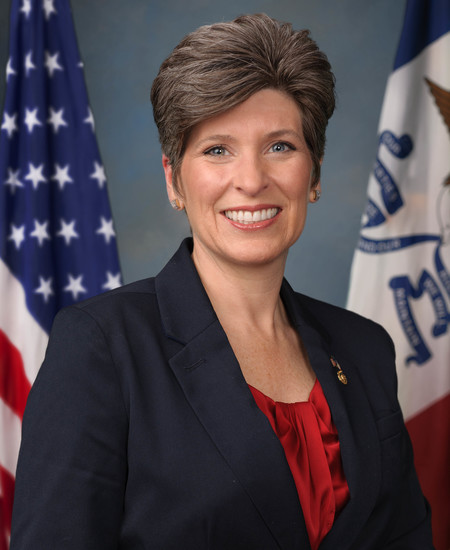
WASHINGTON – After years of fighting to increase transparency around Washington spending, President Donald Trump signed U.S. Senator Joni Ernst’s (R-Iowa) bipartisan bill, the Stop Secret Spending Act , into law to require public disclosure of previously hidden government expenditures. Current law requires most federal spending to be publicly reported on USAspending.gov , allowing taxpayers to see who receives federal funds and details about how, where, and why the money is spent. However, a loophole has allowed agencies to withhold thousands of spending arrangements known as Other Transaction Agreements (OTAs) from public disclosure – the Stop Secret Spending Act closes that loophole. The law also requires the federal government to publish a summary of any spending that remains exempt from public disclosure, including the total amount withheld and the justification for doing so, increasing transparency and accountability across the federal government. Because bureaucrats couldn’t be trusted to fully enact the original law, the Stop Secret Spending Act includes several safeguards to guarantee full transparency: Over the next decade, the Inspectors General of government agencies and departments are required to conduct regular reviews to ensure spending information is being provided to taxpayers in a timely, complete, and accurate manner; The Government Accountability Office will also conduct a review and make recommendations for improvements; and The Treasury Department must issue an annual report providing the total amount spent on grants, contracts, and other awards not included in USAspending.gov along with the reason that data is not posted for the public. “Taxpayers deserve the receipts. For years, I’ve fought to drag Washington’s secret spending into the sunlight, and I’m grateful President Trump signed my bill into law,” said Sen. Ernst. “Now, bureaucrats won’t be able to spend Americans’ hard-earned money in the dark.” “Americans deserve to know how their hard-earned tax dollars are being used. Right now, federal agencies are able to hide billions of dollars in spending from public view through agreements that are not subject to normal government spending disclosure requirements,” said Sen. Hassan. “I’m pleased to see this bipartisan bill to bring more transparency to government spending become law.” “Waste, fraud, and abuse of taxpayer resources by the federal government remains a concern for all Americans,” said Sen. Peters. “This commonsense legislation will let Americans see how their hard-earned dollars are used, so I’m quite glad that this critical, bipartisan bill has become law.” “For too long, billions of dollars in federal spending have gone unreported due to a loophole in the disclosure of other transaction agreements,” said Rep. Panetta. “I’m proud that our bipartisan, bicameral Stop Secret Spending Act has been signed into law, closing that gap by ensuring these expenditures are accounted for on USAspending.gov. This is a commonsense step toward strengthening public trust, improving fiscal accountability, and ensuring responsible stewardship of taxpayer dollars.” “Washington has spent far too long operating behind closed doors, and the American people deserve better. That is why I introduced the Stop Secret Spending Act , and I am proud to see President Trump sign it into law,” said Rep. Moore. “I am grateful to Senator Joni Ernst and Congressman Jimmy Panetta for standing with me in this fight to bring greater transparency and accountability to federal spending. This law closes a loophole that allowed billions of taxpayer dollars to escape public scrutiny and makes clear that American taxpayers have a right to know how their money is being spent. This is an important step toward changing the way Washington does business and putting taxpayers first.” Background: Senator Ernst has long advocated for greater transparency in federal spending. She first introduced the bipartisan Stop Secret Spending Act after raising concerns about billions of dollars in undisclosed federal spending through Other Transaction Agreements (OTAs) and has repeatedly pushed the legislation forward. Over the past five fiscal years (October 1, 2021, through September 14, 2026): The Department of War has obligated $85 billion for thousands of OTAs, through over 30,000 hard-to-track contracts, of which 1,898 are unclassified contracts of $10-million-or-more (438 $10mil+ contracts in just this fiscal year alone). The Department of Homeland Security has obligated $52.2 million for over 700 OTAs; and The Department of the Interior has obligated $858.8 million for over 220 OTAs, with many of these actually paid out for the Department of Health and Human Services’ ARPA-H biomedical research contracts. In August, the Stop Secret Spending Act passed the U.S. Senate unanimously and was sent to the president’s desk. Ernst has continued working across the aisle to advance the legislation and ensure taxpayers have greater visibility into how their hard-earned dollars are spent. ###
a17fed19-e094-4d72-8a19-72e463ef9cbbIssued within 24 hours
Other senators' releases published in the day before or after this one.