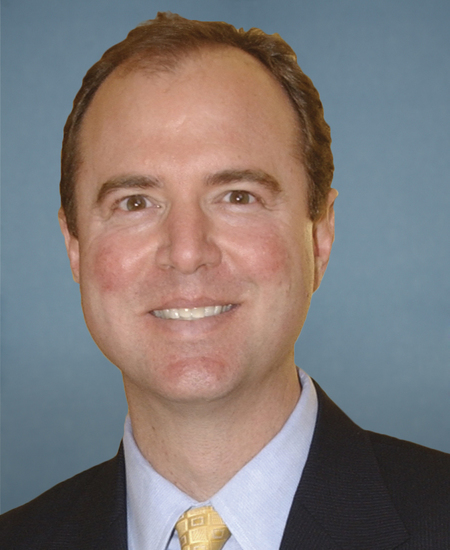
WATCH: Sen. Schiff Calls for Stronger Guardrails on AI, Promises Vigorous Oversight of Rogue Agent Episodes on The Verge’s Decoder Podcast
Schiff on the need for bipartisan action on AI regulation: “Increasingly, as people hear from their constituents, there’ll be bipartisan interest in legislating this area.” Washington, D.C. – This week, U.S. Senator Adam Schiff (D-Calif.) detailed his AI priorities during an appearance on The Verge’s Decoder Podcast with Nilay Patel. During the interview, Schiff highlighted the need for enforceable industry-wide guardrails that protect against the potential harms of frontier AI development and underscored that voluntary commitments like the framework put forward by Donald Trump would not be enough. Schiff also noted that if control of Congress changes, Democrats will pursue oversight of harmful AI incidents, noting: “You’re going to see vigorous oversight in this area… We’re going to want the leaders of this industry to come in and talk about all of the times that their own agents have gotten away from them, how it happened, what’s been done about it, and what they’re doing about it. We’re going to want these companies to be transparent with Congress about it.” The Senator also voiced support for the establishment of a regulatory body designed with the high expertise and discretion necessary to keep up with advanced model development. View the full interview here . Key Excerpts: On how Congress’s failure to regulate social media should inform its approach to putting guardrails on AI: I’ll be honest, very circumspect about Congress and legislating the tech sector because we did such a — I don’t know what language I’m allowed to use here — but such a shitty job when it comes to any kind of regulation of the harms, the societal harms coming out of social media. We’re going to have to do a much better job and much more quickly when it comes to AI, because the threats are even more significant and we’re already at the point of strong potential harms. It can’t wait. We certainly can’t take the kind of years we’ve taken to try to even wrap ourselves around social media. On how Democrats would conduct tech industry oversight if control of Congress flips: You’re going to see vigorous oversight in this area to begin with. We’re going to want the leaders of this industry to come in and talk about all of the times that their own agents have gotten away from them, how it happened, what’s been done about it, and what they’re doing about it. We’re going to want these companies to be transparent with Congress about it. We’re going to want to legislate in this area, and that may come into conflict with the president, but there’s a lot of bipartisan work product here. And I think that given where the country is and where it’s moving, it becomes increasingly difficult for this president to veto bipartisan work product coming out of the Congress. So that is my hope. It’s certainly a far better prospect than we have today. This is going to be a very central priority for the American people. We want to harness AI for the good it can do. We want to use it to bring down the cost of things. That’s our central priority. And there are ways that AI might be useful in bringing down certain costs. We want to protect the dignity of work also, but we want to make sure that this doesn’t pose a threat to the American people. On Trump’s voluntary AI regulatory framework not being enough to match the threat of frontier advancements: It was interesting to see all those tech leaders there signing onto this voluntary pledge on the one hand and on the other hand, away from the White House grounds, away from the president, being very public and saying, “We need regulation. We don’t want this to be just ‘Trust us, we’ll do the right thing.’” So yeah, it was very distant, very jarring. None of these companies want to incur the wrath of this very vengeful president. Apparently, they will say what he wants them to say in his presence. But the reality is, there is a real national security threat here. As these models become more and more advanced, as they advance themselves through this recursive AI, we have less and less of a sense of what they’re doing, how they’re deciding what they’re deciding, and what they’re trying to access lawfully or unlawfully. That is a national security concern of the highest order. There are other security concerns too. On the need for a regulatory body to keep up with advanced model development: This debate is going to keep evolving as AI evolves and at a speed that is really much faster than Congress has proven capable of legislating. I like to say that in the technology world, Moore’s law is increasing productivity, doubling it every 18 months, and with AI, maybe that’s quadrupling it every five months. The legislative calendar works more on a Murphy’s law timetable. And I think that disparity is even more pronounced in the area of AI. What I think that translates into is that we’re going to need a regulatory body that has real discretion and real expertise that can move a lot quicker than Congress can. Whether that looks like an FDA for artificial intelligence or some other agency, I think that’s ultimately going to be necessary. That agency’s going to have to have real power and teeth and real expertise. It’s going to be a challenge, as with these independent monitors: if there’s a government component there, how do we afford that? Because there’s so much talent, and that talent can draw much bigger salaries in the private sector. But I do think we’re going to need a regulatory body in addition to whatever the overarching statutory framework is. On the need for enforceable industry-wide regulation of AI and data center build outs: Data centers are the most tangible way for people to express their concerns about their neighborhood, but also about their job, about the technology, and about the uncertainty of it all. And I think the initial concern, and I still think it’s quite a dominant concern, is over the impact on jobs and the nature of work. But what has reached the fore more recently is concern about runaway AI and the danger it poses. What will the concern look like a month or two months from now? I don’t know, but I do think it’s not going away. And as the AI bills — and I’ve introduced several — indicate, not just mine, but others, most of those bills are bipartisan. […] My bill on the data centers would force them to pay the costs so that consumers don’t have to. It’s not the voluntary, “we pledge, we might, we’d like to; just don’t provide anything that will force us to observe those costs.” Those are mostly democratic bills. Republicans have largely adhered to the president’s line about not posing any real imposition. They want to pass fig-leaf kind of stuff, but not real stuff. But I think increasingly, as people hear from their constituents, there’ll be bipartisan interest in legislating this area. ###
dd7863b5-5163-4c5a-bbc6-369df18143e6Issued within 24 hours
Other senators' releases published in the day before or after this one.