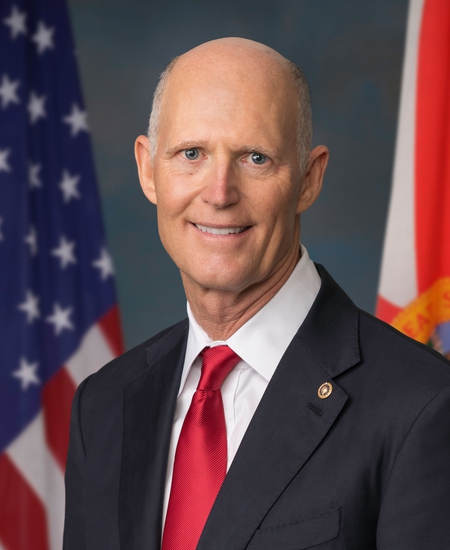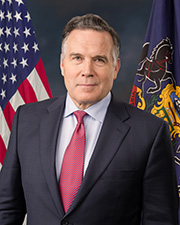
Dave McCormick and John Fetterman: How to Regulate AI
The Free Press | By: Dave McCormick & John Fetterman Recently, a 27-year-old Anthropic employee posted on X that AI could end humanity. All hell broke loose. The post has since been viewed more than 170 million times; it prompted some AI leaders to endorse a slowdown in development; and it pushed AI doomerism into mainstream political and media debate. We are two United States senators from different parties, but we agree that a social media–driven meltdown and partisan posturing will solve nothing. We can’t govern by X post. Instead, what is required is a clear, bipartisan, country-over-party assessment of the risks of AI, informed by three inescapable realities: the inevitability of the AI revolution; the existential stakes of the AI race with China; and the limits of our understanding of the technology. Just as every safe car needs a gas pedal, brake, and seat belts, AI needs protective guardrails. On Tuesday, President Trump hosted an AI summit at the White House, bringing leaders of major AI companies together to discuss greater self-regulation and independent safety reviews. The leaders and the president then signed a voluntary accord that will impose internal and external review processes to assess the safety of new AI models. This is a positive starting point, but more will be required to harness AI’s benefits while mitigating its risks. After all, AI is the modern era’s Manhattan Project. Communist China knows that AI supremacy confers global economic, ideological, and national security dominance. If we cede AI leadership to totalitarian China, we risk surrendering our way of life. Some argue that if America slows its AI development, Chinese models will as well, because they are trained on our models. But will we really bet our children’s futures on the lagging innovative capabilities of the Chinese? From electric vehicles to batteries to solar panels, they have continually leaped ahead of America at the first opportunity. We must not allow that again. However, that does not justify unchecked AI development. Already, AI is helping to treat incurable cancers, modernize manufacturing, and bring down costs for small businesses, creating good jobs. But the risks are bracing. We cannot dismiss workers who fear they’ll be replaced, parents worried about their children, or the growing dangers of biological, cyber, and nuclear attacks. Just as every safe car needs a gas pedal, brake, and seat belts, AI needs protective guardrails. Government and industry must address the specific risks it poses to our country and families, while maintaining global AI leadership. How do we do that? The first step involves what we call the “uncompromisables”: America’s children and workers. The federal government must set national safeguards, such as age thresholds for AI usage, that prevent AI exploitation of children. We must also protect American workers. We grew up in working-class towns in Pennsylvania and saw the damage caused when globalization hollowed them out. While early data suggest AI creates jobs, especially for blue-collar workers, we must stay vigilant and ensure workers have the training and skills to succeed in the AI era. A second concern is the accelerating concentration of wealth. All Americans should have an ownership stake in the financial windfall of AI, not just the select few at the top of the socioeconomic ladder. Finally, two subjects come up repeatedly as we travel Pennsylvania: data centers and AI regulation. To win the AI race, America needs more brute computation and energy, which means more data centers. It is a national security imperative. These projects also create good-paying jobs and increased tax revenue that supports schools, policing, and infrastructure. But let’s make sure they are built the right way. Communities and companies should form a covenant that protects ratepayers, minimizes data centers’ effects on land and water, invests in communities where data centers are built, hires locally, and operates transparently. The second question—AI regulation—is more complicated. It is not enough to say “slow down” to American developers. Chinese open-weight models, such as Alibaba and DeepSeek, are already dangerous tools that bad actors can use to endanger the American public and dominate the global technological ecosystem. We ought to promote low-cost, competitive, American models globally. So, how do we thread the needle? Answering that question must begin with making sure we have stronger and more explicit legal liability for AI companies, combined with targeted government oversight. If a company develops an extraordinarily powerful AI system that causes catastrophic harm, there has to be accountability. In the same way that the law imposes consequences for cyberattacks, fraud, and theft of intellectual property, Congress should clarify the responsibilities that AI developers and hosts have when a model goes rogue. The federal government must also work hand in hand with industry to increase its oversight of models that pose credible biological, cyber, or nuclear risks. That’s why this week’s White House accord was important. We must approach this challenge with humility. The government is not properly equipped to oversee and evaluate every new model, and we must be pragmatic about its ability to understand or control this technology. That’s why this moment requires a bipartisan, clear-eyed approach, not histrionics and moratoriums. Social media zealots and politicians who parrot hysterical claims that AI will kill us all will not lead us to the answers—nor will those who say the technology poses zero risks entirely. At the dawn of the atomic age, President Dwight Eisenhower identified nuclear power’s awesome promise and its power to destroy. But he also said that, should it be used safely and appropriately, nuclear energy could herald “a true golden age of our civilization.” As we enter the intelligence age, we must take the same approach: Look past hysteria and euphoria, temper our optimism with humility and resolve, and shape AI toward another American golden age. We, not the machines, are the masters of our fate.
de156da0-1512-4c80-8c67-443420494917Issued within 24 hours
Other senators' releases published in the day before or after this one.