TAPinto article on Smith's remarks on Alzheimer's'Rep. Chris Smith Highlights Alzheimer's Research Advances, Calls for Greater Support for Patients and Caregivers'
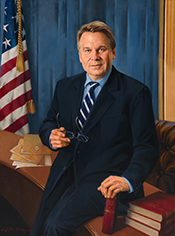
By Jeanne Wall Published October 23, 2026 at 12:48 AM NEW JERSEY — As millions of Americans live with Alzheimer’s disease and families shoulder the growing demands of caregiving, U.S. Rep. Chris Smith is highlighting advances in research, the importance of early detection and the need for continued federal investment in treatment and support. Smith (R-N.J.), founder and co-chair of the bipartisan Congressional Alzheimer’s Caucus, delivered remarks Oct. 22 at the U.S. Department of Health and Human Services’ first-ever Alzheimer’s Disease and Related Dementias Summit. The gathering brought attention to ongoing research, care challenges and efforts to improve the lives of people affected by Alzheimer’s and related dementias. “Special thanks to Secretary Kennedy for his amazing efforts to combat Alzheimer’s Disease and for hosting the first-ever Alzheimer’s Disease and Related Dementias Summit,” Smith said. He also thanked the summit’s panelists for helping bring renewed attention to the disease and efforts to alleviate its symptoms and ultimately find a cure. Smith has been involved in Alzheimer’s advocacy for more than two decades. In 1999, he and Sen. Ed Markey established the bipartisan Congressional Alzheimer’s Caucus, which Smith continues to co-chair. He also sponsored the Ronald Reagan Alzheimer’s Breakthrough Act, which proposed doubling National Institutes of Health funding for Alzheimer’s research to $1.4 billion annually. A significant legislative milestone followed in 2011, when Congress passed the National Alzheimer’s Project Act, which Smith co-authored. The law established a national strategy to address Alzheimer’s disease and created an advisory committee to coordinate a federal response. According to Smith, federal Alzheimer’s research funding through the NIH has grown from $600 million in 2015 to more than $3.8 billion in fiscal year 2026, an increase of more than 600%. “This funding has yielded real, tangible advancements in our understanding of Alzheimer’s and other dementias,” Smith said. He pointed to a new NIH-funded biomarker test developed earlier this year that can distinguish between stages of Alzheimer’s disease, describing the research as an important advance in identifying the disease earlier and helping mitigate cognitive decline. Understanding Alzheimer’s disease and the need for early detection Alzheimer’s disease is a progressive brain disorder that damages memory and thinking skills and eventually interferes with a person’s ability to carry out everyday activities. It is the most common cause of dementia, an umbrella term for conditions that affect memory, reasoning and other cognitive abilities. Although Alzheimer’s is more common among older adults, it is not a normal part of aging. Researchers continue to investigate its causes, how it progresses and how treatments may help people maintain cognitive function for longer. Early detection is an increasingly important part of that effort. While there is currently no cure, some treatments can slow the progression of Alzheimer’s in certain people during the early stages of the disease. An earlier diagnosis can also help patients and families discuss treatment options, plan for future care and access support services. Research into biomarkers — measurable biological signs of disease — is expanding the tools available to researchers and clinicians. Some blood-based tests can help identify biological changes associated with Alzheimer’s, while newer research is exploring ways to assess disease stages and predict progression. These advances may improve diagnosis and treatment planning, although testing must be interpreted in the context of a person's symptoms and clinical evaluation. The scale of the disease underscores the urgency. According to the Alzheimer’s Association’s 2026 Facts and Figures report, an estimated 7.4 million Americans age 65 and older are living with Alzheimer’s dementia. Without medical breakthroughs to prevent or cure the disease, that number could rise to approximately 13.8 million by 2060. New Jersey is also significantly affected. The Alzheimer’s Association estimates that 185,000 state residents age 65 and older are living with Alzheimer’s disease, with hundreds of thousands of family caregivers providing essential support to people with dementia. Despite advances in research and growing awareness, many people with dementia remain undiagnosed or unaware of their diagnosis. In his summit remarks, Smith cited an estimate that 58% of older adults in the United States with probable dementia are either undiagnosed or unaware of their diagnosis. Caregivers face mounting demands Beyond the effects on patients, Alzheimer’s disease places substantial emotional, physical and financial demands on families. Caregivers often help with daily activities, medical appointments, medications and household needs as the disease progresses, frequently while balancing jobs and responsibilities to other family members. Smith cited estimates that more than 12 million family members and other unpaid caregivers provided approximately 19.6 billion hours of care to people living with Alzheimer’s or other dementias in 2025. “We can and should do more to ease the financial, physical, and mental burdens these caregivers face,” Smith said. The Alzheimer’s Association’s national data similarly illustrate the magnitude of that responsibility. Its 2026 report estimates that unpaid dementia caregiving reached an economic value of more than $446 billion in 2025, reflecting the extensive work performed by family members and friends outside the paid health care system. Access to reliable information, caregiver education, respite services and community support can help families navigate the challenges of caring for a loved one with dementia. Such services are especially important as the number of people living with Alzheimer’s is expected to grow. Continued federal focus Smith welcomed the announcement of a new National Plan at the summit and emphasized the importance of continued engagement with advocates and caregivers. He credited organizations such as the Alzheimer’s Association and individuals who share their personal experiences with helping advance research funding and support for affected families. Among those he recognized was his friend Christine Hopkins. Smith said he hopes the summit’s discussions will offer further insight into the experiences of people living with Alzheimer’s and identify ways for the federal government to advance innovation, improve care and support, and strengthen prevention efforts. The broader challenge, he said, remains finding better ways to address the disease while working toward a cure. In his closing remarks, Smith expressed hope for continued progress in research and treatment, ending with the aspiration that, “one day, God willing, a cure” will be found. This article was published on October 23, 2026 and can be found online at: https://www.tapinto.net/towns/holmdel-and-colts-neck/articles/rep-chris-smith-highlights-alzheimer-s-research-advances-calls-for-greater-support-for-patients-and-caregivers
ebf1cddc-b49f-457b-948c-7ae369f5de74Issued within 24 hours
Other senators' releases published in the day before or after this one.