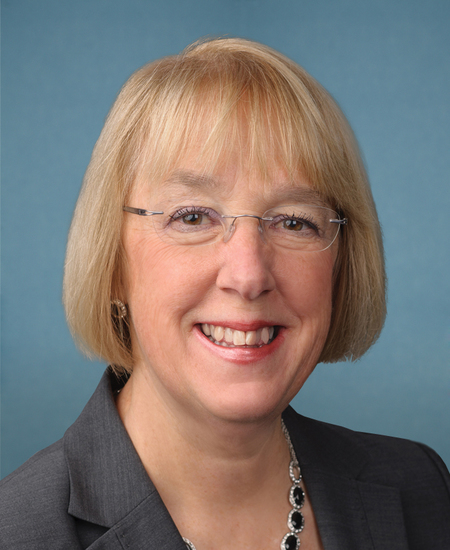
U.S. Senators Katie Britt, Elissa Slotkin Introduce Bipartisan Legislation to Modernize Ovarian Cancer Prevention and Care
WASHINGTON, D.C. — U.S. Senators Katie Britt (R-Ala.) and Elissa Slotkin (D-Mich.) recently introduced the Ovarian Cancer Improving and Modernizing Prevention, Access, Care, and Testing (IMPACT) Act , bipartisan legislation to expand access to genetic testing, hereditary cancer risk assessment, and specialty care for patients and families affected by ovarian cancer. “Too many women receive an ovarian cancer diagnosis only after the disease has advanced, when treatment options are limited, and outcomes are far worse,” said Senator Britt . “Knowledge is one of the most powerful tools we have, and every woman with a family history of ovarian cancer deserves to know her risk and have access to the screening and counseling that can help her make informed decisions about her health. I’m proud to join Senator Slotkin in this bipartisan effort to reauthorize Johanna’s Law, expand outreach to rural and underserved communities, and ensure genetic screening is covered for the women who need it most. Alabama has already shown national leadership in preventing gynecologic cancers, and this legislation builds on that progress so that where a woman lives or what her insurance plan covers doesn’t determine whether she can catch this disease early.” Ovarian cancer is the fifth-leading cause of cancer deaths among women in the United States, and roughly 80 percent of cases are detected only after the disease has reached an advanced stage. If caught early, the five-year survival rate exceeds 90 percent. However, there remains no reliable screening test for the disease. This means that genetic counseling, hereditary risk assessment, and provider awareness are critical tools for prevention and early detection. “No family should have to fight both a cancer diagnosis and their insurance company at the same time,” said Senator Slotkin. “Women, especially in rural communities like Michigan, should be able to get the genetic testing and specialty care they need to catch this disease early or prevent it altogether. Our bill tackles this issue from every angle — research, awareness, outreach and access to care and testing — and I thank my colleagues from across the aisle as we all work to save lives.” The Ovarian Cancer IMPACT Act would expand insurance coverage for genetic and genomic testing, cover risk-reducing interventions, expand rural and telehealth access, prioritize grants for outreach and education strategies in rural, underserved, and high-risk communities, and require HHS to deliver an implementation roadmap to Congress within 180 days of enactment and comprehensive impact reports every three years through FY2032. The Ovarian Cancer IMPACT Act in championed in the U.S. House of Representatives by Representatives Rosa DeLauro (D-Conn.) and Don Bacon (R-Neb.). The bill was also introduced alongside a companion resolution to recognize September as National Ovarian Cancer Awareness Month. You can read the full text of the bill here . “Ovarian cancer affects thousands of women and families every year, including some of my closest friends, and too many cases are not caught until the disease has reached an advanced stage,” said Representative Bacon. “Knowing the warning signs and having access to genetic counseling, testing and quality care can make a real difference. I’m pleased to join my colleagues on the bipartisan, bicameral Ovarian Cancer IMPACT Act to improve awareness, expand access to specialized care, including in rural communities, and help more women get the care they need sooner.” “I am a survivor of ovarian cancer by the grace of God and biomedical research,” said Representative DeLauro. “I am proud to stand with my colleagues in introducing bipartisan, bicameral legislation that would strengthen ovarian cancer research, medical services, and outreach to women to ensure screening and good health. This Ovarian Cancer Month, I am committed to fighting for improved health outcomes for all women, so more and more women survive this deadly disease.” Statements of support for the Members’ legislation are below: “We have an evidence-based strategy to reduce ovarian cancer risk and save lives with salpingectomy but need solutions to remove barriers to this care. Every patient considering pelvic surgery deserves a conversation with their physician about whether risk-reducing salpingectomy is appropriate for them and aligns with their health, values, and goals. We urge health systems and insurers to actively remove barriers to implementation of this care. ACOG is proud to endorse the Ovarian Cancer IMPACT Act, which would expand awareness of and access to evidence-based prevention strategies, helping spare more patients and families from the devastating burden of ovarian cancer,” said Sandra E. Brooks, MD, MBA, FACOG, chief executive officer of the American College of Obstetricians & Gynecologists. “The introduction of the Ovarian Cancer IMPACT Act is an important step forward for people affected by gynecologic cancers,” said Audra Moran, President and CEO of Ovarian Cancer Research Alliance, the largest global organization dedicated to combating ovarian and all gynecologic cancers while supporting patients and families. “We are incredibly grateful to Senators Slotkin and Britt and Representatives DeLauro and Bacon for their bipartisan leadership and commitment to advancing policies that will improve prevention, expand access to care in rural and underserved communities, and give patients and families more opportunities to understand and manage their cancer risk.” “FORCE applauds the introduction of this important legislation, which has the potential to save lives while reducing long-term healthcare costs,” said Lisa Schlager, BRCA1 mutation carrier and Vice President, Public Policy at FORCE: Facing Our Risk of Cancer Empowered. “Up to 20% of ovarian cancers and 15% of endometrial cancers are linked to inherited gene mutations. National medical guidelines recommend that everyone diagnosed with these cancers be offered genetic counseling and testing. While hereditary cancers represent only a subset of all cancer diagnoses, identifying individuals who have—or are predisposed to—these cancers is critical. They are the poster children for prevention, early detection, and targeted treatments.” Senator Britt’s work to improve health outcomes has been extensive. She has championed the Rural Obstetrics Readiness Act to support rural healthcare facilities to provide urgent obstetric care and the MOMS Act , which provides critical support to women during all phases of motherhood, from prenatal care to early childhood development. Additionally, the Senator has worked on the Access to Breast Cancer Diagnosis (ABCD) Act , which aims to eliminate out-of-pocket costs for any follow-up diagnostic breast tests and recently introduced the bipartisan Colorectal Cancer Early Detection Act to expand early screening resources. ###
f3b0a708-f699-4a85-9bb4-1e2188c72287Issued within 24 hours
Other senators' releases published in the day before or after this one.