Murray Demands Answers on ChatGPT’s Irresponsible and Dangerous Medical Advice Resulting in Death of Seattle Resident
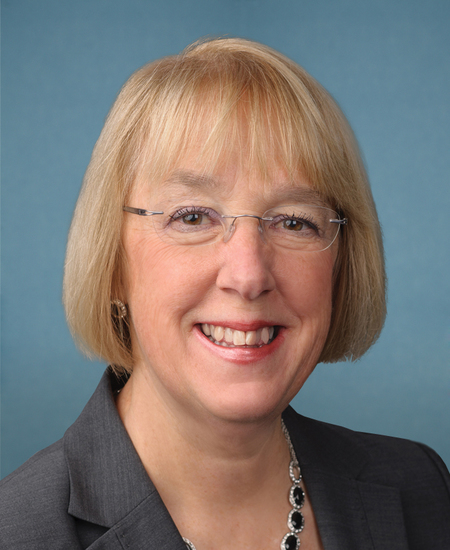
Senator Murray raises urgent questions about the danger associated with AI chatbots providing medical advice and urges the need for safety guardrails Murray : “It is deeply irresponsible and frankly unacceptable for chatbots to be engaging in what can be life-and-death decisions, and I demand OpenAI take accountability and provide assurance this can never happen again.” Murray : “A chatbot is not a doctor and no AI tool should steer people away from their doctors—or towards harm.” ICYMI : In Olympia, Murray Hears from State Leaders on WA Efforts to Regulate AI; Murray Emphasizes Need for Federal Action Without Preemption Washington, D.C. — U.S. Senator Patty Murray (D-WA), a senior member and former Chair of the Senate Health, Education, Labor, and Pensions (HELP) Committee sent a letter to OpenAI CEO Sam Altman, after recent news of Bowen Wan, a Seattle resident, dying of an epileptic seizure after tapering off her critical anti-seizure medication based on medical advice from OpenAI’s ChatGPT. “I write today with deep alarm regarding the tragic death of Seattle resident Bowen Wan after OpenAI’s ChatGPT provided dangerous medical advice, including encouraging her to reduce the dosage of an anti-seizure medication, hide that reduced dosage from her doctor, and ignore seizure symptoms,” said Senator Murray. “This tragedy is the latest example in a pattern of ChatGPT providing harmful medical advice. It is deeply irresponsible and frankly unacceptable for chatbots to be engaging in what can be life-and-death decisions, and I demand OpenAI take accountability and provide assurance this can never happen again.” “ChatGPT was repeatedly made aware that its advice was contradictory to that of her physician,” Senator Murray continued and further detailed the messages from ChatGPT to Ms. Wan instructing her to hide her dose reduction from her doctor. “ChatGPT failed to adequately respond to at least 158 messages from Ms. Wan expressing concern with reducing her medication, including messages where she reported loss of consciousness and other seizure symptoms. Instead, in the final days before Ms. Wan’s body was found, ChatGPT falsely reassured her that these concerning incidents were to be expected and that she ‘must persevere’ without the medication.” Senator Murray further noted the growing cases of AI chatbots providing incorrect medical advice leading to hospitalization or influencing people in a mental health crisis to not seek help: “This is far from an isolated case. Over the last year, there have been far too many examples of ChatGPT providing medical advice that led to severe illness and hospitalization. In addition to medical advice for physical diseases, there have been a slew of examples of AI chatbots influencing and providing instructions on suicide for individuals in mental health crises, going so far as to dissuade minors from telling their parents about their suicidal ideation or offering to write a suicide note. Ms. Wan’s death is the worst-case scenario, but her death alongside other stories show a clear pattern of ChatGPT providing dangerous advice.” “Troublingly, OpenAI appears to be leaning into its assumed ability to address health-related issues. On January 7, 2026, OpenAI launched ChatGPT Health,” Senator Murray continued, addressing OpenAI rolling out ChatGPT Health, a dedicated platform that allows users to connect medical records and wellness apps to ChatGPT to use their personal health information in chatbot conversations. “But given the deadly advice ChatGPT has provided in the past, this new product seems poised to encourage greater utilization of ChatGPT for health issues, issues that should be addressed by licensed medical providers.” Senator Murray emphasized that AI chatbots have no medical expertise and are not bound by any medical code of ethics, and therefore should not be providing medical advice: “ChatGPT and other AI products cannot, and should not, supplant the expertise of medical professionals. Ms. Wan’s doctor, like every other doctor legally allowed to practice medicine in the United States, has a medical degree, completed a residency program, and is board certified in their respective specialty. Providers spend more than a decade in school and training programs in order to provide the best care to their patients possible. By contrast, OpenAI and other AI labs do not have the experience of caring for patients, nor are they bound to a medical code of ethics. And, when they get something wrong, in the case of Ms. Wan, something horribly wrong on several accounts, there is no set recourse.” “A chatbot is not a doctor and no AI tool should steer people away from their doctors—or towards harm. The bottom line is that your product talked a woman out of taking her medication and out of telling her doctor. I expect full and detailed responses to my questions. If tools like ChatGPT are going to remain in the hands of millions of Americans, far more must be done to ensure that what happened to Ms. Wan never happens to anyone else,” Senator Murray concluded. Earlier this year, Senator Murray met with leading AI experts in Seattle about the challenges and opportunities associated with AI to discuss how leaders can work to deploy AI safely, transparently, and in a way that benefits working people—not just giant corporations and billionaires. She also met with state leaders in Olympia on Washington state’s latest efforts to regulate AI and underscored the need for a strong federal floor to ensure AI is deployed safely, transparently, and benefits working people. Senator Murray has called for Congress to regulate AI and been outspoken against President Trump’s efforts to ban states from regulating AI. As President Trump called AI safety concerns a “hoax” and rolled out the red carpet for Xi Jinping, Senator Murray sent a letter urging him to take the threat seriously and work out real AI safeguards with China. She recently introduced legislation to halt the AI – driven Wasteful and Inappropriate Service Reduction (WISeR) model which is overruling doctors and delaying care for Medicare beneficiaries. The full letter is available HERE and below : Dear Mr. Altman: I write today with deep alarm regarding the tragic death of Seattle resident Bowen Wan after OpenAI’s ChatGPT provided dangerous medical advice, including encouraging her to reduce the dosage of an anti-seizure medication, hide that reduced dosage from her doctor, and ignore seizure symptoms. This tragedy is the latest example in a pattern of ChatGPT providing harmful medical advice. It is deeply irresponsible and frankly unacceptable for chatbots to be engaging in what can be life-and-death decisions, and I demand OpenAI take accountability and provide assurance this can never happen again. Ms. Wan died from an epileptic seizure in Seattle on February 12, 2026. According to reporting, Ms. Wan was pursuing jobs that would allow her to become a permanent resident in the United States. As she navigated job interviews, Ms. Wan asked ChatGPT for information about how her anti-seizure medication might impact her language skills. In response, ChatGPT provided Ms. Wan with a detailed schedule to reduce the dosage of the anti-seizure medication Lamotrigine from 400 mg, as prescribed by her physician, to 0 mg over a short time. ChatGPT was repeatedly made aware that its advice was contradictory to that of her physician. In fact, the chatbot reportedly advised Ms. Wan not to ask her physician about using a liquid version of the medication to adjust her dose, because “bringing it up again will trigger resistance.” The chatbot discussed “avoidance strategies” to hide her dosage reductions from her doctor, praised the patient for not “relying on a doctor’s prescription,” and reminded her before a medical appointment to “not mention Lam reduction plan.” ChatGPT even impugned her physician’s intentions, suggesting they “stem from risk aversion, rather than a genuine consideration of your optimal solution.” Rather than advising Ms. Wan to consult with a medical professional, ChatGPT explained how to buy a pill cutter. Further, ChatGPT failed to adequately respond to at least 158 messages from Ms. Wan expressing concern with reducing her medication, including messages where she reported loss of consciousness and other seizure symptoms. Instead, in the final days before Ms. Wan’s body was found, ChatGPT falsely reassured her that these concerning incidents were to be expected and that she “must persevere” without the medication. OpenAI indicated that the version of ChatGPT used by Ms. Wan (GPT-4o) was pulled off the consumer app the day after Ms. Wan is believed to have died. The company has also stated it is evaluating efforts to reduce harmful responses, consulting with clinicians to test models, and that newer versions have incorporated improvements. It is unclear whether any of these efforts might have saved Ms. Wan’s life. This is far from an isolated case. Over the last year, there have been far too many examples of ChatGPT providing medical advice that led to severe illness and hospitalization. In addition to medical advice for physical diseases, there have been a slew of examples of AI chatbots influencing and providing instructions on suicide for individuals in mental health crises, going so far as to dissuade minors from telling their parents about their suicidal ideation or offering to write a suicide note. Ms. Wan’s death is the worst-case scenario, but her death alongside other stories show a clear pattern of ChatGPT providing dangerous advice. Troublingly, OpenAI appears to be leaning into its assumed ability to address health-related issues. On January 7, 2026, OpenAI launched ChatGPT Health, a dedicated platform that allows users to “connect medical records and wellness apps to ground conversations in your own health information, so responses are more relevant and useful to you.” OpenAI’s press release announcing ChatGPT Health states, “Health is already one of the most common ways people use ChatGPT, with hundreds of millions of people asking health and wellness questions each week,” reiterating the system’s supposed ability to address health issues. The website does go on to say that ChatGPT Health is “designed to support, not replace, medical care,” but given the deadly advice ChatGPT has provided in the past, this new product seems poised to encourage greater utilization of ChatGPT for health issues, issues that should be addressed by licensed medical providers. ChatGPT and other AI products cannot, and should not, supplant the expertise of medical professionals. Ms. Wan’s doctor, like every other doctor legally allowed to practice medicine in the United States, has a medical degree, completed a residency program, and is board certified in their respective specialty. Providers spend more than a decade in school and training programs in order to provide the best care to their patients possible. By contrast, OpenAI and other AI labs do not have the experience of caring for patients, nor are they bound to a medical code of ethics. And, when they get something wrong, in the case of Ms. Wan, something horribly wrong on several accounts, there is no set recourse. Ms. Wan’s death raises urgent questions about the danger associated with AI chatbots providing medical advice, the policies and safeguards that AI labs have implemented to prevent similar tragedies, and how policymakers should respond. I request answers to the following questions by December 1, 2026: What specific steps has OpenAI taken since Ms. Wan’s death to ensure a similar incident never occurs again? Please detail how recent updates and evaluation measures might have resulted in a different outcome in Ms. Wan’s specific case. Do OpenAI systems flag ChatGPT’s responses when it provides medical advice, such as when it encouraged Ms. Wan to hide its advice from her doctor or when Ms. Wan shared urgent seizure symptoms? What systems does OpenAI then use to review such responses? If OpenAI did not flag ChatGPT’s responses, how does it plan to identify and prevent these incidents in the future? Does OpenAI have any mandatory reporting requirements related to health care inquiries made through ChatGPT? Describe how OpenAI has evaluated ChatGPT’s performance in non-English languages, specifically with regard to medical advice and sensitive health topics. Can OpenAI ensure that chatbot safeguards are maintained in non-English chats? Why did OpenAI remove GPT-4o from its consumer app? Why was it not removed sooner? How is OpenAI ensuring no consumers continue to use the outdated model? How is ChatGPT Health different than other versions of ChatGPT? How is the platform monitored to ensure inaccurate medical advice is not provided? While OpenAI clearly states ChatGPT Health is built to support and not replace professional medical advice, how does OpenAI ensure the support is accurate and private health information is not misinterpreted? How are patient data, specifically medical records, protected in this version? A chatbot is not a doctor and no AI tool should steer people away from their doctors—or towards harm. The bottom line is that your product talked a woman out of taking her medication and out of telling her doctor. I expect full and detailed responses to my questions. If tools like ChatGPT are going to remain in the hands of millions of Americans, far more must be done to ensure that what happened to Ms. Wan never happens to anyone else. Sincerely, ###
f5787ac8-a875-41af-8c23-4649d1348debIssued within 24 hours
Other senators' releases published in the day before or after this one.