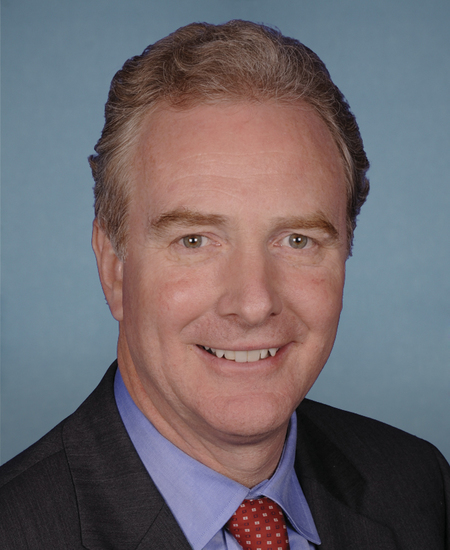
Van Hollen, Warren, Wyden, Sound Alarm on Lutnick Family’s Conflicts of Interest Involving New Commerce Rare Earth Deal
U.S. Senators Chris Van Hollen (D-Md.), Ranking Member on the Appropriations Subcommittee on Commerce, Justice, Science, and Related Agencies, Elizabeth Warren (D-Mass.), Ranking Member on the Senate Committee on Banking, Housing, and Urban Affairs, and Ron Wyden (D-Ore.), Ranking Member on the Senate Finance Committee pressed Secretary of Commerce Howard Lutnick on concerns over his close involvement in the Department’s recent investment in rare earth mineral company USA Rare Earth, Inc. (USAR). The deal appears to have directly benefited the Secretary’s former firm, Cantor Fitzgerald, which is now led by his two adult sons.“This follows in a long string of actions that you have taken in your capacity as the Secretary of Commerce that could stand to enrich your immediate family and former company,”wrote the lawmakers.Securing a domestic supply of critical minerals — including rare earths — is essential to U.S. national security and economic competitiveness, making it especially important that federal investments are based on the merits, and that decisions are made free of conflicts of interest. But the circumstances surrounding the recent Commerce Department investment raise fresh concerns about Trump Administration corruption.Last month, the Department announced a tentative deal worth up to $1.6 billion with USAR while acquiring 16.1 million shares of the company, around a 10% stake. USAR had only held one previous government contract, worth just under $100,000. On the same day, USAR announced it had also raised $1.5 billion in private funds with Lutnick’s former firm Cantor Fitzgerald acting as “lead placement agent” for the transaction, meaning, as the lawmakers noted, “Cantor acted as a compensated broker for a company whose financial position was bolstered by as much as $1.6 billion in public funds from your Department.”Prior to becoming Commerce Secretary, Lutnick owned and led Cantor for years. His ethics agreement required that he divest this interest, which he did by transferring his stake to his adult sons, who now lead the company. Ethics experts have expressed concern that this unusual arrangement “is reason to worry that the public interest is being subordinated, yet again, to the profit seeking of Trump cronies.”“The USAR deal, which you publicly touted and reportedly were personally involved in, is the latest example of how official Commerce Department business has intersected with Cantor Fitzgerald’s financial interests during your tenure,”wrote the lawmakers.Secretary Lutnick is not the only one who appears to have benefited from this deal. Billionaire Trump allies appear to have had access to shares of USAR in this private fundraising sale brokered by Cantor, including Steve Schwarzman, Ken Griffin, and Steven A. Cohen — all of whom contributed exorbitant amounts of money to President Trump’s campaign and inauguration funds.“[I]f [these supporters of the Trump administration] had inside information on the Commerce Department, it could potentially implicate federal ethics rules — as well as raising questions about corruption related to financial rewards for wealthy supporters of President Trump and his administration,”wrote the lawmakers.The lawmakers pressed Secretary Lutnick for answers regarding these clear conflict-of-interest concerns by March 11, 2026.
Text of the letter can be viewedhereand below.
Dear Secretary Lutnick:
We write regarding the agreement brokered by the Department of Commerce in which the U.S. government provides substantial funding for and acquires an ownership stake in USA Rare Earth, Inc., (USAR) a rare earth mineral mining company. This deal was announced in conjunction with a $1.5 billion private fundraising effort for USAR brokered by your former firm, Cantor Fitzgerald (“Cantor”) — a deal that could enrich your immediate family. We have previously raised concerns that you have used your role as Commerce Secretary in ways that could benefit your family and former company, and this latest deal raises fresh conflict-of-interest concerns about your activities as Secretary of the Department of Commerce.
Securing a domestic supply of critical minerals — including rare earths — is essential to U.S. national security and economic competitiveness. These materials are required for a range of critical manufacturing industries — from electric vehicles and semiconductors to defense systems. China accounts for around 60 percent of global rare earth mining output and is responsible for about 91 percent of global production. Last year, China adopted new export restrictions on critical minerals and magnets that endangered U.S. defense supply chains — highlighting the outsized leverage China can have over supply chains that American industry cannot afford to cede. Particularly given these vital national interests, it is imperative that federal investments in critical industries be made free from conflicts of interest and on the merits. The circumstances surrounding the USAR deal raise questions about whether that standard has been met.
On January 26, 2026, the Department of Commerce announced a tentative deal worth up to $1.6 billion with USAR. Under the terms of the deal, the Department would extend “up to $277 million in direct funding and up to $1.3 billion in loans” to USAR for two rare earth mining projects, while acquiring 16.1 million shares of the company, around a 10% stake. Prior to this tentative announcement, USAR had only held one prior government contract, worth just under $100,000.
On the same day, USAR also announced it had raised $1.5 billion in private funds with Cantor Fitzgerald “as the lead placement agent” for the transaction — meaning that Cantor acted as a compensated broker for a company whose financial position was bolstered by a $1.6 billion public funding agreement from your Department.
Prior to entering the Trump Administration, you owned and led Cantor for years. Your ethics agreement required that you divest this interest — and you did so by transferring your stake in the company to your adult sons, who now lead the company. As ethics experts noted, the “fact that the [USAR] deal is brokered by the Wall Street firm formerly run by the commerce secretary — and now headed by his sons — is reason to worry that the public interest is being subordinated, yet again, to the profit seeking of Trump cronies.”
Commerce’s Investment in USAR Overlaps with Cantor’s Financial Interests
We have serious concerns about the Commerce Department’s decision to enter this deal in which your former firm, run by your sons, has a clear financial interest. The USAR deal, which you publicly touted and reportedly were personally involved in, is the latest example of how official Commerce Department business has intersected with Cantor Fitzgerald’s financial interests during your tenure.
You reportedly played a key role in the Commerce Department’s investment in USAR, meeting with USAR’s CEO in early November 2025. Soon after, USAR met with Commerce Department officials managing CHIPS and Science Act funding. The company was also invited to an interagency meeting led by your agency at the Pentagon with the Department of Defense and the Department of Energy. You reportedly asked the company’s CEO, “what would it take [for USA Rare Earth] to go faster and to scale further?”
As a prerequisite for securing up to $1.6 billion in public funds from Commerce, it appears USAR had to raise matching private funds. The CEO of USAR, Barbara Humpton, said that “first condition is we were asked to go raise private money [by Commerce].” USAR turned to Cantor to raise the capital it needed to unlock public funds, taking on your former company to act as its agent. Humpton went on to say that USA Rare Earth had an initial goal to raise $500 million in funding from private sources but ended up surpassing that goal with $1.5 billion of private investment in public equity (PIPE) funding. In its press release announcing the Commerce deal, USAR confirmed that, “[i]n conjunction with [the federal government investment], USAR has raised a common stock PIPE” and that “Cantor Fitzgerald & Co. acted as lead placement agent” for this transaction.
In a PIPE transaction, stocks and equity of an already public company are typically sold at a “discount to market price” to a restricted pool of private investors. A placement agent – in this case, Cantor – typically sells the discounted equity while receiving a fee for the shares they sell. If the PIPE funds were raised under these circumstances, then it appears that, in order to secure public funds from the government agency you lead, USAR paid your family’s company to raise matching private funds.
The Department of Commerce’s decision to invest in USAR therefore raises a number of potential ethics concerns. Cantor, led by your two sons, likely received a cut for selling stocks of a company that needed capital to receive up to $1.6 billion in public investment assurances from the agency you lead. Under the terms of your ethics agreement, you agreed that “for a period of one year after [your] resignation or for as long [you] continue to have an ownership interest in Cantor Fitzgerald L.P., whichever is later, [you would] not participate personally and substantially in any particular matter involving specific parties in which … Cantor Fitzgerald L.P., or its subsidiaries, is a party or represents a party.” Depending on the relationship between Commerce’s USAR investment and Cantor’s USAR investment deal — your involvement, if any, in facilitating the USAR deals may have implicated federal ethics law.
Given your close ties to Cantor, and Cantor’s apparent financial interest in USAR, the Commerce Department’s investment should be closely scrutinized. The Department of Commerce should disclose the full terms of its agreement with USAR, including negotiated milestones, costsharing agreements, and reporting requirements for the duration of the contract. The Department must also make clear at what point it became aware Cantor was representing USAR in the PIPE transaction, and if representatives of Cantor met with Commerce officials or with you personally.
Commerce Deal with USAR May Have Benefited Administration Allies
SEC disclosure filings reveal that among a wide pool of investors, billionaire allies of the Trump administration appear to have bought discounted shares of USAR in this private fundraising sale brokered by Cantor. These include Steve Schwarzman, Ken Griffin, and Steven A Cohen, who collectively steered tens of millions towards the President’s campaigns and inauguration funds.
Cantor facilitated the sale of 69.8 million shares of USAR, more than one-third of the company’s available stock, to private investors at $21.50 a share. Although the stock’s price has continued to fluctuate since the announcement, reports at the time assessed that this PIPE offer “represents a discount to the stock’s closing price of $24.77 during the market session preceding the company’s announcement.” As experts have noted, “[b]ecause of these discounts and warrants, PIPE investors earn substantially higher returns than investors who buy and sell stocks of issuing firms’ or comparable firms at market prices.” Following the announcement of the CommerceUSAR deal, USAR’s stock price climbed by 29%, before settling at more than $26 a share.
It is unclear how or why these supporters of the Trump administration became involved in the USAR PIPE, or the extent to which they were aware of the Commerce Department’s direct investment in USAR. However, if they had inside information on the Commerce Department, it could potentially implicate federal ethics rules – as well as raising questions about corruption related to financial rewards for wealthy supporters of President Trump and his administration.
Conclusion and Questions
This latest USAR deal is yet another example of a Commerce Department action that appears to align with Cantor Fitzgerald’s financial interests. It follows in a long string of actions that you have taken in your capacity as the Secretary of Commerce that could stand to enrich your immediate family and former company. Given the conflict-of-interest concerns raised by the Department’s deal with USAR, we request that you answer the following questions by March 11, 2026:
1. What was your involvement in the Commerce Department decision to invest in USAR?
a. Did you receive any advice from ethics officials regarding your involvement? If so, please provide a written copy of any guidance provided by ethics officials, including any documentation of recusals.
b. Please provide any records of your meeting with USAR’s CEO in November 2025.
2. When did you become aware of Cantor’s representation of USAR in the PIPE transaction that was announced in conjunction with the federal government investment in USAR?
a. When did the Department of Commerce become aware of Cantor’s representation of USAR in the PIPE transaction?
b. To what extent was the Commerce Department involved in this transaction?
c. To what extent were you personally involved in this transaction?
d. Did you or any other Commerce Department officials provide any information to any entity, person, or company involved in the PIPE prior to the public announcement of the federal government’s deal with USAR?
e. Were USAR officials required to maintain confidentiality about the federal government investment prior to the January 26, 2026 announcement?
3. What was the nature of the interagency meeting between USAR and the Departments of Defense, Commerce, and Energy at the Pentagon?
a. Please provide the date, list of attendees, and any transcripts, notes, or agendas, from the meeting.
4. Have you or anyone else in the Department of Commerce communicated with Brandon Lutnick, Kyle Lutnick, or any other Cantor representative about critical minerals or rare earth mining investments since February 18, 2025?
a. Have you or anyone else in the Department of Commerce met with representatives of Cantor Fitzgerald since February 18, 2025 regarding USAR? If so, please provide the date, any transcripts, and the names of Commerce officials involved.
5. Please provide a copy of the Department of Commerce’s negotiated agreement with USAR, including any negotiated milestones, cost-sharing agreements, and reporting requirements for the duration of the contract.
a. Please provide a copy of the negotiated agreement between USAR and the U.S. Department of Energy’s National Energy Technology Laboratory.
6. Did the Department of Commerce have any involvement in USAR’s PIPE transaction?
a. If so, please describe the nature and extent of Commerce’s involvement.
7. Were you involved in USAR’s PIPE transaction in which Cantor acted as a placement agent?
a. If so, do you believe that you complied with former employer recusal requirements under 5 CFR § 2635.502 and your ethics pledge? If so, why?
Thank you for your attention to this important matter.
1bbc00d4-15ff-4edf-9584-cb5b802fa455Issued within 24 hours
Other senators' releases published in the day before or after this one.