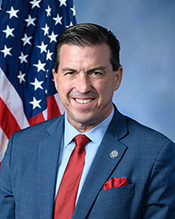
Rep. Torres Demands Answers from HUD on Abandonment of Fair Housing Enforcement for LGBTQ+ Americans
Resources / LGBTQ+ Rights Share on Rep. Torres Demands Answers from HUD on Abandonment of Fair Housing Enforcement for LGBTQ+ Americans Oct 22, 2026 In the News LGBTQ+ Rights Press Today, Congressman Ritchie Torres (NY-15) sent a letter to U.S. Department of Housing and Urban Development (HUD) Secretary Scott Turner demanding answers about HUD’s current approach to fair housing enforcement, particularly the Office of Fair Housing and Equal Opportunity’s (FHEO) enforcement of protections for LGBTQ+ Americans. In 2021, HUD announced that the Fair Housing Act’s prohibition on sex discrimination covers discrimination based on sexual orientation and gender identity, consistent with the Supreme Court’s reasoning in Bostock v. Clayton County . After the Trump Administration revoked Executive Order 13988 at the start of the President’s second term, HUD retreated from that enforcement posture. The Congressmember notes that this retreat is at odds with Secretary Turner’s own public pledge to uphold the Fair Housing Act for every American. The consequences fall on people who already face disproportionate housing instability. According to the Williams Institute, 50 percent of LGBTQ+ adults own homes, compared with 70 percent of non-LGBTQ+ adults, and LGBTQ+ people are more likely to face discrimination in rental housing, mortgage lending, homeless shelters, and other housing-related services. A separate Equal Rights Center investigation found that almost half of older same-sex couples face some form of discrimination when seeking elder housing. The letter cites ProPublica reporting on an Arkansas man who filed a complaint alleging he was denied housing because he is gay. HUD initially began processing his complaint, but after the change in administration he was told that allegations of sexual orientation or gender identity discrimination were no longer being investigated. Career staff have also reportedly faced efforts by political appointees to obstruct investigations, and whole categories of cases, including LGBTQ+ discrimination, appraisal bias, zoning restrictions, and language access, have reportedly received diminished priority or heightened political scrutiny. The Fair Housing Act directs HUD to investigate filed complaints and generally complete investigations within 100 days. Rep. Torres is requesting that HUD account for the cases removed from its backlog and how each was resolved, provide monthly data on sexual orientation and gender identity complaints since January 20, 2025, identify which categories of discrimination have been deprioritized, disclose whether political appointees must preapprove routine investigative work, report current FHEO staffing compared with January 2025, and justify any decision to decline investigating discrimination complaints. The Congressmember has requested complete responses by November 1, 2026. The full letter reads (PDF here ): “I write to request answers regarding the Department of Housing and Urban Development’s (HUD) current approach to fair housing enforcement, particularly the enforcement of protections for LGBTQ+ Americans by the Office of Fair Housing and Equal Opportunity (FHEO). “Housing is not a privilege reserved for those whom the presidential administration considers politically acceptable. It is the foundation upon which Americans build their lives, raise their families, maintain employment, and pursue prosperity. The federal government has a responsibility to ensure that Americans are not denied that foundation because of who they are or whom they love. These issues not only have direct consequences for my constituents in the Bronx, but the integrity of federal fair housing enforcement is a national concern that should matter to communities in every state and all Members of Congress. “In 2021, HUD announced that the Fair Housing Act’s prohibition on sex discrimination would encompass discrimination based on sexual orientation and gender identity. That position reflected the Supreme Court’s reasoning in its Bostock v. Clayton County decision that discrimination based on sexual orientation or gender identity is a form of sex discrimination in the employment context. In the decision authored by Justice Neil Gorsuch, the Supreme Court recognized that ‘it is impossible to discriminate against a person for being homosexual or transgender without discriminating against that individual based on sex.’ The decision provided critical clarity on the application of Bostock in discrimination cases. “The consequences of this change in enforcement are not theoretical. Research from the Williams Institute demonstrates that LGBTQ+ people experience disproportionately high rates of poverty, housing instability, and homelessness. 50% of LGBTQ+ adults own homes, while 70% of non-LGBTQ+ adults own homes. LGBTQ+ people are further more likely to experience discrimination in rental housing, mortgage lending, homeless shelters, and other housing-related services. Transgender American
bbc41c88-d417-4372-8989-c68f4f3d0f85Issued within 24 hours
Other senators' releases published in the day before or after this one.